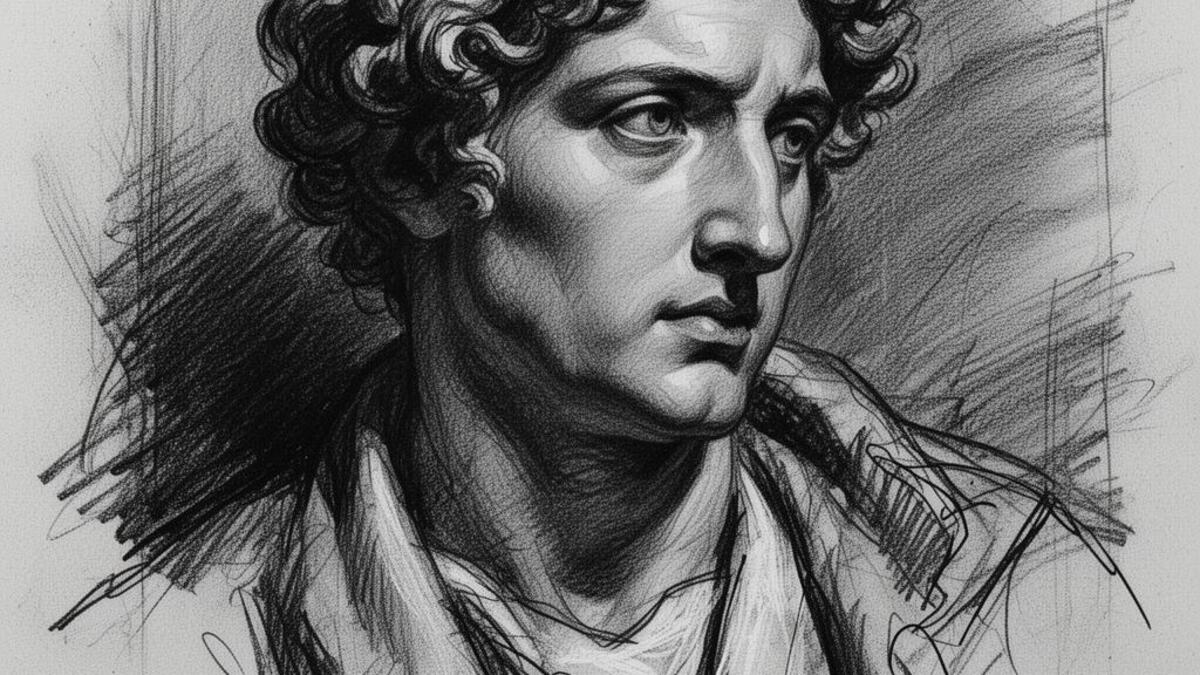
Drawing / Sketch

Line-based artwork, sketches, and hand-drawn mark-making

Compare Drawing / Sketch with another style →
Record023-DR
AestheticDrawing / Sketch
ClassAnalog / Nostalgic
StatusINGESTING
Example of the Drawing / Sketch aesthetic
Archive platedrawing
Source document

Registrar's index cards on the platen glass - captured by the scanner

Omoro Archive - Registrar's OfficeDrawing / SketchFILE 023-DR
When to use it
  • Concept development and ideation
  • Sketch-based branding
+2 more in the Style Guide
Perfect for
  • Design process documentation
  • Handmade craft brands
+2 more in the Style Guide
What it looks like
  • Pencil sketches
  • Ink drawings
+2 more in the Style Guide
Omoro Style GuideAll 151 aesthetics, every field on this page, in one PDF.
Get the guide →
History

40,000 BCE–present · Universal; all human cultures; the foundational visual practice

Drawing is the most direct form of mark-making: a tool moved across a surface, leaving a trace. The visual qualities of drawing: line weight, pressure variation, speed indication in the stroke, the evidence of hand tremor or confident gesture: are the direct record of a physical and mental act. This directness gives drawing an intimacy that other media cannot replicate: you see the drawer thinking.

Drawing traditions span: the Old Master disegno tradition (where drawing was the foundation of all visual practice: Raphael's compositional studies, Rembrandt's rapid sketches, Dürer's precise naturalism), architectural drawing (Piranesi's etchings, Le Corbusier's sketchbooks), cartoon and comic art (Winsor McCay, Crumb, Hergé), fashion illustration (René Gruau, Antonio Lopez), and contemporary artists who return to drawing as primary medium (Kara Walker's silhouettes, Julie Mehretu's architectural webs, Cy Twombly's scrawled paintings).

For visual design, drawing aesthetics appear as: the sketch and wireframe tradition (UX design borrowed directly from architectural drawing practice), editorial illustration (the rapid observational drawing published in newspapers and magazines), hand-drawn UI and app icon traditions, and the general visual culture of showing process: the 'drawing visible' aesthetic that appears in design that wants to signal handcraft and human presence.

Visual markers

The visual DNA: what makes it recognisable

typography
  • Hand-lettered text that incorporates drawing marks and annotation style
  • Pencil or ink handwriting as primary typographic element
  • Sketchbook annotation: text written around and into drawn images
  • Graphite-quality type: slightly grey, slightly variable pressure
grid
  • The sketchbook format: portrait orientation, slight texture, binding visible
  • Annotation composition: drawings surrounded by written notes
  • Serial studies: multiple views of the same subject on one page
  • Margin drawing: spontaneous work happening at the edges of a structured page
materials
  • Graphite grey: #B0A898, #A09888: the tone of pencil on white paper
  • Ink black: #1E1A16: the rich, saturated line of dip pen or marker
  • Cartridge white: #F5F1EB: the warm white of good drawing paper
  • Conte sanguine: #8B4030, #A04838: red chalk, the medium of Old Master figure drawing
motifs
  • Visible line quality: the pressure variation that reveals hand movement
  • Hatching and cross-hatching as tonal system
  • Contour line: the outline that describes form without internal tone
  • Erased marks visible beneath overdrawn lines
Aesthetic profile

8-channel console - dominant channels taped & circled by the registrar

Attribute Console - 023-DR 8 CH ACTIVEFIG. 1
CH01Minimal
MaximalL·30
CH02Analog
DigitalL·90
CH03Restrained
ExpressiveR·30
CH04Cool
WarmCTR·0
CH05Futuristic
NostalgicR·40
CH06Structured
ChaoticR·10
CH07Dark
LightR·20
CH08Organic
GeometricL·30

strongest channels circled - leans analog, nostalgic, minimal ✦

Profile card

Your aesthetic passport - share the fingerprint

Aesthetic Profile
Drawing / Sketch
MinimalAnalogExpressiveWarmNostalgicChaoticLightOrganic
AnalogNostalgicMinimal
omoro.io/styles/drawing
Color Palettes

4 color interpretations of this aesthetic

Drawing / Sketch
Graphite on warm paper
Charcoal Study
Life-room charcoal on newsprint: smeared and lifted
Pen & Ink
Cross-hatched nib on cream paper: line as the only tool
Sepia Sketch
Old-master bistre and chalk on brown paper
Photo Direction

How to shoot this aesthetic

"The quietest discipline graphite on paper, thought made line"

Shot list

  • Top-down overhead of a drawing in progress, hand visible at work, paper grain catching raking light
  • Close portrait of an artist staring at a subject they are drawing, the intensity of observation held
  • Side shot of a sketchbook open in a public space café, train, park subject drawing a stranger

Lighting

Window light to one side only let the shadow side go dark; the single source creates the same quality of light the old masters used and references the discipline's history

Mood Board

Join waitlist for access

Join the waitlist for full access

Join the waitlist
Creative Application Analysis

Drawing / Sketch: where the language earns its place

Drawing / Sketch is most effective when its visual decisions do useful work. Line-based artwork, sketches, and hand-drawn mark-making

Best industries
Fashion and editorialFIT 9/10

The style gives styling, proportion, and image sequencing a clear point of view rather than treating them as decoration.

Hospitality and real estateFIT 8/10

It can turn atmosphere, material, and spatial pacing into evidence of a distinct experience before a visitor arrives.

Culture and premium retailFIT 8/10

It helps a physical or editorial environment feel authored, which raises attention and perceived care.

Best audiences
Design-literate viewersFIT 9/10

They recognize the references, proportion, and restraint that make the language feel intentional.

Considered buyersFIT 8/10

They respond to visible judgment because it reduces the feeling of interchangeable product.

Creative decision makersFIT 8/10

A coherent aesthetic gives them a usable standard for choosing images, objects, and collaborators.

Best products
Flagship productsA singular object benefits when the visual system concentrates attention rather than dispersing it.
Editorial publicationsThe language can hold a sequence of stories together while leaving room for individual subjects.
Spatial and service experiencesIt extends naturally into materials, signage, lighting, and the rhythm of arrival.
Best campaign types
Brand or product launchA defined visual language gives the first encounter enough conviction to establish a durable frame.
Editorial campaignIt rewards a sequence of related images rather than a single isolated hero shot.
Concept film or lookbookMotion, casting, set detail, and typography can all carry the same underlying logic.
Creative feasibility
Production costMedium

The cost comes from consistent art direction, suitable locations or materials, and time to edit the details that would otherwise undermine the premise.

Creative difficultyHigh

The challenge is conceptual. It takes visual literacy and a real point of view to avoid borrowing surface cues without their original logic.

Execution difficultyHigh

Lighting, casting, type, color, material, and retouching must agree. A single weak choice can make the work feel like an imitation.

Overall creative assessment

Drawing / Sketch creates its strongest advantage when it gives a brand a standard of judgment, not merely an attractive finish. It fails when recognizable cues are collected without a governing idea. The difference between average and exceptional execution is usually proportion: how much is shown, what is withheld, and whether every element belongs to the same world. The most capable teams pair an exacting art director with specialists who understand the medium, from photographer and stylist to set designer, editor, and typographer.

Strategic Recommendation

Should Drawing / Sketch be the strategic choice?

Best for
A brand with a real point of viewThe aesthetic works when it can sharpen an existing position, not invent one in its place.
High-consideration launchesA controlled visual system helps make an object, place, or service feel intentional before its details are fully understood.
Editorial, spatial, and experiential workThese formats allow composition, material, pacing, and typography to reinforce one another.
Creative portfolios and institutionsA sustained visual language can demonstrate discernment and make a body of work feel coherent.
Avoid if
The message must be read instantly by everyoneAesthetic nuance can compete with direct instructional clarity when accessibility is the first requirement.
The brand cannot sustain production standardsInconsistent imagery, typography, or material choices expose the gap between the concept and the execution.
The product has no credible relationship to the visual promiseStyling cannot compensate for a story, object, or service that does not support it.
Risk of misuseHigh

Surface imitation is easy. The language becomes generic when familiar cues replace proportion, specificity, and a coherent system.

Contemporary prevalenceCommon

Its visual ingredients appear regularly in contemporary work, but a rigorous execution remains distinguishable from a loose collection of references.

LongevityEnduring

Its strongest principles depend on composition, material, and cultural literacy rather than a short-lived visual effect.

Brand investmentHigh

It asks for consistency across photography, typography, motion, environments, and the many details that make a brand feel believable.

Creative verdict

Drawing / Sketch deserves serious consideration from brands and institutions that can articulate a real point of view and protect it through execution. It is less suitable for work that needs immediate instructional clarity, broad visual neutrality, or low-cost production flexibility. Its greatest advantage is differentiation through judgment: it can make a product, place, or editorial proposition feel authored rather than merely packaged. Average executions borrow recognizable signals, then lose coherence when type, casting, copy, or materials fail to agree. Exceptional executions understand the visual language as a system of choices, including what not to show. The largest mistake is treating the style as a finish applied after strategy. Adopt it only when the product and organization can carry the same standard of care the imagery proposes.

Editorial Depth

Join waitlist for access

Common Misconception
Historical Context
Brands That Accidentally Use This Style
Brands That Perfectly Represent This Style
Psychological Effect

Join the waitlist for editorial depth

Join the waitlist
Related concepts

Connected across the creative knowledge graph

Cross-references
Illustrationillustration applies drawing to communicative, published endsHand-drawn Doodleshand drawn doodles is the casual, spontaneous end of the drawing aesthetic spectrumPaintingdrawing is painting's foundational practice: the disegno beneath the coloreConceptual ArtSol LeWitt's wall drawings are among conceptual art's defining works
About this aesthetic
What is drawing visual aesthetic?
Drawing aesthetic is the visual language of direct mark-making: contour lines, hatching, pressure variation, and the visible evidence of hand and thought in real time. Key visual qualities: graphite grey (#B0A898), ink black (#1E1A16), cartridge white (#F5F1EB). Spans Old Master study tradition, architectural drawing, comic and cartoon art, and contemporary artists for whom drawing is primary medium (Kara Walker, Julie Mehretu).
What is the difference between drawing and illustration?
Drawing is a medium and practice: the physical act of making marks. Illustration is a purpose: making images for communication and publication. All illustration uses drawing (or equivalent digital tools), but not all drawing is illustration. An artist's sketchbook practice is drawing; a book cover image is illustration. The aesthetic distinction: drawing shows process, thought, and the evidence of making; illustration refines those marks toward a communicative end.
How has digital technology changed drawing?
Digital drawing tablets (Wacom, iPad with Apple Pencil) replicate the physical act with high fidelity while offering undo, layers, and infinite media simulation. The result has been a massive democratization of drawing practice: the technical barriers to entry (learning to handle a dip pen, control charcoal) are significantly reduced. Simultaneously, physical drawing has become more valued precisely because it cannot be undone: the visible error, the committed line, is now a statement of material investment.

Build with the drawing / sketch aesthetic

Omoro turns aesthetic references into on-brand visuals. Generate, compose and publish from one studio.

Join the waitlist