When to use it
- Human-scale city campaigns
- Cultural reporting and independent publishing
- Identity work that needs lived-in energy
- Sequences built from chance encounters
Unscripted public life caught at the instant gesture, light, and geometry lock together
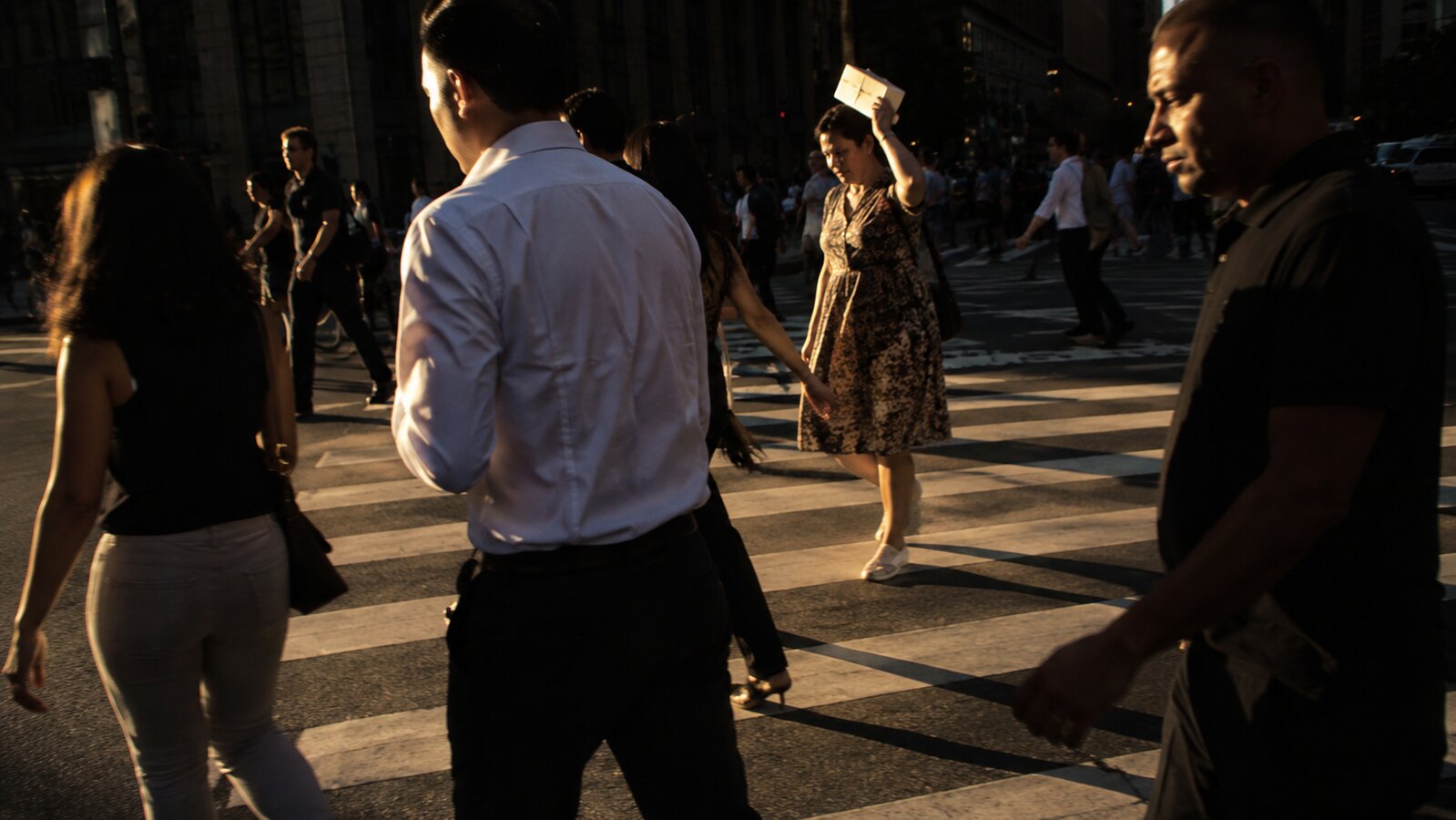


Record 038-SP - when it works, who it is for, what it looks like
1920s–present · Paris, New York, and modern cities worldwide
Street photography became possible when smaller cameras and faster film made it practical to work quickly in public. The compact Leica changed the scale of the practice: photographers could move through crowds without the setup of a studio or press camera. In Paris, Henri Cartier-Bresson made the phrase 'decisive moment' shorthand for the instant when gesture and geometry seem to arrive together.
The tradition expanded through photographers with very different ethics and temperaments: Helen Levitt's children and sidewalks, Robert Frank's unsettled America, Garry Winogrand's crowd energy, Daido Moriyama's abrasive grain, and Vivian Maier's accumulated private record of public life. What links them is not a look but a readiness to accept accident, compression and awkwardness as the material of the frame.
Today the genre is complicated by surveillance, consent and ubiquitous cameras. Its value is no longer simply that it records public life; it is that a photographer can make a particular, sustained way of paying attention visible.
The visual DNA: what makes it recognisable
The definitive color scheme for this aesthetic
How to shoot this aesthetic
"The city already has a script; your job is to catch the line before it disappears"
Shot list
Lighting
Available light only. Work into hard sun, rain reflection, storefront spill, or a single practical source; do not make the city look lit for a shoot.
Drop this into Studio to generate in this aesthetic
Street photography with unposed public life, decisive-moment timing, hard available light, layered urban geometry, modest 35mm grain, and a frame that feels discovered rather than designed
Join waitlist for access
Join the waitlist for full access
Join the waitlistStreet Photography is most effective when its visual decisions do useful work. Unscripted public life caught at the instant gesture, light, and geometry lock together
Budget goes into art direction and casting, not the toolkit.
Anyone can spot the references. A real system out of them is the hard part.
One wrong prop or one off color reads as costume instead of conviction.
Street Photography earns its keep when it gives a brand a standard of judgment, not just a finish. It falls apart the moment recognizable cues get collected without a point of view behind them. The tell is always proportion: what's shown, what's held back, and whether every choice belongs to the same world.
The surface is easy to copy. What separates the real thing from a knockoff is the system underneath.
The ingredients are everywhere right now. A disciplined execution is still the minority.
This holds up because it's built on composition and material, not a filter that ages out.
It only works if every touchpoint agrees. Cut a corner anywhere and the whole thing shows it.
Use Street Photography when the brand can back a real point of view and protect it through execution. Not when the goal is broad, neutral, or cheap to produce. The advantage is differentiation through judgment: the work reads as authored, not packaged. Average executions borrow the signals and lose the coherence. The best ones treat the visual language as a system of choices, including what they leave out.
Join waitlist for access
Join the waitlist for editorial depth
Join the waitlistConnected across the creative knowledge graph
Where it stands now, and what it costs you to use it
Street photography is a useful corrective to over-art-directed imagery because the frame has to respond to a world that does not wait for it.
Its current question is permission, not nostalgia. The strongest contemporary work makes its relationship to the people and communities in the image legible.
Street photography is candid work made in public spaces, where unposed people, movement, light and the built environment create the composition. It is defined by an observational method, not just by shooting on a street.
No. Black and white has a strong historical association with the genre, but color—from Saul Leiter's reflections to contemporary digital work—can be equally central. The important quality is the photographer's attention to timing and public life.
Omoro turns aesthetic references into on-brand visuals. Generate, compose and publish from one studio.
Join the waitlist