When to use it
- Founder and artist profiles
- Long-form interviews
- Campaigns requiring presence and trust
- Creative portfolios and personal archives
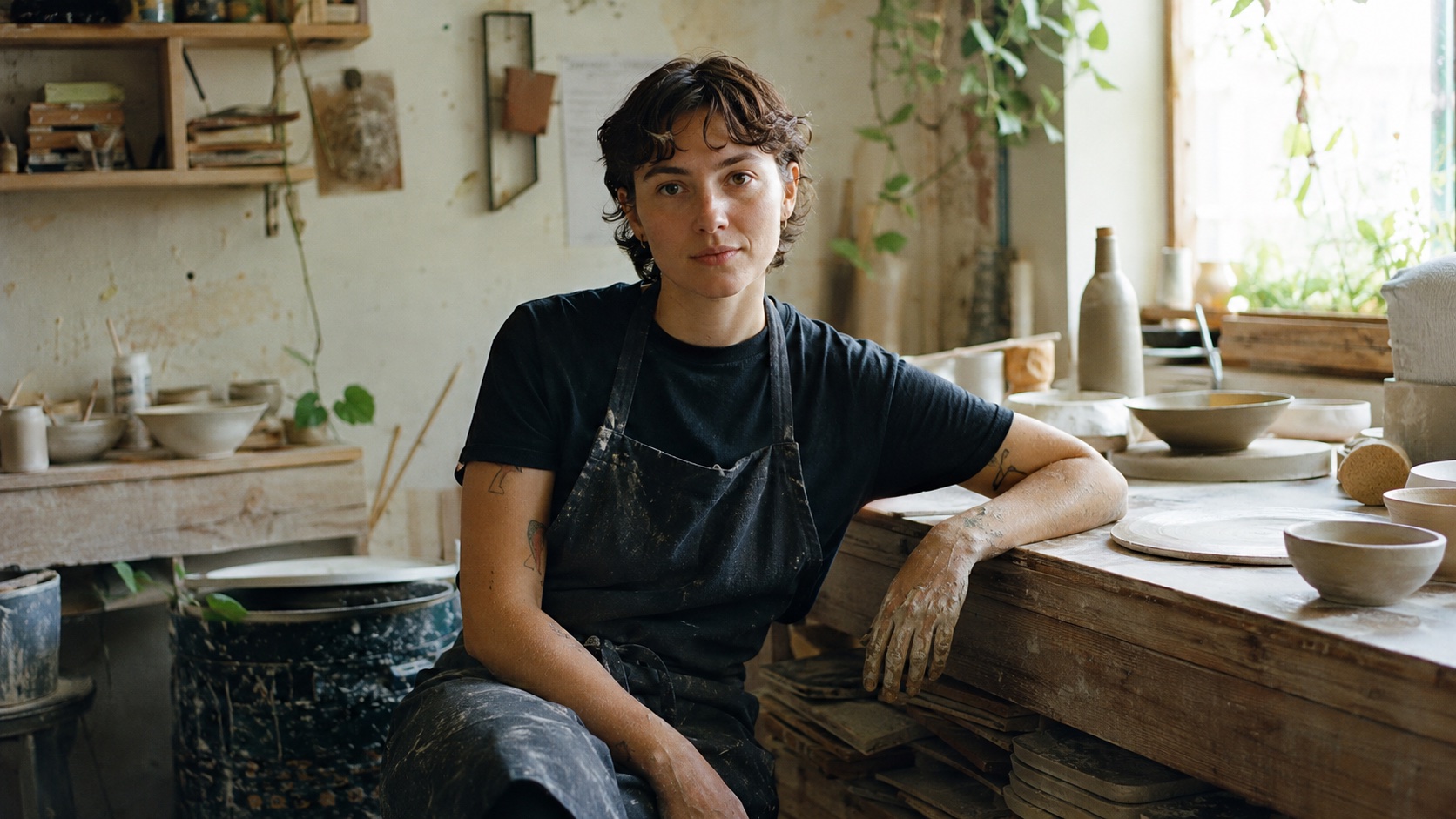
The face and body as a collaboration between subject, photographer, light, and surrounding world


Record 035-PP - when it works, who it is for, what it looks like
1840s–present · Studio portraiture, global vernacular archives, and editorial practice
Portraiture was one of photography's first popular uses because the daguerreotype offered something painted portraiture could not: a specific person's appearance, mechanically recorded. Studios quickly developed their own choreography—backdrops, poses, retouching, visiting cards—and photographic portraits became objects of family memory, public reputation and social class.
The twentieth century expanded the form. August Sander made typology into a social map; Irving Penn made restraint and precision glamorous; Richard Avedon turned the white backdrop into a psychological stage; and photographers such as Zanele Muholi have used portraiture to insist on visibility and self-definition. The genre can be formal or intimate, but it always depends on the terms of the encounter.
Contemporary portraiture is less interested in the myth of the photographer extracting truth from a face. The strongest work makes collaboration felt: how a sitter chooses to appear, how a space is shared, and how the image returns to the person represented.
The visual DNA: what makes it recognisable
The definitive color scheme for this aesthetic
How to shoot this aesthetic
"Make room for the person before asking the picture to do anything"
Shot list
Lighting
Begin with window light or a single large soft source. Let direction reveal form, but keep the light simple enough that the subject is never reduced to a lighting exercise.
Drop this into Studio to generate in this aesthetic
Portrait photography built through trust between photographer and sitter, honest directional light, attentive posture, tactile detail, and an environment that reveals character without becoming a prop set
Join waitlist for access
Join the waitlist for full access
Join the waitlistPortrait Photography is most effective when its visual decisions do useful work. The face and body as a collaboration between subject, photographer, light, and surrounding world
Budget goes into art direction and casting, not the toolkit.
Anyone can spot the references. A real system out of them is the hard part.
One wrong prop or one off color reads as costume instead of conviction.
Portrait Photography earns its keep when it gives a brand a standard of judgment, not just a finish. It falls apart the moment recognizable cues get collected without a point of view behind them. The tell is always proportion: what's shown, what's held back, and whether every choice belongs to the same world.
The surface is easy to copy. What separates the real thing from a knockoff is the system underneath.
The ingredients are everywhere right now. A disciplined execution is still the minority.
This holds up because it's built on composition and material, not a filter that ages out.
It only works if every touchpoint agrees. Cut a corner anywhere and the whole thing shows it.
Use Portrait Photography when the brand can back a real point of view and protect it through execution. Not when the goal is broad, neutral, or cheap to produce. The advantage is differentiation through judgment: the work reads as authored, not packaged. Average executions borrow the signals and lose the coherence. The best ones treat the visual language as a system of choices, including what they leave out.
Join waitlist for access
Join the waitlist for editorial depth
Join the waitlistConnected across the creative knowledge graph
Where it stands now, and what it costs you to use it
Portrait photography remains difficult to automate because the value sits in the relationship, not simply in a plausibly rendered face.
The best current portraits reject extractive access. They let sitters hold complexity, privacy and authorship instead of making personality into a quick visual commodity.
A strong portrait makes a deliberate relationship between subject, light, pose and setting. It does not require a smile or direct gaze; it requires that the visual decisions reveal something about how the sitter wants to be seen.
Either can work. A studio can clarify expression and gesture by removing context; an environment can show the objects, labor and relationships that shape a person. Choose the setting that serves the portrait's actual question.
Omoro turns aesthetic references into on-brand visuals. Generate, compose and publish from one studio.
Join the waitlist