When to use it
- Magazine features and cover stories
- Fashion and culture campaigns
- Concept-led launches
- Visual worlds with a clear editorial point of view
A photograph shaped by an idea: art direction, styling, location, and gesture working as one visual argument
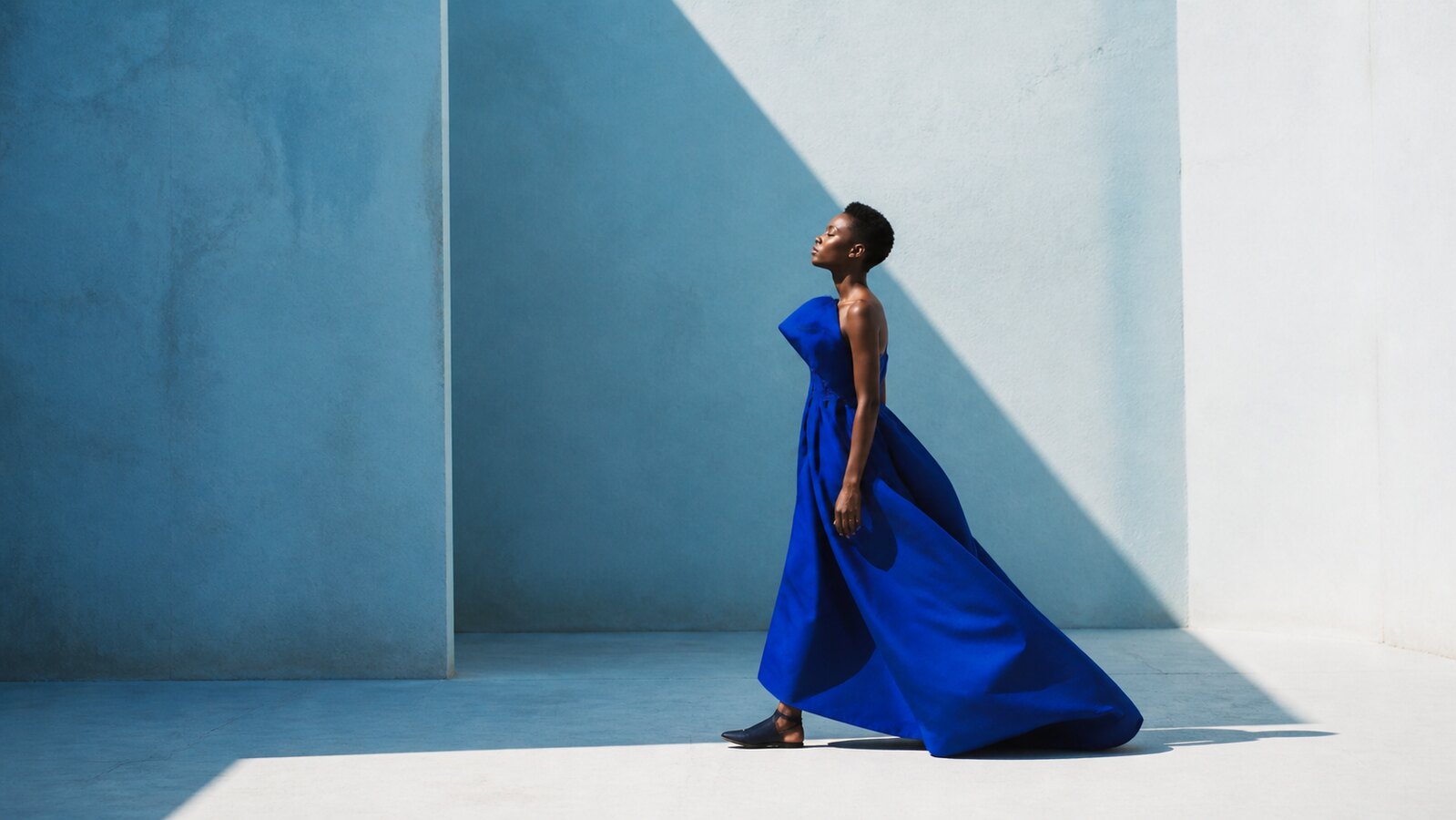


Record 024-EP - when it works, who it is for, what it looks like
1910s–present · Illustrated magazines, fashion publishing, and art direction studios
Editorial photography grew with the illustrated magazine, where pictures had to carry an article's tone before a reader reached the first paragraph. Vogue, Harper's Bazaar, Life and later independent magazines gave photographers, stylists and art directors a collaborative space to make an image that could be factual, aspirational, satirical or dreamlike.
Its modern language came from photographers who treated the page as a stage: Irving Penn's controlled studios, Richard Avedon's kinetic fashion frames, Sarah Moon's soft uncertainty, Nick Knight's digital experiments, and the many editors and stylists whose names are often absent from the credit line. Editorial work is authored by a team, even when one photographer is the public signature.
In current practice, editorial photography is valuable precisely because it can communicate an idea without the visual exhaust of a full campaign. Its best form is spare: a clear proposition, a memorable light decision and only the props that make the proposition sharper.
The visual DNA: what makes it recognisable
The definitive color scheme for this aesthetic
How to shoot this aesthetic
"A frame with an opinion: every color, gesture, and prop knows why it is there"
Shot list
Lighting
Build a simple, deliberate light: one hard sun-like source or a large soft source, with practical color only when it serves the concept. Avoid blanket fill.
Drop this into Studio to generate in this aesthetic
Editorial photography with a precise visual thesis, intentional art direction, considered styling, sculptural light, controlled color relationships, and a frame that feels authored rather than merely captured
Join waitlist for access
Join the waitlist for full access
Join the waitlistEditorial Photography is most effective when its visual decisions do useful work. A photograph shaped by an idea: art direction, styling, location, and gesture working as one visual argument
Budget goes into art direction and casting, not the toolkit.
Anyone can spot the references. A real system out of them is the hard part.
One wrong prop or one off color reads as costume instead of conviction.
Editorial Photography earns its keep when it gives a brand a standard of judgment, not just a finish. It falls apart the moment recognizable cues get collected without a point of view behind them. The tell is always proportion: what's shown, what's held back, and whether every choice belongs to the same world.
The surface is easy to copy. What separates the real thing from a knockoff is the system underneath.
The ingredients are everywhere right now. A disciplined execution is still the minority.
This holds up because it's built on composition and material, not a filter that ages out.
It only works if every touchpoint agrees. Cut a corner anywhere and the whole thing shows it.
Use Editorial Photography when the brand can back a real point of view and protect it through execution. Not when the goal is broad, neutral, or cheap to produce. The advantage is differentiation through judgment: the work reads as authored, not packaged. Average executions borrow the signals and lose the coherence. The best ones treat the visual language as a system of choices, including what they leave out.
Join waitlist for access
Join the waitlist for editorial depth
Join the waitlistConnected across the creative knowledge graph
Where it stands now, and what it costs you to use it
Editorial imagery is where brands and publications can still look specific without explaining every choice in copy.
What has become tired is vague luxury. A good editorial frame has an argument; a costly set with no point now reads as generic production value.
Editorial photography is made to express a story, mood or viewpoint for a publication or campaign. It uses art direction, styling, setting and composition as meaning-making tools rather than treating them as background.
Commercial photography primarily sells a product or service. Editorial photography can support a brand, but it begins with an idea, feature or cultural point of view. The product may be present, but it is not automatically the whole frame.
Omoro turns aesthetic references into on-brand visuals. Generate, compose and publish from one studio.
Join the waitlist