Craft Modernism

Modern form made by hand: oiled wood, stoneware, paper lanterns and hand-stitched patchwork in cobalt, mustard, tomato red and olive, with the maker's marks left visible

Compare Craft Modernism with another style →See the Craft Modernism typefaces →
Record022-CM
AestheticCraft Modernism
ClassAnalog / Warm
StatusINGESTING
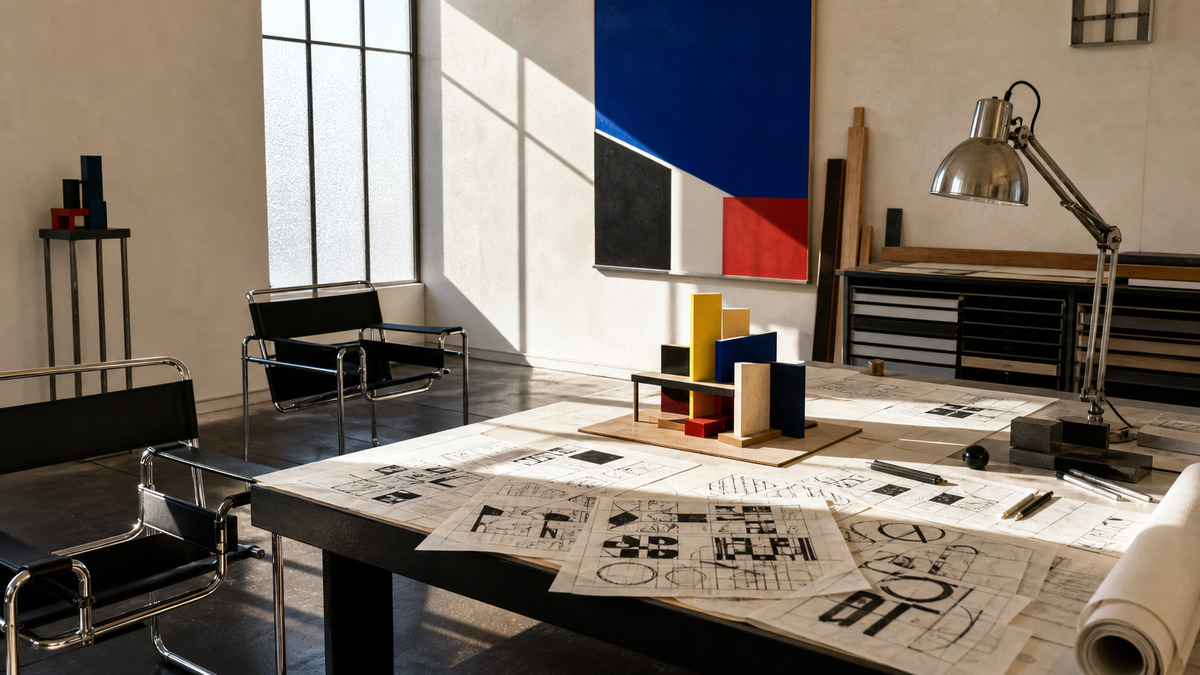
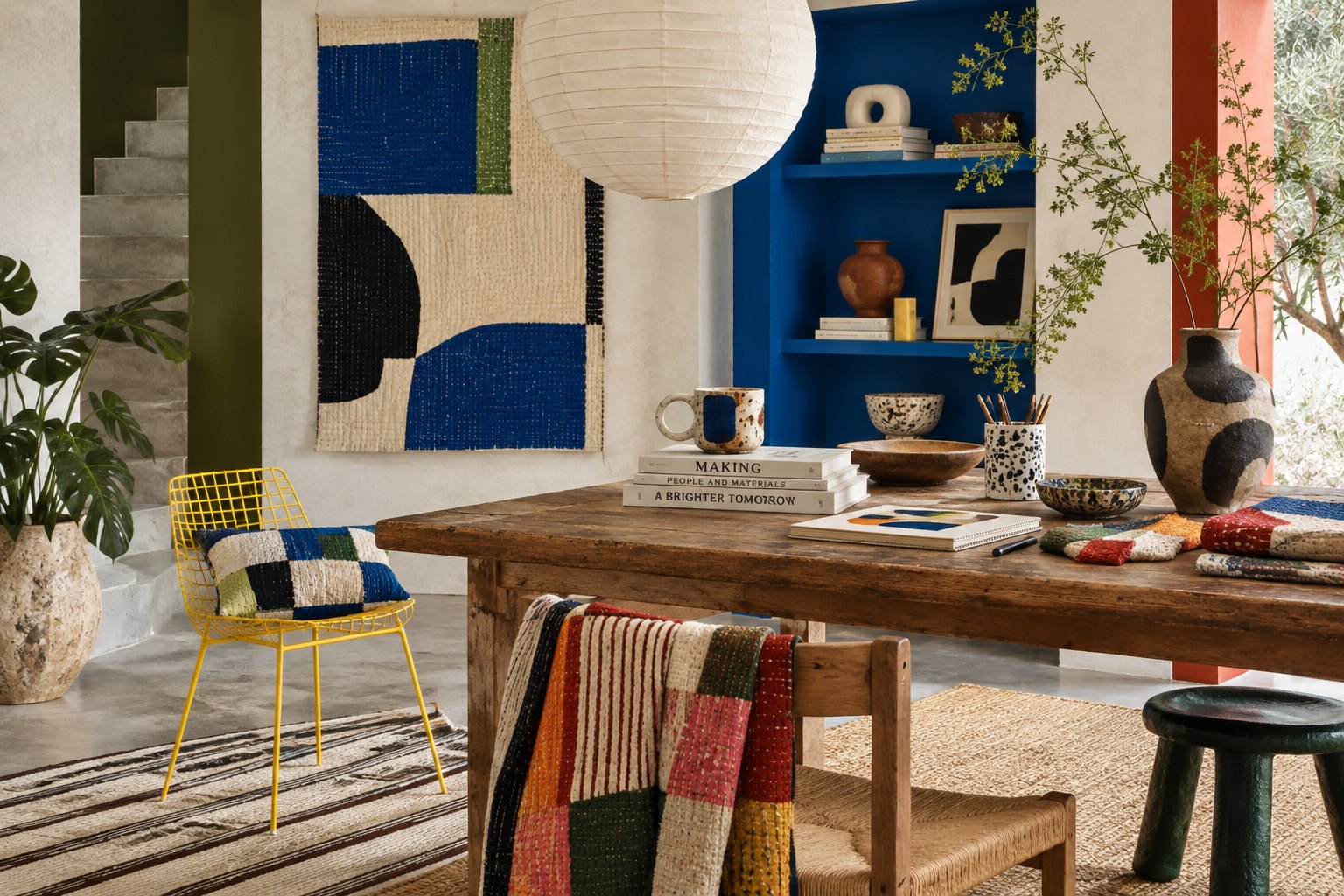
A workroom with a hand-stitched blue, black and cream wall textile, a paper lantern, a worn wooden table with stoneware and quilted cloth, a yellow wire chair and a cobalt blue shelf.
Archive plate · Craft Modernism
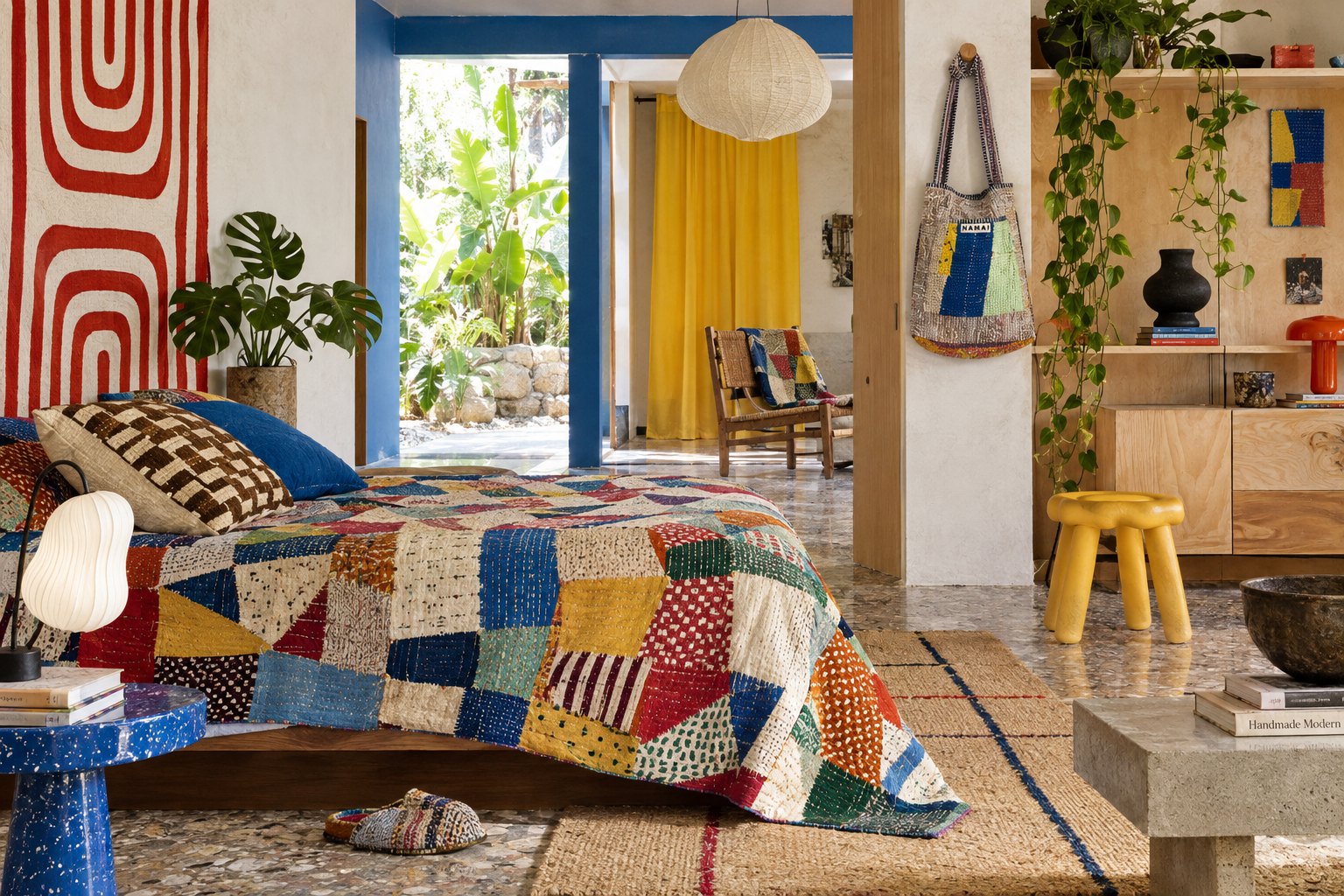
A bedroom with a patchwork kantha quilt on a low walnut bed, a red and white hand-painted wall hanging, a paper lantern, a rush chair and a yellow stool, a tropical garden through a blue doorway.
Dossier sceneBedroom · 1/3
01
The record

What it is, when it works, who it is for, and where it already exists.

How to use it

Record 022-CM - when it works, who it is for, what it looks like

FIELD 01

When to use it

  • Furniture, lighting, homeware and textile brands that make things by hand or with named makers
  • Hotels, restaurants and residences that want warmth without nostalgia
  • Galleries, craft fairs and design shops that sell objects with a story
  • Any brief that asks for modern and human in the same breath
FIELD 02

Perfect for

  • Furniture and lighting studios
  • Ceramics, textile and homeware brands
  • Boutique hotels and restaurants
  • Galleries and design shops
FIELD 03

What it looks like

  • Anni Albers's textiles at the Museum of Modern Art, 1949
  • Isamu Noguchi's Akari light sculptures in paper and bamboo, from 1951
  • Objects: USA, the touring studio craft survey that opened at the Smithsonian, 1969
  • The Loewe Foundation Craft Prize, founded in 2016

In the wild, Craft Modernism aesthetic real-world examples

Where this aesthetic shows up in the real world · ↗ opens the source site

Omoro Style GuideEvery aesthetic, every field on this page, in one PDF.
Get the guide →
02
The anatomy

Where Craft Modernism came from, what makes it recognisable, and the fingerprint it leaves.

History, Craft Modernism aesthetic history

1940s to now · The Bauhaus workshops, then the postwar American studio craft movement

Modernism began in the workshop. When Walter Gropius opened the Bauhaus in Weimar in 1919, he asked artists to return to craft, and the school's weaving, metal, wood and ceramics workshops became the laboratory for modern design. Anni Albers entered the weaving workshop in the early 1920s; in 1949 her show at the Museum of Modern Art in New York was the first there devoted to a textile artist.

After the Second World War, the studio craft movement made the argument its own. Independent makers offered an alternative to the anonymity of the corporate world: George Nakashima built furniture near New Hope, Pennsylvania, from 1943, leaving the free edge of the slab and stitching cracks with butterfly joints; Isamu Noguchi began his Akari paper lamps in 1951; Peter Voulkos, Ruth Asawa and Harry Bertoia pushed clay, wire and metal toward sculpture. In 1969 Objects: USA opened at the Smithsonian with more than 500 works by 308 makers and toured to thirty-three venues, and in 2011 the Museum of Arts and Design surveyed the period as Crafting Modernism.

Today the idea is back at the centre of interiors and product design, as the reaction to flat, fast minimalism. The Loewe Foundation Craft Prize, founded in 2016 by Jonathan Anderson, made contemporary craft a luxury conversation, and furniture, lighting, textiles and hospitality now favour pieces with a traceable maker, simple modern forms and surfaces that show the hand: a visible joint, an uneven glaze, a quilt's running stitch.

Modern form, made by hand, with the maker's marks left in.

Omoro dossier · 022-CM

Visual markers, Craft Modernism aesthetic visual markers

The visual DNA: what makes it recognisable

typography

See the fonts
  • Humanist sans set small and calm
  • Warm book serifs for catalogues and labels
  • Maker's stamps, marks and letterpress

grid

  • One object per frame, photographed like a portrait
  • Generous margins and plain grounds
  • Rooms with few pieces and space between them
  • Process shown beside the finished piece

materials

  • Raw linen #CDB9A0 and oiled walnut #744D2D as the base
  • Cobalt #01396E, mustard #C07B08, tomato red #AD3221 and olive #6F6337 as colour blocks
  • Solid wood, rush, stoneware, quilted cotton, handwoven wool and paper
  • Limewash, plaster and terrazzo

motifs

  • Free-edge slabs and visible joinery
  • Wheel-thrown vessels with uneven glazes
  • Kantha and patchwork quilting in visible running stitch
  • Paper lanterns and hand-formed metal

Aesthetic profile

8-channel console with the fingerprint on its display. Save the card, or share the page

Aesthetic Profile
Craft Modernism
1940s to now · The Bauhaus workshops, then the postwar American studio craft movement
Attribute console · 022-CM
leans analog, warm, nostalgic
8 CH
FIG. 1
MaximalMinimalAnalogDigitalExpressiveRestrainedWarmCoolNostalgicFuturisticStructuredChaoticLightDarkOrganicGeometric
01Minimal
Maximal10%
02Analog
Digital90%
03Restrained
Expressive20%
04Cool
Warm60%
05Futuristic
Nostalgic40%
06Structured
Chaotic10%
07Dark
Light40%
08Organic
Geometric20%
AnalogWarmNostalgic
Omoro · Attribute console · 022-CM
omoro.io/styles/craft-modernism

Color Palettes, Craft Modernism color palettes and hex codes

The definitive color scheme for this aesthetic

Craft Modernism
#CDB9A0 · #01396E · #C07B08 · #AD3221 · #6F6337 · #744D2D
A sunlit workroom: raw linen and oiled walnut, with patchwork blocks of cobalt, mustard, tomato red and olive
Omoro Palette Pack575 curated palettes across every aesthetic, 5 export formats.
Get the palettes →

Adjacent Palettes, styles related to Craft Modernism

The colour of the styles sitting closest to this one

Bauhaus
Japandi
Wabi-Sabi
Artisanal Textile
03
The direction

How to shoot it, how to prompt it, and how to board it.

Photo Direction

How to shoot this aesthetic

"Shoot hand-made pieces in sunlit rooms: bold patchwork, real materials and every stitch in focus"

Shot list

  • A workroom with a hand-stitched wall textile, a paper lantern, a worn wooden table of stoneware and quilted cloth, and one yellow wire chair
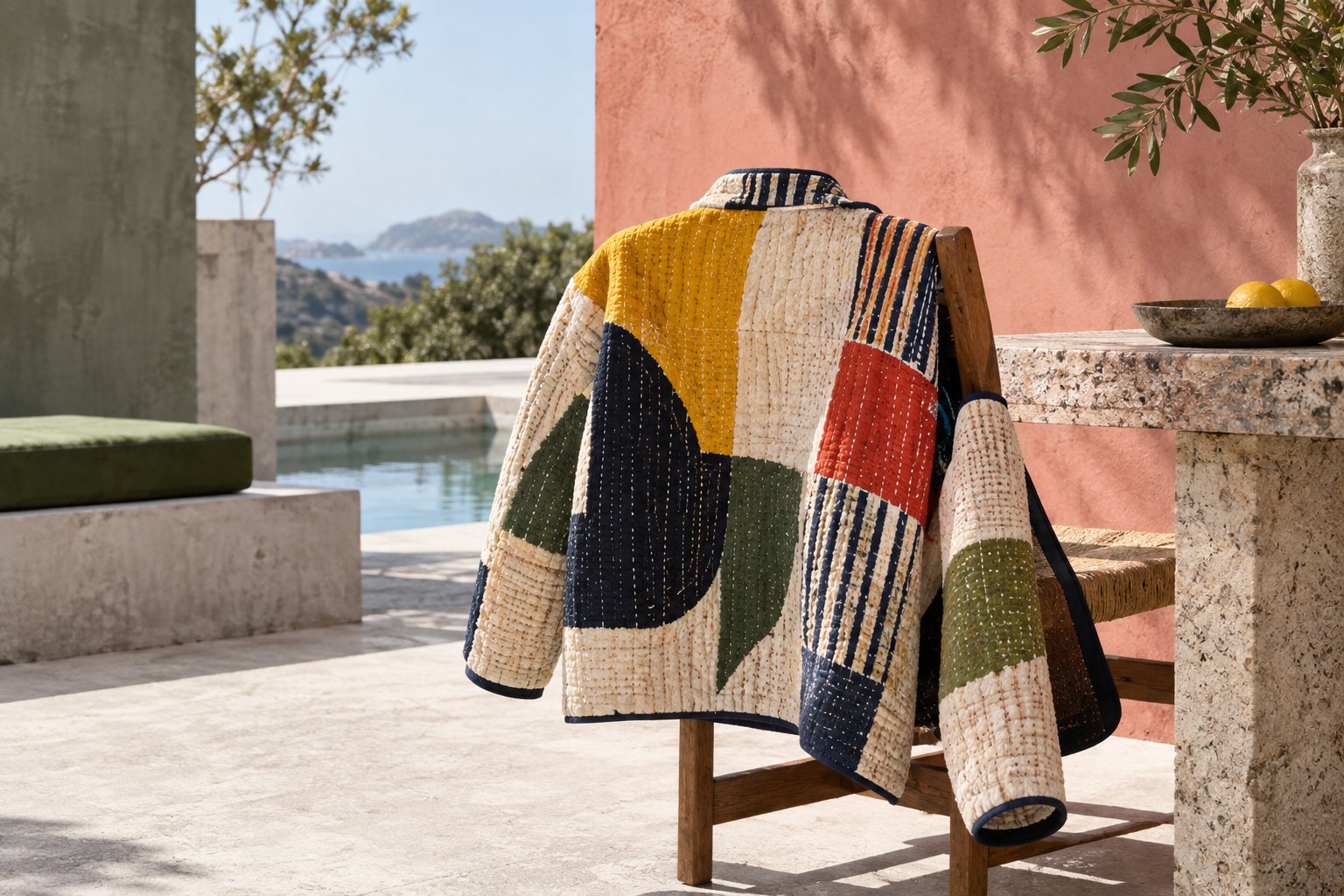
  • A quilted patchwork jacket hung on a rush chair on a sunlit terrace, the sea beyond, the running stitch sharp
  • A bedroom with a kantha quilt on a low wooden bed, a paper lantern and a garden through a painted doorway

Lighting

Bright, warm daylight: sun through a doorway or across a terrace, with soft shadows. Let it rake across the quilting, the glaze and the wood grain so the handwork reads. No flat studio light, no heavy grading.

Omoro Director's Briefs196 photo shot-lists like this one, ready to shoot from.
Get the briefs →

Generative Prompt

Drop this into Studio to generate in this aesthetic

Craft modernism, postwar studio craft meets contemporary interiors, simple modern forms made by hand, hand-stitched kantha patchwork quilts and textiles in bold colour blocks, wheel-thrown stoneware and speckled ceramics, worn wooden tables and rush-seat chairs, paper lanterns, a wire chair, limewashed and plaster walls, bright Mediterranean daylight with soft shadows, a palette of raw linen, cobalt blue, mustard, tomato red, olive and oiled walnut, the maker's marks and running stitches visible, no plastic, no printed patterns, no readable text

Paste as-is, or append your own subject

Mood Board

The record applied to your project. The record's kit is free; your brand, references and plates come with membership

Mood board
The Craft Modernism board
8 frames · 4 selected
FIG. 4
Raw LinenCDB9A0Cobalt01396EMustardC07B08Tomato RedAD3221Olive6F6337Oiled Walnut744D2D
Brand and references
IdleBrand and references open with membership
With membership: the brand's own facts and colours in every prompt, references carried into every frame, and the plates generated.
01 · Hero application
02 · Material and finish
03 · Palette in context
04 · Photography direction
05 · Pattern plate
06 · Object
07 · Environment
08 · Digital presence
Demo kit free, the rest with membershipThe record as a demo kit, free. Name a project and it is written for that
Omoro · Mood board · 022-CM
04
The judgement

Whether to use it, what it costs to do properly, and where it stands right now.

Creative verdict, Craft Modernism feasibility and strategic recommendation

Two written calls, seven meters, and when to walk away

Creative verdict
Should Craft Modernism be the call?
7 meters
FIG. 2
Assessment

Use real materials and name the makers. Keep the form simple and let the surface carry the character: a free edge, a visible joint, an uneven glaze. Photograph in raking daylight so the grain and the tool marks read. Printed wood grain, faux-rustic finishes and the word artisan on factory goods undo it immediately.

Verdict

Right when the brand makes or sells things that are genuinely made well: furniture, lighting, ceramics, textiles, hotels and restaurants. It rewards real materials, named makers and patience, and exposes anything faked.

Production cost
High

Solid wood, stoneware and handwoven cloth cost what they cost, and commissioning named makers costs more.

Creative difficulty
Medium

The forms are modern and well understood; choosing the materials and the makers is the design.

Execution difficulty
High

The hand has to show without the object looking unfinished, and faked texture is spotted at once.

Risk of misuse
Medium

Faux craft is everywhere: printed grain, distressed finishes and handmade as a label on factory goods.

Prevalence
Emerging

Rising across interiors, hospitality and furniture as the reaction to flat, fast minimalism.

Longevity
Timeless

The studio craft argument is eighty years old and the objects it made are still collected and still in use.

Brand investment
High

Real materials and real makers cost more up front, and the pieces and the story last far longer.

Avoid if
The product is cheap, fast or disposable
The style promises time and care; a throwaway price or product contradicts it.
The texture will be printed or faked
Printed wood grain and faux-rustic finishes read as imitation at once, and the look depends on the real thing.
The brand needs to feel high-tech or futuristic
Warm wood, clay and cloth pull toward history and the hand.
Omoro · Creative verdict · 022-CM

Editorial Depth

A Pro feature: origins, practitioners, and pitfalls

Editorial depth
The Craft Modernism file
14 sections
FIG. 3
Context02Brands02Perception04Use04Index02
01Common MisconceptionThe principle beneath the surface
02Historical ContextOrigins, cultural moment, and reaction
03Brands That Accidentally Use This StyleNatural alignment, not category claims
04Brands That Perfectly Represent This StyleExceptional execution
05Psychological EffectHow visual decisions change perception
06Visual ChecklistInclude and avoid
07Creative FormulaThe visual system reduced to essentials
08Recognition SignalsHow to recognize it in two seconds
09When To Use This StyleContexts where the language performs
10Common Creative MistakesWhere imitation weakens the signal
11Best Brand ApplicationsIndustries with a natural advantage
12Creative Application AnalysisFit, feasibility, and production reality
13Related StylesClose languages and the key distinction
14Visual DNA SummaryThe sentence to remember
The editorial depth, with membershipOpening soon
Omoro · Editorial depth · 022-CM
05
The index

Neighbours, cross-references, blends, and the questions people ask.

Related concepts

Connected across the creative knowledge graph

Cultural relevance, Craft Modernism cultural relevance today

Where it stands now, and what it costs you to use it

Craft modernism answers a tiredness with interiors that all look the same. It keeps modernism's clarity, simple forms, honest structure and uncluttered rooms, and brings back what the flat version lost: warmth, texture and a person behind the object.

Its weakness is the fake. Printed wood grain, distressed finishes and handmade as a label on factory goods are everywhere, and they read as imitation at once. The work that lands uses real materials, names its makers and lets the surface carry the character.

Cross-references

BauhausThe school that put craft workshops at the heart of modern designJapandiThe warm-minimal interior formula it often furnishesWabi-SabiThe philosophy of imperfection its surfaces shareArtisanal TextileThe handwoven cloth that carries much of its warmth

Blend

Mix Craft Modernism with any style in the library

Craft Modernism×
50%50%
53% alike
Craft Modernism referenceBauhaus referenceCraft Modernism 50%Bauhaus 50%

Merged palette

#CDB9A0

#000000

#01396E

#E8291C

#C07B08

Leads analog, structured, nostalgic

Typography · from Craft Modernism

Raleway over Merriweather

Materials

  • Raw linen #CDB9A0 and oiled walnut #744D2D as the base
  • Cobalt #01396E, mustard #C07B08, tomato red #AD3221 and olive #6F6337 as colour blocks
  • Red, yellow, blue as pure hue: the color triad of the Itten color wheel

The calls this blend forces

These two disagree on 3 things, and a blend cannot average them: you pick a side. At this mix:

Organic or Geometric? Craft Modernism is organic, Bauhaus is geometric. This mix lands geometric.

Warm or Cool? Craft Modernism is warm, Bauhaus is cool. This mix lands warm.

Maximal or Minimal? Craft Modernism is maximal, Bauhaus is minimal. This mix lands minimal.

Use it

Craft modernism, postwar studio craft meets contemporary interiors, simple modern forms made by hand, hand-stitched kantha patchwork quilts and textiles in bold colour blocks, wheel-thrown stoneware and speckled ceramics, worn wooden tables and rush-seat chairs, paper lanterns, a wire chair, limewashed and plaster walls, bright Mediterranean daylight with soft shadows, a palette of raw linen, cobalt blue, mustard, tomato red, olive and oiled walnut, the maker's marks and running stitches visible, no plastic, no printed patterns, no readable text (50%), infused with Bauhaus design aesthetic with bold primary-color contrast, geometric shapes, functional art principles, Kandinsky-influenced composition, color palette strictly #CDB9A0 #000000 #01396E #E8291C #C07B08, leaning organic over geometric, warm over cool, maximal over minimal, overall character: analog, structured, nostalgic

One-click generation opens with the studio

About this aesthetic

What is craft modernism?

A design approach that pairs modern form with hand-made material: simple shapes carried by oiled wood, stoneware, paper lanterns and hand-stitched patchwork in bold colour blocks, with the maker's marks left visible. It descends from the Bauhaus workshops and the postwar studio craft movement.

Where does craft modernism come from?

From the Bauhaus, which put craft workshops at the heart of modern design in 1919, and from the American studio craft movement after 1945, when makers such as George Nakashima, Anni Albers, Isamu Noguchi and Peter Voulkos made modern objects by hand. Objects: USA in 1969 brought that work to a wide public.

How is it different from Japandi or wabi-sabi?

Japandi is a decorating formula that blends Japanese and Scandinavian minimalism, and wabi-sabi is a philosophy of imperfection and age. Craft modernism is about the object and its maker: a modern form, made by hand, from real material, and it can sit in any culture's room.

Build with the craft modernism aesthetic

Every style in the library is broken down like this one: the palette, the typography, the materials and the lineage.

Explore the style library →