When to use it
- Brands built on cloth, mills, dyeing and hand work
- Slow fashion, repair and made-to-last positioning
- Interiors and homeware where the textile leads
- Editorial that wants to show a maker's hand honestly
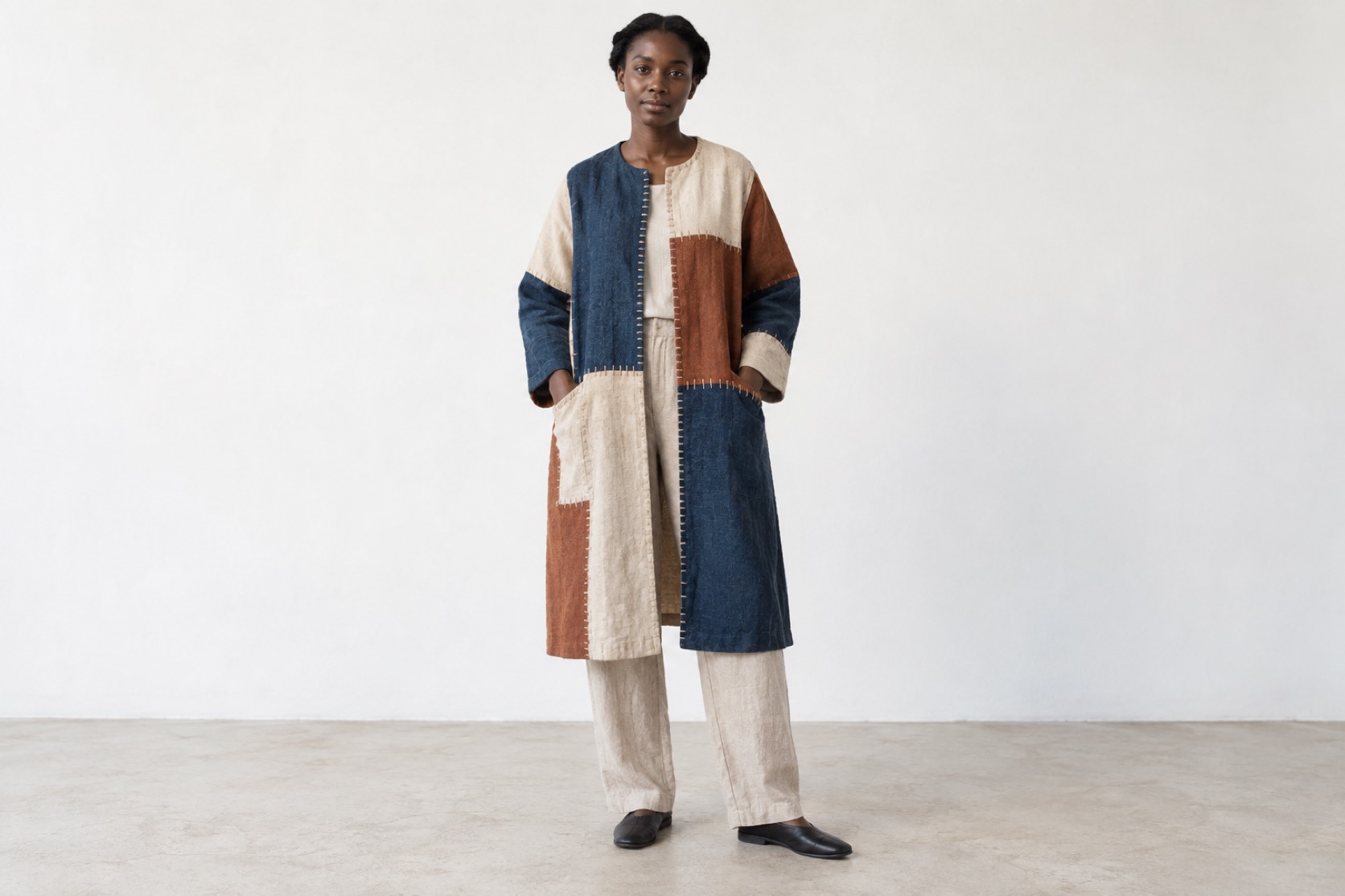
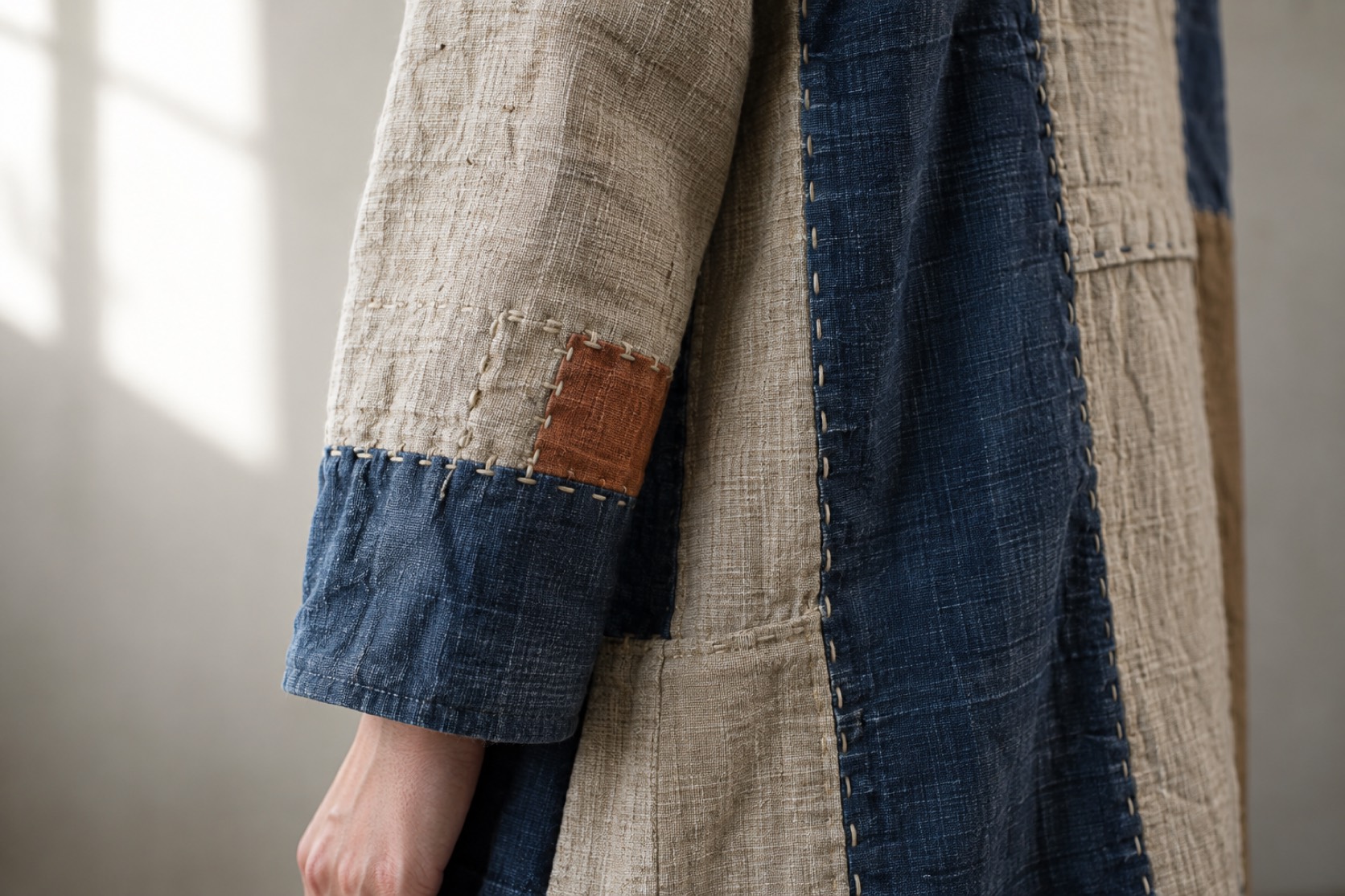
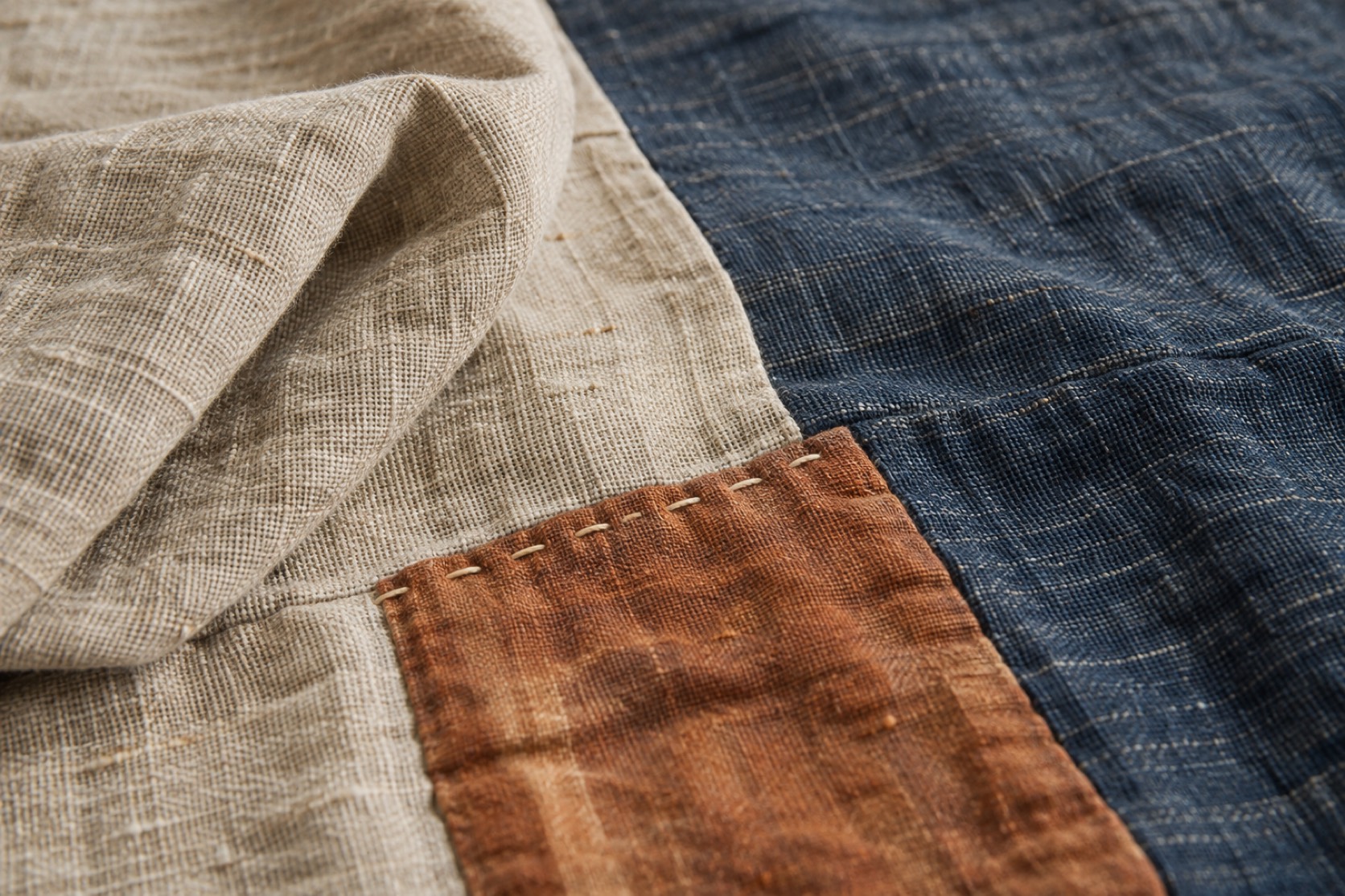
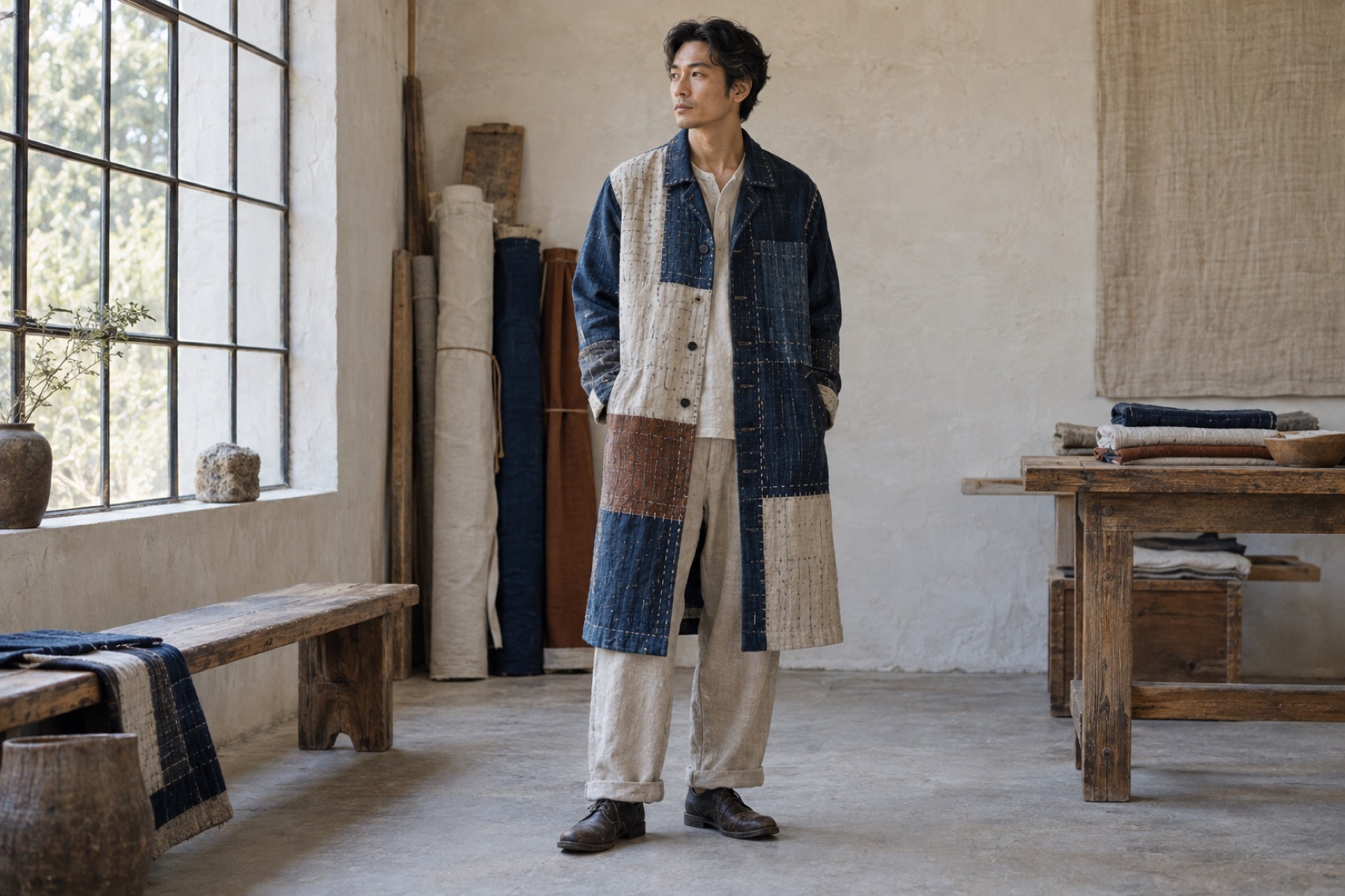
The textile as the subject: irregular weave, visible hand stitching, decided patchwork, hand-dyed variation and repair, in silhouettes plain enough to show it
What it is, when it works, who it is for, and where it already exists.
Record 020-AT - when it works, who it is for, what it looks like
Where this aesthetic shows up in the real world · ↗ opens the source site
Where Artisanal Textile came from, what makes it recognisable, and the fingerprint it leaves.
Long-standing folk traditions, revived from the 1970s · Japan, Bengal, the Outer Hebrides and everywhere cloth was scarce
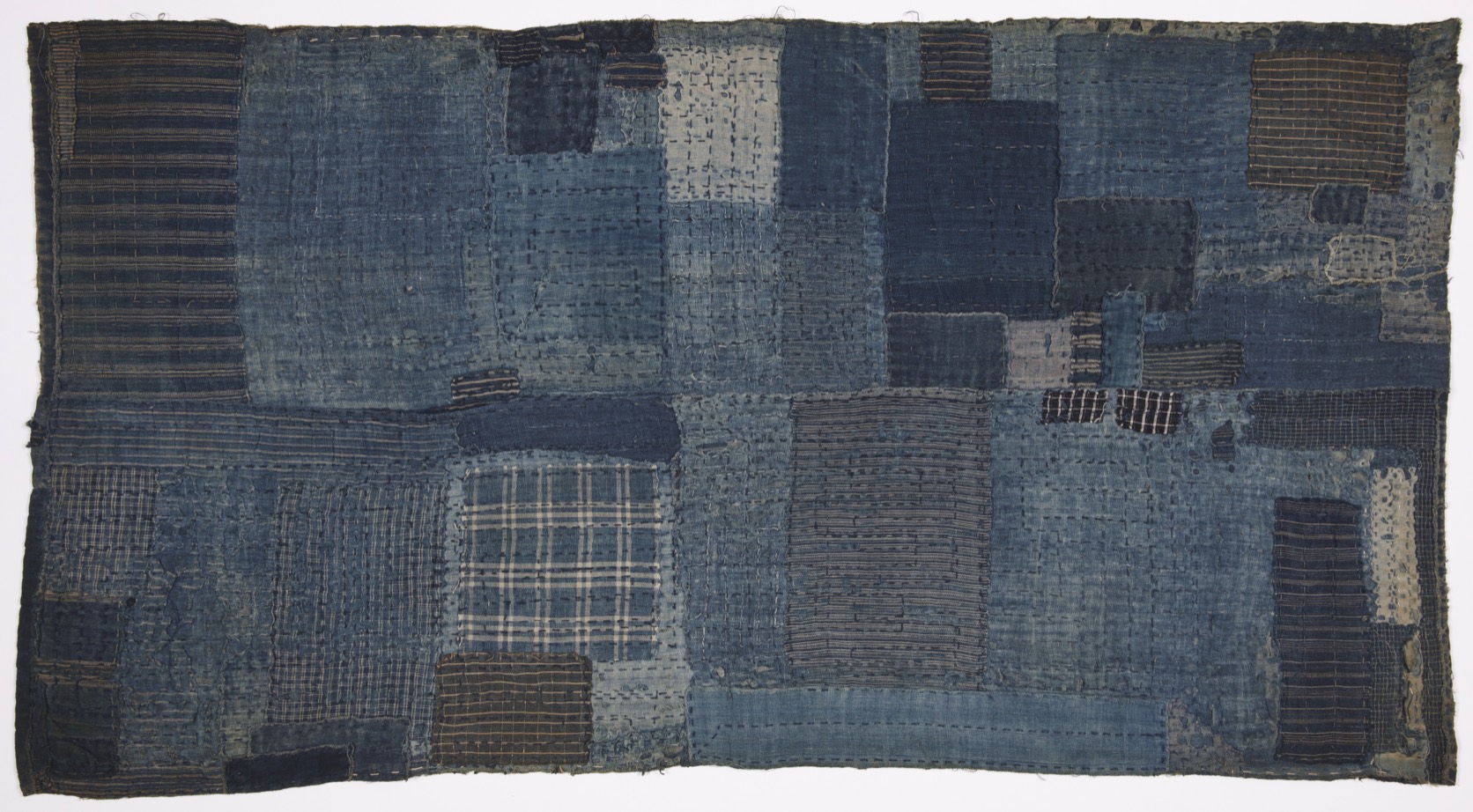
Most of what this style borrows was invented by necessity. Boro, from the Japanese for tattered, describes the hemp and cotton textiles of northern Japan, patched and re-patched across generations from the eighteenth century onward because cloth was too scarce to discard. The stitching that holds them, sashiko, is a plain running stitch worked in rows, and its beauty is a by-product of its job. In Bengal, kantha quilts were made by layering worn saris and running the same simple stitch across the whole surface, and the rippled texture that results is the mark of the method rather than a decorative choice.
Elsewhere the traditions were defended rather than improvised. Harris Tweed has been hand-woven at home in the Outer Hebrides for centuries, and the Orb certification mark was registered in 1910 to protect the definition. In India, khadi, hand-spun and hand-woven cotton, became a political material in the 1920s through the swadeshi movement, where wearing homespun cloth was an argument about self-sufficiency. In Japan, Yanagi Soetsu's mingei movement from 1925 made the case that anonymous handmade objects for daily use held a beauty that studio craft did not.
The contemporary version is a choice rather than a necessity, and that is where its honesty is tested. The techniques are specific and named, and their provenance is a matter of record, so a garment that claims boro should be patched and stitched like boro rather than merely worn-looking. The failures are consistent: invented provenance, motifs lifted from unrelated traditions and used as decoration, and digitally printed slub that is perfectly irregular in a way no hand ever managed. The real thing wavers.
“Fabric that shows the hand that made it, in a silhouette plain enough to let it.
The visual DNA: what makes it recognisable
8-channel console with the fingerprint on its display. Save the card, or share the page

The definitive color scheme for this aesthetic
How to shoot it, how to prompt it, and how to board it.
How to shoot this aesthetic
"Make the cloth the subject: weave, stitch, dye and repair, photographed at arm's length in daylight"
Shot list
Lighting
Daylight only, raking across the cloth so the weave and the stitch cast their own shadows. A window and a white card. Never flat frontal light, which erases texture, and never a warm gel, which fakes it.
Drop this into Studio to generate in this aesthetic
Artisanal textile, hand-loomed linen, wool or cotton with an irregular weave, visible hand stitching, decided patchwork, hand-dyed variation across the cloth and a repair left proud, worn in a plain silhouette that shows the material, undyed flax, indigo, walnut and madder, daylight on a wooden table or a loom, photographic, not a digital texture, no bohemian styling
The record applied to your project. The record's kit is free; your brand, references and plates come with membership
01 · Hero application02 · Material and finish03 · Palette in context04 · Photography directionWhether to use it, what it costs to do properly, and where it stands right now.
Two written calls, seven meters, and when to walk away
Let the cloth be the subject. Photograph the weave, the stitch and the join at arm's length in daylight, and keep the silhouette plain enough that nothing competes with the material. Name every technique accurately, boro, kantha, sashiko, patchwork, and use only what the garment actually carries. An invented provenance, a motif lifted from an unrelated tradition, or a texture that is perfect where a hand would waver, and the honesty the style depends on is gone.
Right when the brand's truth is in the material and it can name every technique it shows: mills, weavers, dyers, repair, homeware. The silhouette stays plain so the cloth leads. Provenance is a fact, not a mood; invent one, or mix traditions as decoration, and the style becomes the thing it was against.
Hand-loomed cloth by the metre and the time to stitch and dye it. Cheaper than couture, dearer than a mill run.
The material leads. The judgement is in restraint: a plain silhouette, a true technique, nothing borrowed for decoration.
Daylight and a macro lens do most of the work; the discipline is naming the technique correctly and not faking the hand.
A digital slub texture and a borrowed motif read as artisanal to no one who has held cloth.
Slow fashion and interiors reach for it constantly, usually as styling rather than as material.
Boro and kantha were made to last and to be mended, and the look has outlived every trend that borrowed it.
Cloth by the metre and a maker's time; the camera work is simple.
A Pro feature: origins, practitioners, and pitfalls
Neighbours, cross-references, blends, and the questions people ask.
Connected across the creative knowledge graph
Where it stands now, and what it costs you to use it
As mass production became total, cloth that shows a hand became the clearest available proof of a slower method. That makes this the natural language for mills, weavers, dyers, repair services and any brand whose claim is that the thing was made properly and will last.
It carries an obligation the other styles do not. These techniques belong to specific places and histories, and the traditions are documented. Naming them accurately is part of the work; inventing a provenance, or mixing motifs from unrelated cultures as decoration, turns a style built on honesty into the opposite.
Mix Artisanal Textile with any style in the library
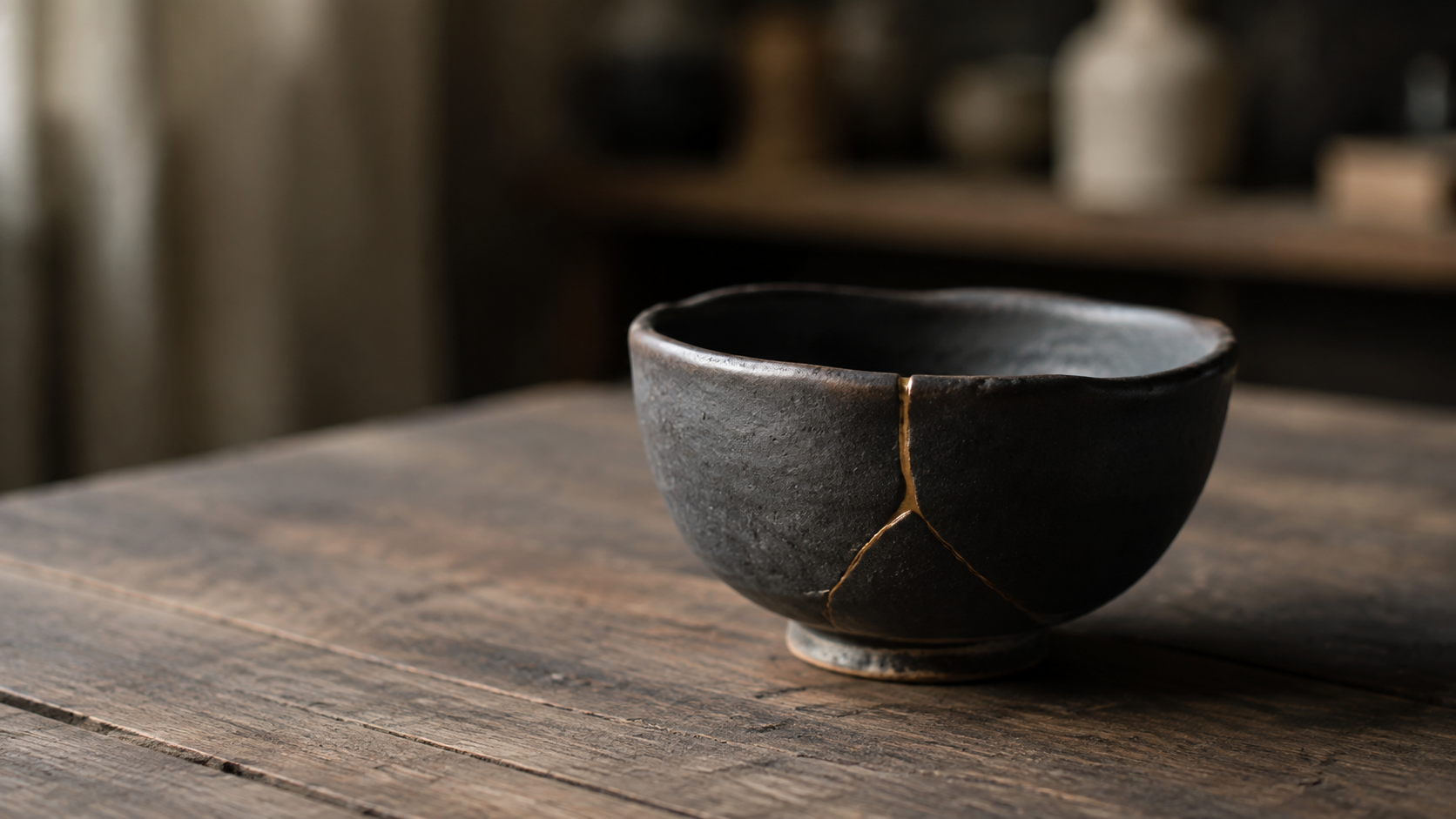 Artisanal Textile 50%Wabi-Sabi 50%
Merged palette
#D9CDB4
#4A3828
#2A3F6B
#8B7355
#C4A882
Leads analog, organic, nostalgic
Typography · from Artisanal Textile
Cormorant Garamond over Lora
Materials
Use it
Artisanal textile, hand-loomed linen, wool or cotton with an irregular weave, visible hand stitching, decided patchwork, hand-dyed variation across the cloth and a repair left proud, worn in a plain silhouette that shows the material, undyed flax, indigo, walnut and madder, daylight on a wooden table or a loom, photographic, not a digital texture, no bohemian styling (50%), infused with Wabi-sabi aesthetic finding beauty in imperfection and impermanence, Japanese philosophy of transient rustic simplicity, muted earthy tonal quiet, color palette strictly #D9CDB4 #4A3828 #2A3F6B #8B7355 #C4A882, overall character: analog, organic, nostalgic
Boro, from the Japanese for tattered, refers to textiles from northern Japan patched and re-patched over generations, largely from the eighteenth century onward, because cotton and hemp were scarce. The layers are held with sashiko, a plain running stitch worked in rows. The look is the record of repeated repair.
A quilting tradition of Bengal in which worn saris and cloths are layered and stitched together with a simple running stitch across the whole surface. The rippled texture comes from the stitching itself, and the technique was a way of giving worn cloth another life.
Look for irregularity that is genuinely irregular: slub that varies in thickness, dye that takes unevenly across a width, a stitch line that wavers, a repair that does not match. Digital textures repeat and are uniformly imperfect, which is a different thing from being imperfect.
Every style in the library is broken down like this one: the palette, the typography, the materials and the lineage.
Explore the style library →