Deconstructed Tailoring

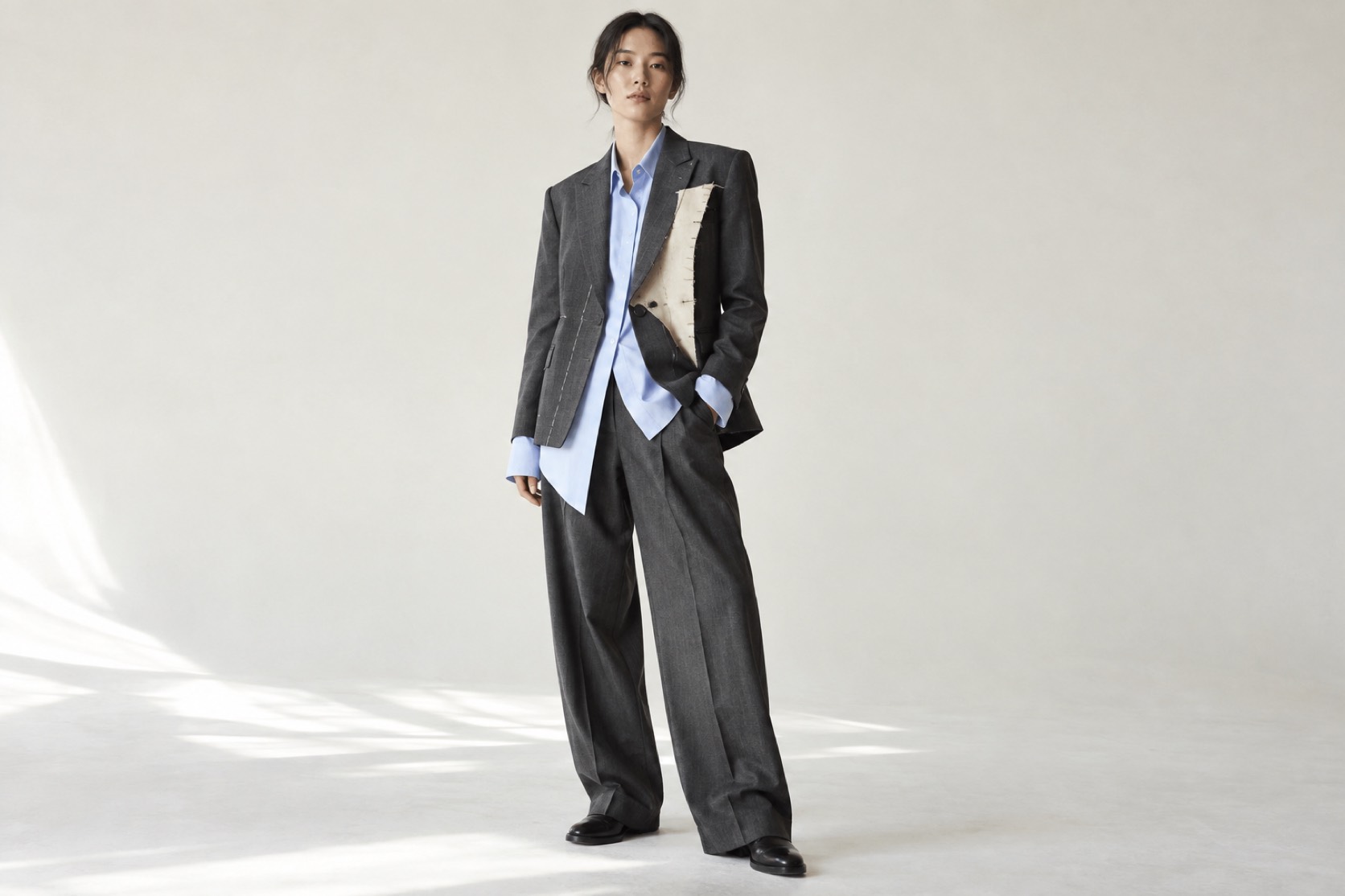
The tailored jacket taken apart in plain sight: displaced lapels, moved closures, visible canvas and basting, hems left raw on purpose, all of it still wearable

Compare Deconstructed Tailoring with another style →See the Deconstructed Tailoring typefaces →
Record023-DT
AestheticDeconstructed Tailoring
ClassAnalog / Restrained
StatusINGESTING
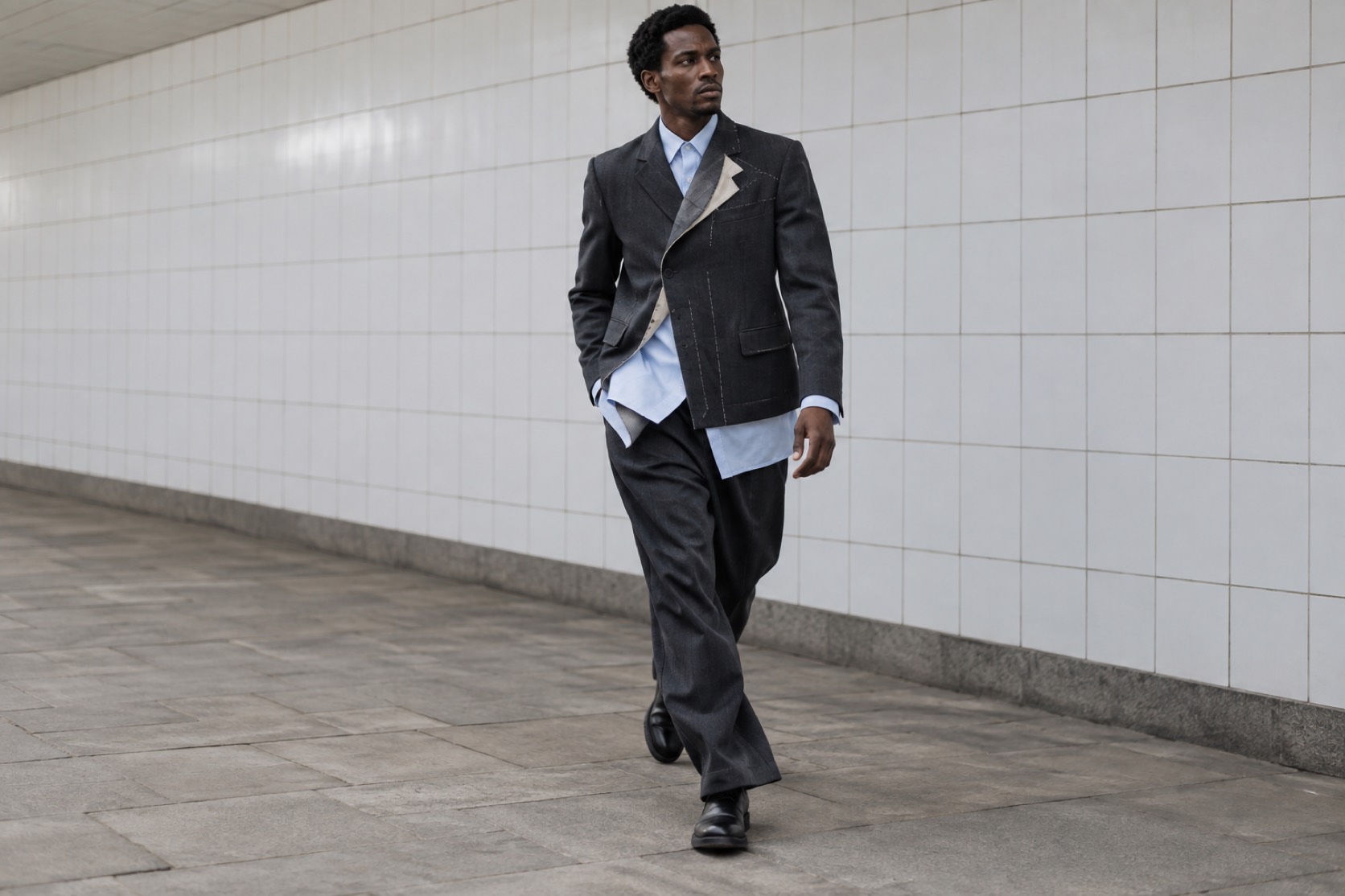
A model wears charcoal tailoring with exposed cream canvas and an asymmetric blue shirt.
Archive plate · Deconstructed Tailoring
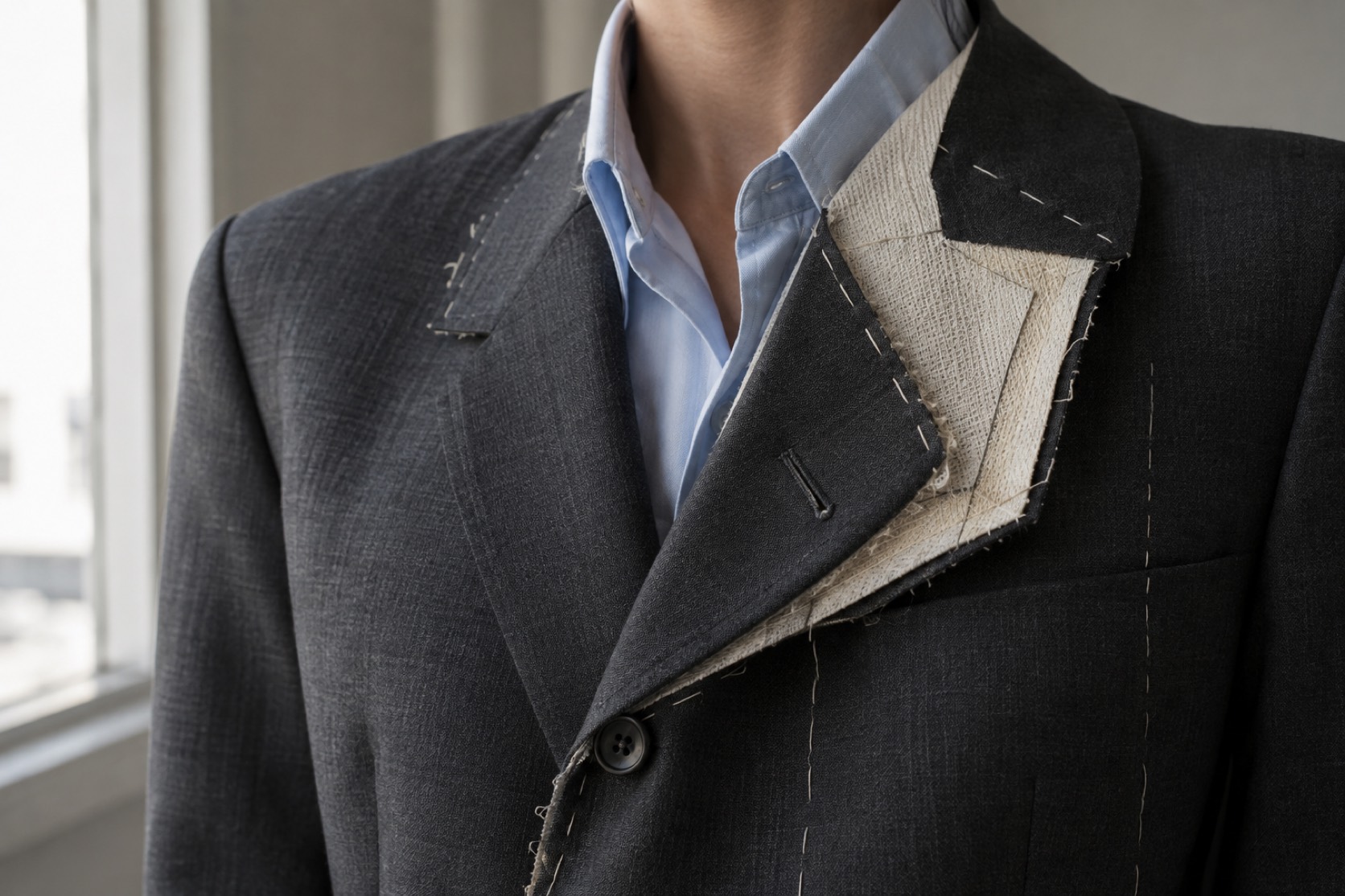
An opened charcoal lapel reveals cream canvas and white basting stitches.
Dossier sceneConstruction · 1/3
01
The record

What it is, when it works, who it is for, and where it already exists.

How to use it

Record 023-DT - when it works, who it is for, what it looks like

FIELD 01

When to use it

  • Menswear and tailoring brands that want intelligence rather than polish
  • Editorial about making, process and the studio
  • Identities for design practices that show their working
  • Anything where the seam is more interesting than the surface
FIELD 02

Perfect for

  • Tailoring and menswear labels
  • Design studios and architects
  • Fashion schools and ateliers
  • Publishers of craft and process
FIELD 03

What it looks like

  • Martin Margiela, first collection, Paris, 1988
  • Comme des Garcons, Body Meets Dress, Dress Meets Body, 1997
  • Yohji Yamamoto, Paris debut, 1981
  • Amy Spindler, Coming Apart, The New York Times, 1993

In the wild, Deconstructed Tailoring aesthetic real-world examples

Where this aesthetic shows up in the real world · ↗ opens the source site

Designers, Royal Academy of Fine Arts AntwerpAnn Demeulemeester and the Antwerp Six (opens in a new tab)1986
Criticism that named deconstruction in fashionAmy Spindler, Coming Apart, The New York Times (opens in a new tab)1993
Omoro Style GuideEvery aesthetic, every field on this page, in one PDF.
Get the guide →
02
The anatomy

Where Deconstructed Tailoring came from, what makes it recognisable, and the fingerprint it leaves.

History, Deconstructed Tailoring aesthetic history

1980s to present · Tokyo and Antwerp, by way of Paris

In 1981 Rei Kawakubo and Yohji Yamamoto showed in Paris, and the response in the press was hostile enough to become famous. The clothes were black, loose, asymmetric and in places deliberately unfinished, and they proposed that a garment could be interesting for how it was made rather than how it flattered. Five years later the six Antwerp graduates who became the Antwerp Six brought a related argument from Belgium, and in 1988 Martin Margiela's first Paris collection made the method explicit: linings shown as outerwear, shoulders unpicked and reset, seam allowances turned outward, tacking stitches left in.

The critic Amy Spindler named the tendency in The New York Times in 1993, borrowing deconstruction from Derrida by way of architecture. The borrowing was loose but the observation was exact: these designers were not destroying tailoring, they were disassembling it so its logic could be read. Comme des Garcons pushed furthest in 1997 with Body Meets Dress, Dress Meets Body, where padding relocated the body's shape entirely, and the argument moved from how a jacket is built to what a jacket is for.

Because the surface effects are easy and the thinking is not, the style has been copied more often than it has been understood. Distressed streetwear takes the raw edge and drops the question; a jacket with every hem left raw is decoration by another route. The version that lasts stays convincingly made and wearable, presses what should be pressed, and lets each garment expose one different structural decision, so the collection reads as a sequence of arguments rather than a single gesture.

The jacket with its reasoning showing, and every exposed seam answering a question about what a jacket is.

Omoro dossier · 023-DT

Visual markers, Deconstructed Tailoring aesthetic visual markers

The visual DNA: what makes it recognisable

typography

See the fonts
  • A typewriter or monospaced face, set like a docket or a pattern label
  • Labels, tags and stamped numbers used as the only ornament
  • Type laid out on a grid of hairlines, as a pattern piece is drawn

grid

  • Straight-on, flat and even, so every seam is legible
  • Garments shown open, reversed or half-made, with the inside as the subject
  • The atelier as the set: a cutting table, chalk, a rail of unfinished jackets
  • Pattern pieces pinned flat beside the finished garment

materials

  • Charcoal suiting #3A3A3A and chalk shirting #F4F1EA
  • Hair canvas #D6CBB3 and basting white #E8E0C8 as the exposed interior
  • Wool suiting, cotton poplin, tailoring canvas, basting thread, horn buttons

motifs

  • A lapel displaced from where the eye expects it
  • A closure moved off centre, with the buttonholes to prove it was meant
  • Seam allowances pressed outward and left proud
  • White basting stitches left in the finished garment

Aesthetic profile

8-channel console with the fingerprint on its display. Save the card, or share the page

Aesthetic Profile
Deconstructed Tailoring
1980s to present · Tokyo and Antwerp, by way of Paris
Attribute console · 023-DT
leans analog, restrained, cool
8 CH
FIG. 1
MinimalMaximalAnalogDigitalRestrainedExpressiveCoolWarmNostalgicFuturisticChaoticStructuredLightDarkGeometricOrganic
01Minimal
Maximal20%
02Analog
Digital70%
03Restrained
Expressive30%
04Cool
Warm30%
05Futuristic
Nostalgic20%
06Structured
Chaotic20%
07Dark
Light20%
08Organic
Geometric10%
AnalogRestrainedCool
Omoro · Attribute console · 023-DT
omoro.io/styles/deconstructed-tailoring

Color Palettes, Deconstructed Tailoring color palettes and hex codes

The definitive color scheme for this aesthetic

Deconstructed Tailoring
#3A3A3A · #F4F1EA · #D6CBB3 · #161616 · #E8E0C8
Charcoal and chalk with the canvas showing: the colour of a jacket before it is finished
Omoro Palette Pack575 curated palettes across every aesthetic, 5 export formats.
Get the palettes →
03
The direction

How to shoot it, how to prompt it, and how to board it.

Photo Direction

How to shoot this aesthetic

"Show the thinking: canvas, basting and a displaced lapel, photographed as flat and plainly as a pattern piece"

Shot list

  • Straight-on full-length shot of a charcoal wool jacket worn open, the left lapel displaced two inches down the front and the closure moved off centre, cotton shirting beneath, flat even light
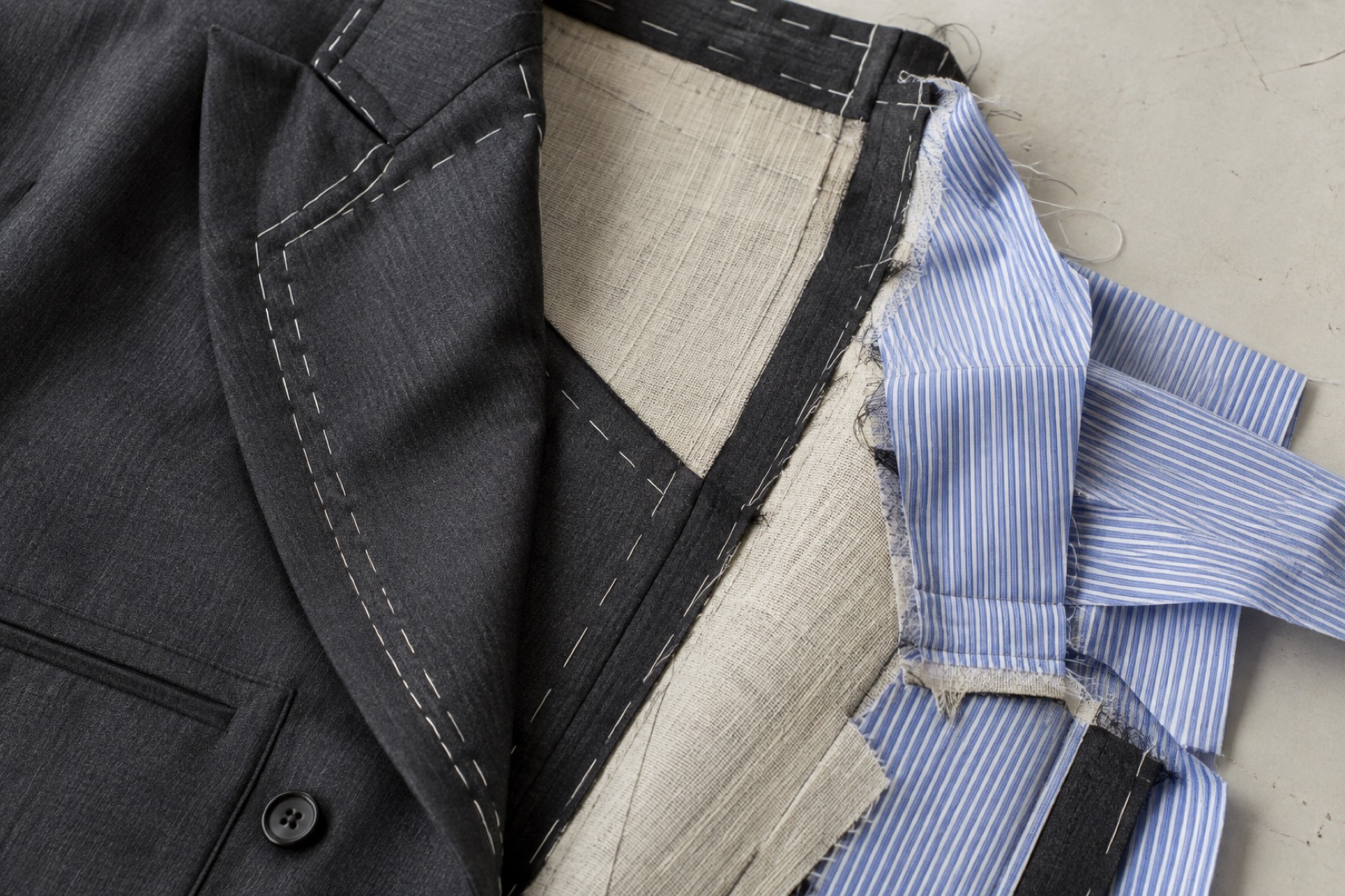
  • Waist-up shot of the same jacket from the side with the front panel folded back, hair canvas and chest piece exposed, white basting stitches running through them
  • Close construction detail of a shoulder seam with the allowance pressed to the outside and left proud, the raw wool edge and the basting thread sharp in the frame

Lighting

Flat and even, the way a pattern cutter would light a table. Two soft sources at equal power, no drama, no rim. Every seam has to be legible; a shadow across a lapel loses the point of the picture.

Omoro Director's Briefs188 photo shot-lists like this one, ready to shoot from.
Get the briefs →

Generative Prompt

Drop this into Studio to generate in this aesthetic

Deconstructed tailoring, a wool jacket with its construction exposed and rearranged, lapel displaced, closure set off centre, hair canvas and white basting visible, contrasting seam allowances, a hem left raw on purpose, cotton shirting underneath, still convincingly made and wearable, flat even light, charcoal, chalk and undyed canvas, no distressing, no random damage

Paste as-is, or append your own subject

Mood Board

The record applied to your project. The record's kit is free; your brand, references and plates come with membership

Mood board
The Deconstructed Tailoring board
8 frames · 4 selected
FIG. 4
Charcoal Suiting3A3A3AChalk ShirtingF4F1EAHair CanvasD6CBB3Black161616Basting WhiteE8E0C8
Brand and references
IdleBrand and references open with membership
With membership: the brand's own facts and colours in every prompt, references carried into every frame, and the plates generated.
01 · Hero application
02 · Material and finish
03 · Palette in context
04 · Photography direction
05 · Pattern plate
06 · Object
07 · Environment
08 · Digital presence
Demo kit free, the rest with membershipThe record as a demo kit, free. Name a project and it is written for that
Omoro · Mood board · 023-DT
04
The judgement

Whether to use it, what it costs to do properly, and where it stands right now.

Creative verdict, Deconstructed Tailoring feasibility and strategic recommendation

Two written calls, seven meters, and when to walk away

Creative verdict
Should Deconstructed Tailoring be the call?
7 meters
FIG. 2
Assessment

Show the thinking. Every exposed element, the canvas, the basting, the moved lapel, should answer the question of what a jacket is made of, and the answer should differ from garment to garment. Light it flat and even, as a pattern cutter would, and photograph it straight on so the construction reads as a diagram. The moment it looks distressed rather than unfinished, or every hem is raw the same way, it has become streetwear.

Verdict

Right when the brand wants to be seen thinking: tailoring, design practices, schools, anything that shows its working. The clothes must stay wearable and made; the exposure is of logic, not of wear. If the same raw hem appears on every piece, the system has stopped deciding and started decorating.

Production cost
Medium

Ordinary suiting and shirting, and a tailor who understands the jacket well enough to take it apart legibly.

Creative difficulty
High

Every displacement has to be a decision about the jacket's logic. A random cut reads as damage.

Execution difficulty
High

Exposed canvas and basting have to be neat to read as intentional; the raw hem must be the only raw hem.

Risk of misuse
High

Raw edges and visible seams are the easiest thing in fashion to fake and the hardest to mean.

Prevalence
Common

Every few seasons it returns to the runway; the intelligent version is rarer than the distressed one.

Longevity
Enduring

Margiela's questions about what a jacket is have been asked for thirty-five years and still are.

Brand investment
Medium

It needs a tailor and a point of view, not a budget.

Avoid if
The clothes have to look finished and polished
The whole idea is showing the construction. Hide it and there is nothing left but a jacket.
Wear and damage are the mood
Deconstruction exposes logic, not age. Distressing reads as streetwear and the intelligence goes.
Omoro · Creative verdict · 023-DT

Editorial Depth

A Pro feature: origins, practitioners, and pitfalls

Editorial depth
The Deconstructed Tailoring file
14 sections
FIG. 3
Context02Brands02Perception04Use04Index02
01Common MisconceptionThe principle beneath the surface
02Historical ContextOrigins, cultural moment, and reaction
03Brands That Accidentally Use This StyleNatural alignment, not category claims
04Brands That Perfectly Represent This StyleExceptional execution
05Psychological EffectHow visual decisions change perception
06Visual ChecklistInclude and avoid
07Creative FormulaThe visual system reduced to essentials
08Recognition SignalsHow to recognize it in two seconds
09When To Use This StyleContexts where the language performs
10Common Creative MistakesWhere imitation weakens the signal
11Best Brand ApplicationsIndustries with a natural advantage
12Creative Application AnalysisFit, feasibility, and production reality
13Related StylesClose languages and the key distinction
14Visual DNA SummaryThe sentence to remember
The editorial depth, with membershipOpening soon
Omoro · Editorial depth · 023-DT
05
The index

Neighbours, cross-references, blends, and the questions people ask.

Related concepts

Connected across the creative knowledge graph

Cultural relevance, Deconstructed Tailoring cultural relevance today

Where it stands now, and what it costs you to use it

Deconstruction is how fashion shows its working, and that makes it the natural language for brands whose value is judgement rather than polish: tailors, design studios, schools, publishers of process. It signals that the maker knows the rules well enough to move them, which is a claim polish cannot make.

Its risk is that the surface is trivially copyable. Raw edges and exposed seams can be applied to anything, and usually are. The test is whether each exposure is a different decision about construction, and whether the garment would still work if worn. A collection where every hem is raw the same way has stopped deciding.

Cross-references

Fashion DesignThe discipline whose rules this style takes apartSculptural CoutureThe other end of the same craft: one hides structure, the other reveals itBrutalismThe same honesty about materials and structure, in concrete rather than clothNormcoreShares the plain palette and the refusal of decoration, with none of the exposure

Blend

Mix Deconstructed Tailoring with any style in the library

Deconstructed Tailoring×
50%50%
37% alike
Deconstructed Tailoring referenceFashion Design referenceDeconstructed Tailoring 50%Fashion Design 50%

Merged palette

#3A3A3A

#2A2018

#F4F1EA

#8A7A6A

#D6CBB3

Leads analog, light, expressive

Typography · from Deconstructed Tailoring

IBM Plex Sans over IBM Plex Mono

Materials

  • Charcoal suiting #3A3A3A and chalk shirting #F4F1EA
  • Hair canvas #D6CBB3 and basting white #E8E0C8 as the exposed interior
  • No house palette: each fashion house has its own signature color register

The calls this blend forces

These two disagree on one thing, and a blend cannot average them: you pick a side. At this mix:

Restrained or Expressive? Deconstructed Tailoring is restrained, Fashion Design is expressive. This mix lands expressive.

Use it

Deconstructed tailoring, a wool jacket with its construction exposed and rearranged, lapel displaced, closure set off centre, hair canvas and white basting visible, contrasting seam allowances, a hem left raw on purpose, cotton shirting underneath, still convincingly made and wearable, flat even light, charcoal, chalk and undyed canvas, no distressing, no random damage (50%), infused with Fashion design aesthetic with considered silhouette and garment construction, runway-quality styling and fabric drape, editorial fashion-photography lighting, seasonal collection cohesion, haute couture attention to tailoring detail, color palette strictly #3A3A3A #2A2018 #F4F1EA #8A7A6A #D6CBB3, leaning restrained over expressive, overall character: analog, light, expressive

One-click generation opens with the studio

About this aesthetic

What is deconstruction in fashion?

A method of exposing and rearranging how a garment is built: showing canvas and linings, displacing lapels and closures, turning seam allowances outward, leaving basting in. It was named in fashion criticism in the early 1990s, after the work of Rei Kawakubo, Yohji Yamamoto, Martin Margiela and the Antwerp designers.

Is deconstructed tailoring the same as distressed clothing?

No. Distressing simulates wear and damage. Deconstruction exposes construction, and the garment stays convincingly made and wearable. A frayed hem that was cut and left is a decision; one that was sanded to look old is a different style entirely.

What is tailoring canvas and why is it visible here?

Hair canvas is the stiff interlining, traditionally with horsehair, that gives a jacket's chest and lapel their roll. It normally sits hidden between the outer cloth and the lining. Showing it puts the jacket's internal structure on the outside, which is the central move of the style.

Build with the deconstructed tailoring aesthetic

Every style in the library is broken down like this one: the palette, the typography, the materials and the lineage.

Explore the style library →