When to use it
- Homes, apartments and renovations with a retro-modern leaning
- Boutique hotels, bars and cafés
- Furniture and homeware brands
- Set design with a 1950s or 60s mood
The postwar modern home: warm wood, tapered legs, low lines and furniture designed for real life
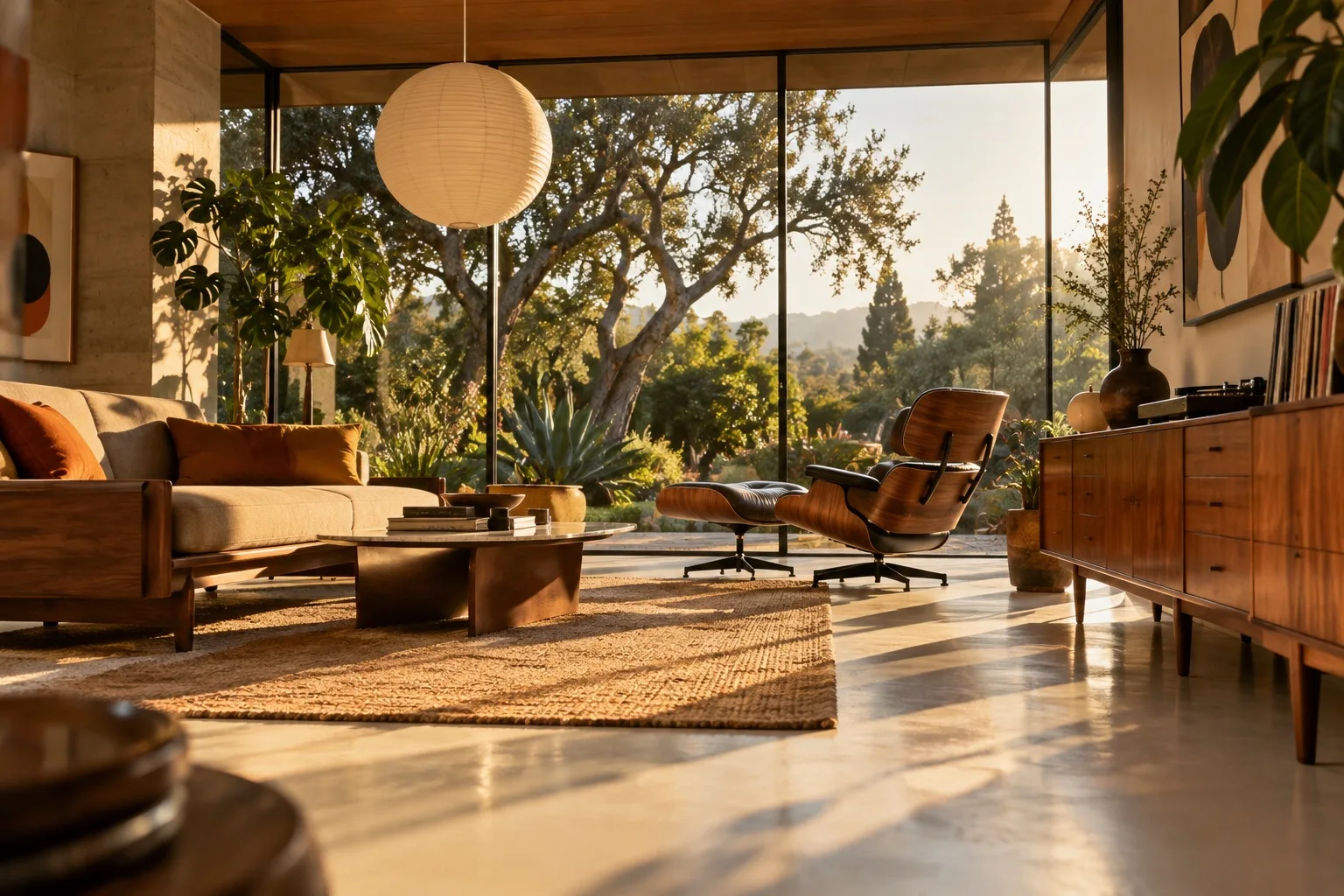
What it is, when it works, who it is for, and where it already exists.
Record 032-MC - when it works, who it is for, what it looks like
Where this aesthetic shows up in the real world · ↗ opens the source site
Where Mid-Century Modern came from, what makes it recognisable, and the fingerprint it leaves.
1945–1969 · American and Scandinavian postwar design
After the Second World War, designers set out to make modern design warm and affordable for new family homes. In the United States, Charles and Ray Eames experimented with moulded plywood and fibreglass, and Herman Miller and Knoll brought pieces by the Eameses, George Nelson and Eero Saarinen into homes and offices. The Eames Lounge Chair of 1956 became the style's best-known object.
Architecture shaped the rooms as much as the furniture did. The Case Study House programme in Los Angeles, run by Arts & Architecture magazine from 1945, showed open-plan houses with walls of glass, where the living room opened straight onto the garden. Scandinavian designers added teak and softer craftsmanship.
The name came later. Cara Greenberg's 1984 book Mid-Century Modern: Furniture of the 1950s gave the period its label, and the look returned in force in the 2000s, helped by television such as Mad Men. Original pieces became collectable and reproductions filled high-street shops.
“Warm wood, clean lines, postwar optimism.
The visual DNA: what makes it recognisable
8-channel console with the fingerprint on its display. Save the card, or share the page

The definitive color scheme for this aesthetic
The colour of the styles sitting closest to this one
How to shoot it, how to prompt it, and how to board it.
How to shoot this aesthetic
"Shoot the light, the wood and the lines together"
Shot list
Lighting
Late afternoon daylight through large windows, warm and directional. Add a practical lamp or two to glow in the corners.
Drop this into Studio to generate in this aesthetic
Mid-century modern interior: teak and walnut furniture with tapered legs, a low sofa, a moulded plywood lounge chair, a sunburst clock, mustard, olive and burnt orange accents, warm white walls, floor-to-ceiling windows with afternoon light, clean lines and optimism
The whole record as a portable skill for Claude, ChatGPT, Gemini, image and video models, or a human brief
The whole record, compiled into a skill another system can work inside: lineage, axes, palettes, type, materials, photography, verdicts and a critique checklist. Nothing is generated; it is the dossier, restructured.
The record applied to your project. The record's kit is free; your brand, references and plates come with membership
01 · Hero applicationWhether to use it, what it costs to do properly, and where it stands right now.
Two written calls, seven meters, and when to walk away
Anchor the room with a low sofa, one iconic chair and a long sideboard. Keep the walls light and the colour in the textiles. Avoid buying a full matching set; mixing periods keeps it from looking like a film set.
Right for homes, bars and hotels that want warmth, optimism and clean lines. Mix one or two genuine classics with simple modern pieces so the room feels lived in rather than like a period set.
Originals cost a lot; reproductions and vintage finds bring it down.
The vocabulary is well known and easy to follow.
Furniture and lighting do most of the work.
Easy to get right; the risk is a themed, museum-like room.
A staple of furniture retail for two decades.
The classic pieces have stayed in production and demand for seventy years.
Original pieces are expensive; good reproductions are widely available.
A Pro feature: origins, practitioners, and pitfalls
Neighbours, cross-references, blends, and the questions people ask.
Connected across the creative knowledge graph
Where it stands now, and what it costs you to use it
Mid-century modern is one of the most searched and bought furniture styles, and its classic pieces remain in production today.
It gives a home warmth without clutter, which is why it mixes easily with Scandinavian, Japandi and organic modern rooms.
Mix Mid-Century Modern with any style in the library
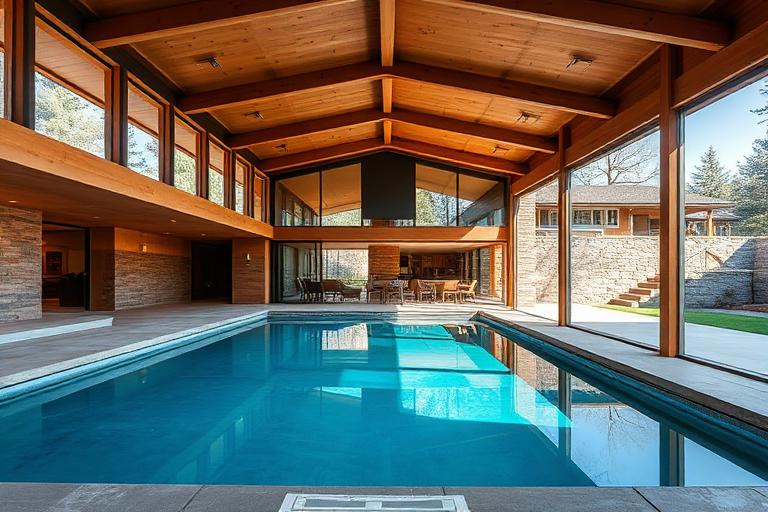 Mid-Century Modern 50%Mid-Century Modern 50%
Merged palette
#9A5B34
#6B3410
#D4A017
#6B7038
#C4622D
Leads nostalgic, warm, structured
Typography · from Mid-Century Modern
Space Grotesk over Inter
Materials
Use it
Mid-century modern interior: teak and walnut furniture with tapered legs, a low sofa, a moulded plywood lounge chair, a sunburst clock, mustard, olive and burnt orange accents, warm white walls, floor-to-ceiling windows with afternoon light, clean lines and optimism (50%), infused with Mid-Century Modern architecture with post-war optimism, floor-to-ceiling glass, indoor-outdoor living, butterfly roofs, Eames and Neutra influence, Palm Springs warmth, stone and wood, color palette strictly #9A5B34 #6B3410 #D4A017 #6B7038 #C4622D, overall character: nostalgic, warm, structured
Clean lines, tapered or hairpin legs, low profiles, warm woods such as teak and walnut, and new materials of the time such as moulded plywood and fibreglass. Pieces are designed to be used every day rather than to impress.
Start with a low sofa and one iconic lounge chair, add a long wooden sideboard and a globe or cone lamp, and keep walls light. Bring in mustard, olive or burnt orange through cushions, rugs and art rather than painting everything.
Every style in the library is broken down like this one: the palette, the typography, the materials and the lineage.
Explore the style library →