When to use it
- Contemporary homes that want calm with warmth
- Spas, wellness centres and boutique hotels
- Restaurants and cafés with a natural, modern feel
- Beauty, wellness and homeware brands
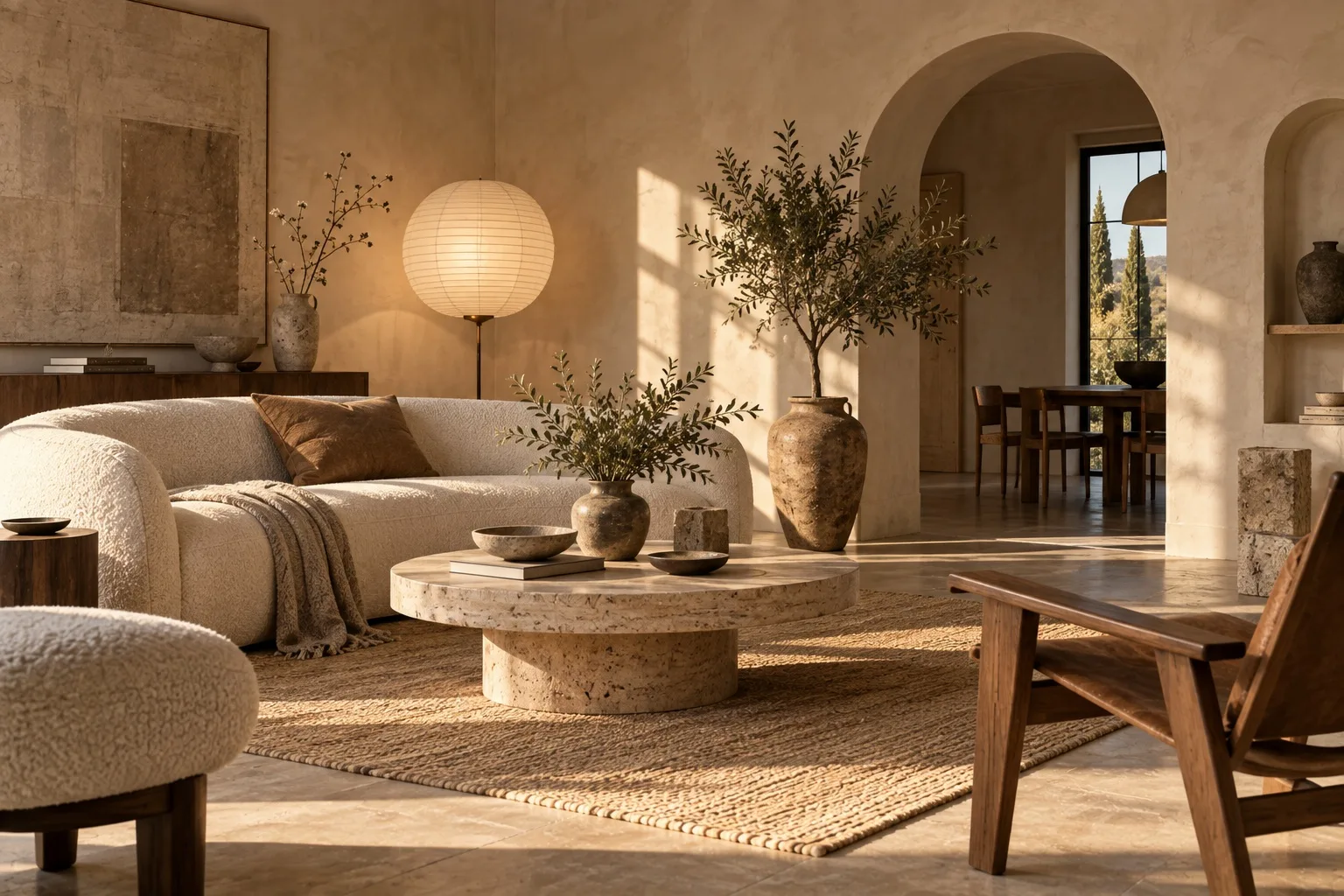
Minimalism softened by nature: curves, plaster, travertine, raw wood, linen and sculptural lamps
What it is, when it works, who it is for, and where it already exists.
Record 034-OM - when it works, who it is for, what it looks like
Where this aesthetic shows up in the real world · ↗ opens the source site
Where Organic Modern came from, what makes it recognisable, and the fingerprint it leaves.
2010s–present · Modernism blended with natural materials and organic form
The idea of organic design goes back to the architect Frank Lloyd Wright, who argued that buildings should grow out of their site and use materials honestly. Mid-century designers such as Isamu Noguchi, whose Akari paper lamps date from 1951, brought natural materials and soft sculptural shapes into modern rooms.
In the 2010s interior designers blended the clean lines of Scandinavian and mid-century modernism with a warmer, more tactile palette: plaster and limewash walls, stone, raw wood and linen. Designs from the past, such as Pierre Jeanneret's cane chairs for Chandigarh in India, became sought after again.
By the 2020s curves were everywhere, from boucle sofas to arched doorways, and organic modern became one of the most popular looks for new homes, hotels and spas.
“Minimalism, softened by nature.
The visual DNA: what makes it recognisable
8-channel console with the fingerprint on its display. Save the card, or share the page

The definitive color scheme for this aesthetic
The colour of the styles sitting closest to this one
How to shoot it, how to prompt it, and how to board it.
How to shoot this aesthetic
"Soft light on hard, natural materials"
Shot list
Lighting
Soft, warm, low-angle daylight to show texture; paper lamps and warm bulbs at dusk.
Drop this into Studio to generate in this aesthetic
Organic modern interior: limewash plaster walls, a curved boucle sofa, a travertine coffee table, raw oak and walnut, a paper lantern lamp, hand-thrown ceramics, linen curtains, an olive tree in a clay pot, soft warm light, calm, earthy and sculptural
The whole record as a portable skill for Claude, ChatGPT, Gemini, image and video models, or a human brief
The whole record, compiled into a skill another system can work inside: lineage, axes, palettes, type, materials, photography, verdicts and a critique checklist. Nothing is generated; it is the dossier, restructured.
The record applied to your project. The record's kit is free; your brand, references and plates come with membership
01 · Hero applicationWhether to use it, what it costs to do properly, and where it stands right now.
Two written calls, seven meters, and when to walk away
Start with walls: limewash or plaster adds depth. Choose one curved statement piece and natural materials around it. Light for texture and keep the palette warm.
Right for homes, spas and hotels that want calm with warmth. Use real materials, especially plaster, stone and wood, and add one sculptural piece so the room has character.
Limewash, stone and wood are more expensive than standard finishes.
Needs a sense of proportion to avoid blandness.
Plaster and stone need skilled trades.
The risk is a beige, curved room that looks like every other new build.
The dominant look of 2020s new homes and hotels.
Natural materials and calm last; the boucle-and-curve moment will date.
Plaster, stone and good wood cost more than paint and laminate.
A Pro feature: origins, practitioners, and pitfalls
Neighbours, cross-references, blends, and the questions people ask.
Connected across the creative knowledge graph
Where it stands now, and what it costs you to use it
Organic modern is among the most popular interior looks of the 2020s, visible in new homes, spas and boutique hotels.
It answers a wish for calm, natural rooms after years of screen time, with materials that invite touch.
Mix Organic Modern with any style in the library
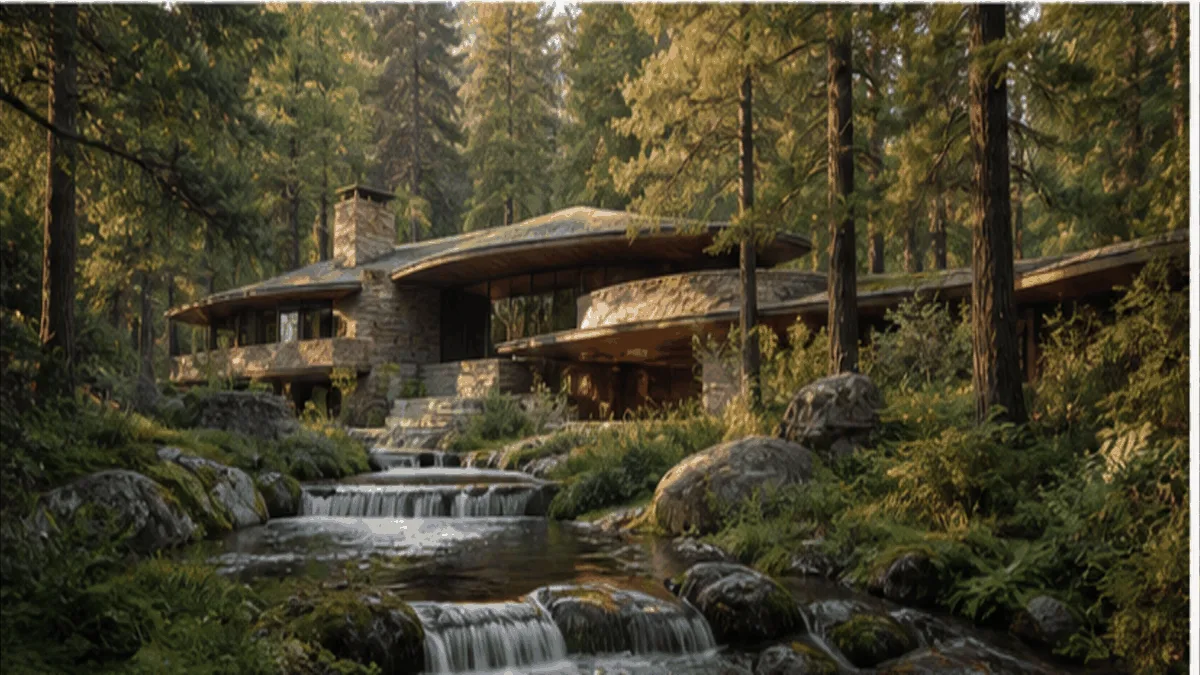 Organic Modern 50%Organic Architecture 50%
Merged palette
#EDE6DA
#2E3D1F
#C79C7E
#5C7A3E
#D8C7A8
Leads organic, warm, analog
Typography · from Organic Modern
Raleway over Merriweather
Materials
The calls this blend forces
These two disagree on 2 things, and a blend cannot average them: you pick a side. At this mix:
Restrained or Expressive? Organic Modern is restrained, Organic Architecture is expressive. This mix lands expressive.
Minimal or Maximal? Organic Modern is minimal, Organic Architecture is maximal. This mix lands minimal.
Use it
Organic modern interior: limewash plaster walls, a curved boucle sofa, a travertine coffee table, raw oak and walnut, a paper lantern lamp, hand-thrown ceramics, linen curtains, an olive tree in a clay pot, soft warm light, calm, earthy and sculptural (50%), infused with Frank Lloyd Wright organic architecture with horizontal prairie lines, integration with natural landscape, Fallingwater-inspired cantilevers over water, Usonian warmth, natural stone and wood, color palette strictly #EDE6DA #2E3D1F #C79C7E #5C7A3E #D8C7A8, leaning restrained over expressive, minimal over maximal, overall character: organic, warm, analog
Modern, simple layouts combined with natural materials and soft forms: curved furniture, plaster or limewash walls, stone, raw wood, linen and ceramics, in a warm, earthy palette.
They overlap. Japandi is stricter, lower and more geometric, borrowing from Japanese restraint. Organic modern is softer and more sculptural, with curves, plaster and clay.
Every style in the library is broken down like this one: the palette, the typography, the materials and the lineage.
Explore the style library →