Plain furniture and rooms made as an act of faith: peg rails, ladder-back chairs, oval boxes, whitewash and one line of colour, the American root of quiet craft
Where Shaker came from, what makes it recognisable, and the fingerprint it leaves.
History, Shaker aesthetic history
1774-present (peak 1840s) · Shaker communities of New York and New England
The Shakers were a religious community, the United Society of Believers, who came to America from England in 1774 under Ann Lee and built villages across New York and New England, with Mount Lebanon, founded in 1787, as the seat. They believed work was worship and that an object should be made as well as if an angel would use it, and by the 1840s, at their peak of around six thousand members, that belief had produced a complete design language.
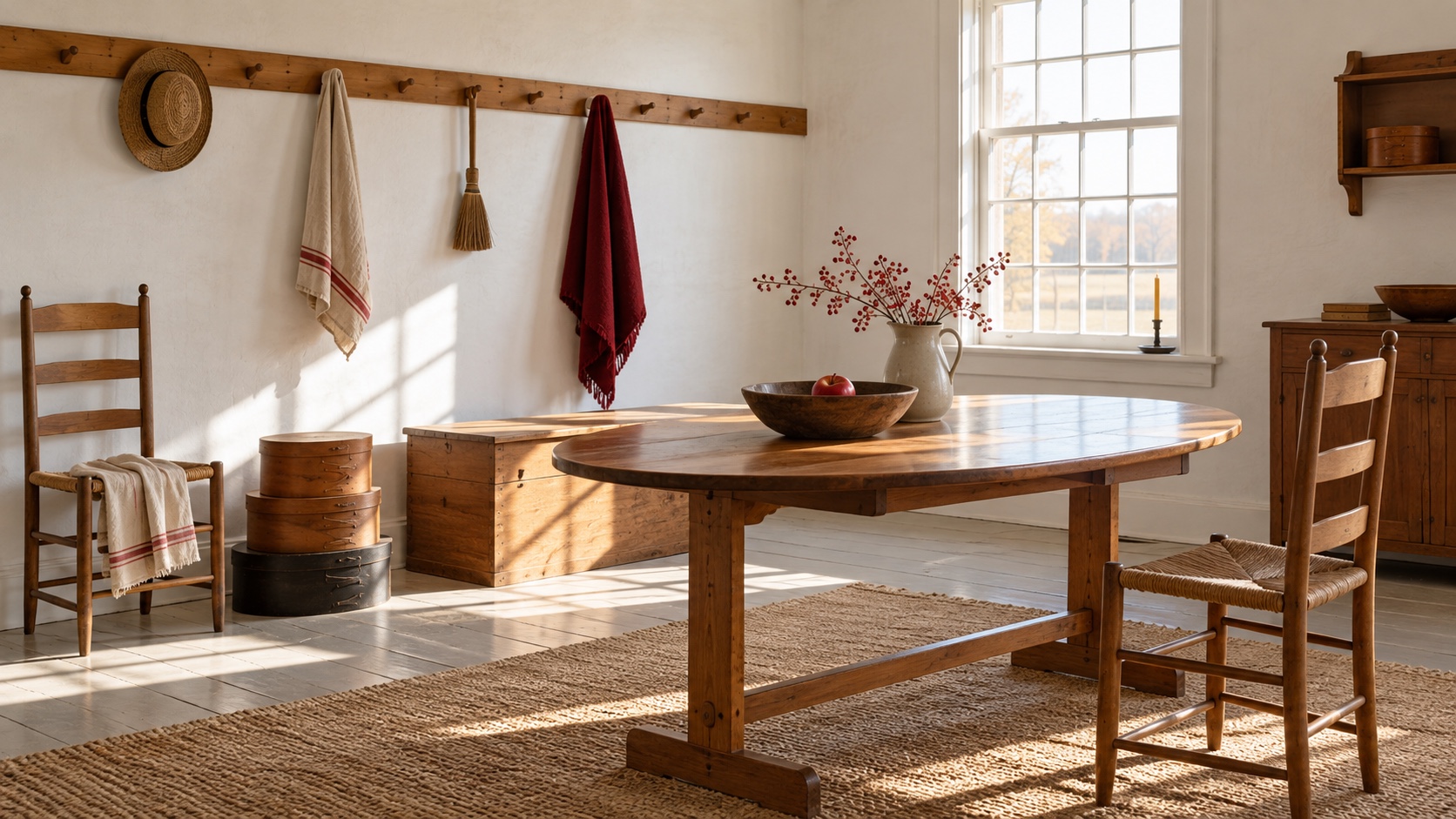
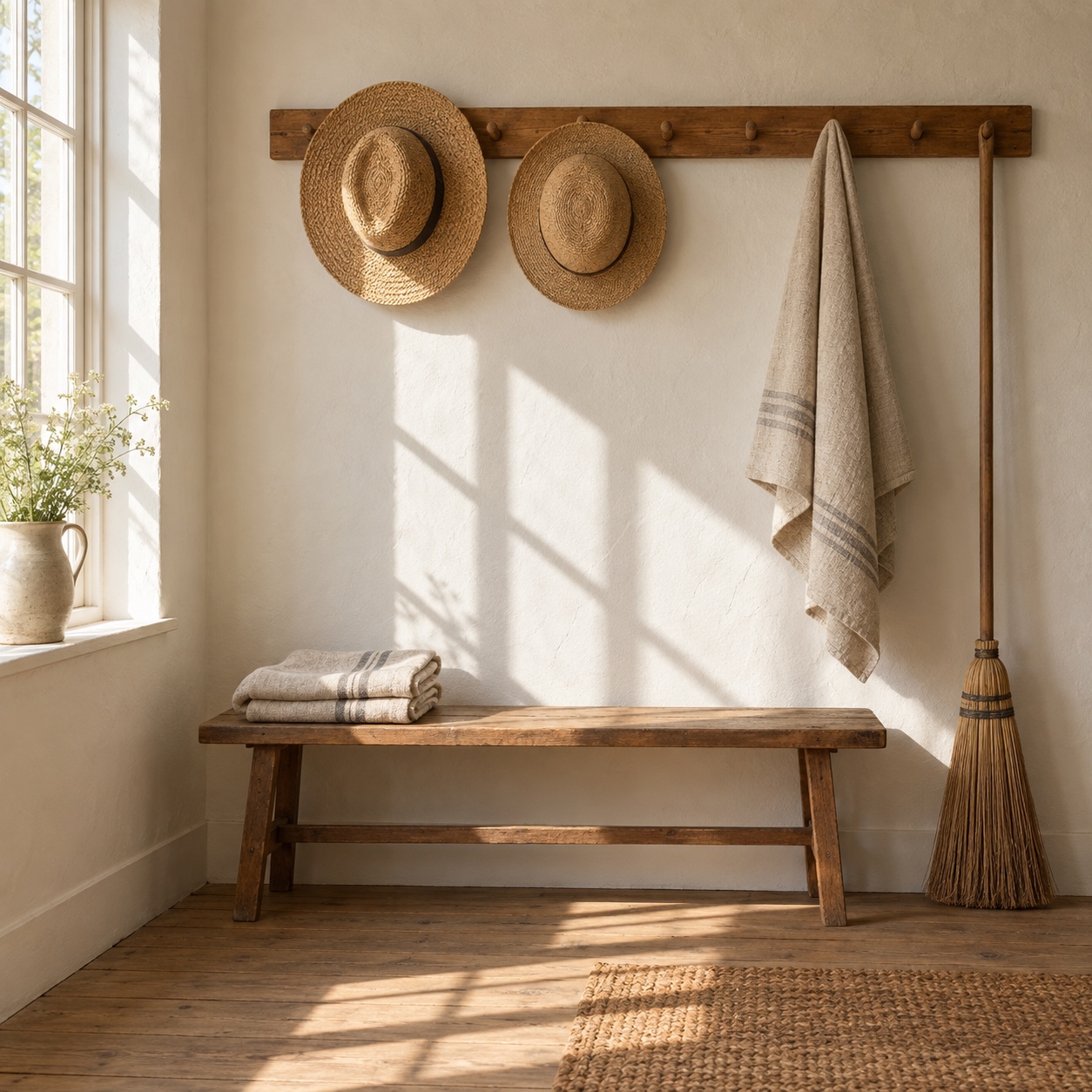
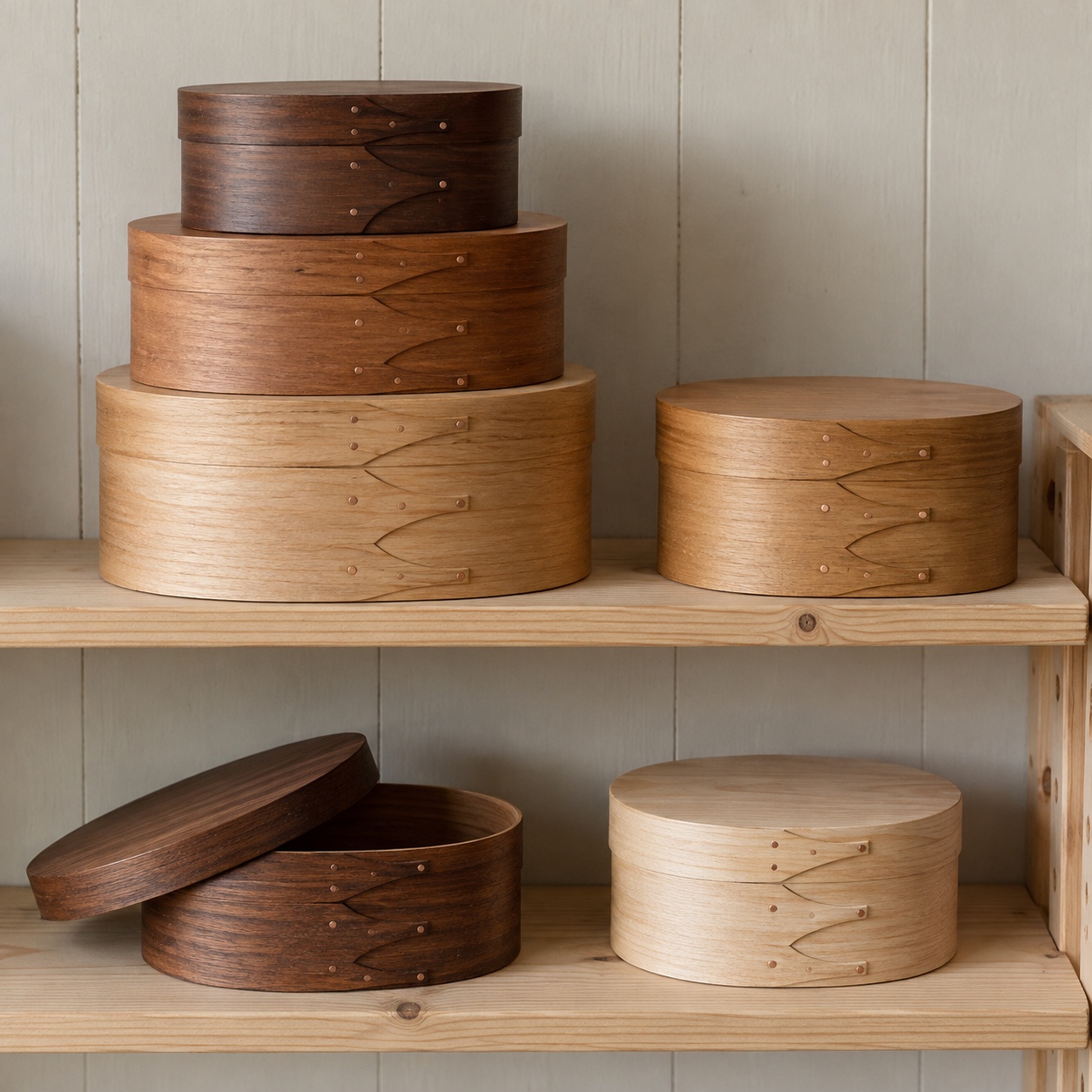
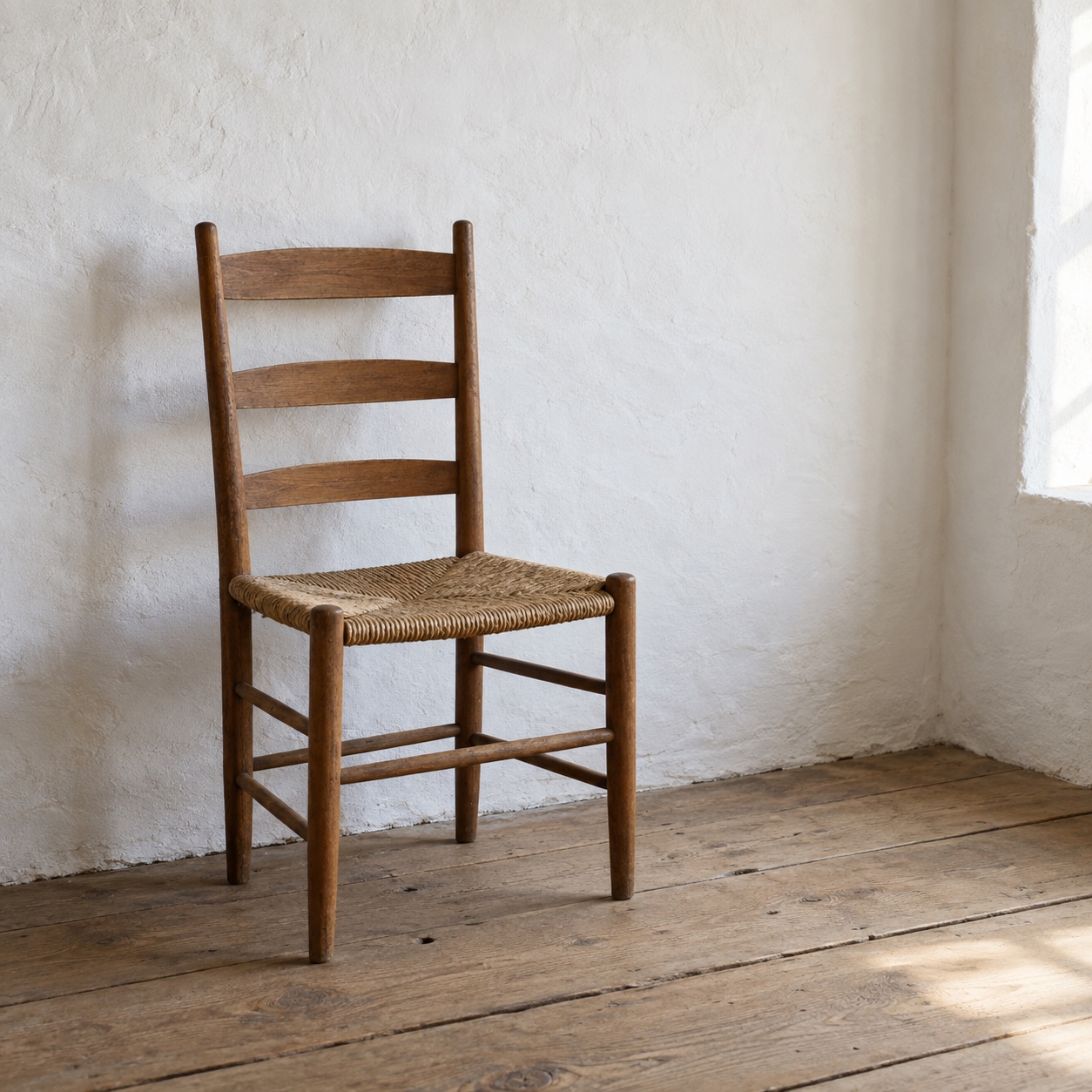
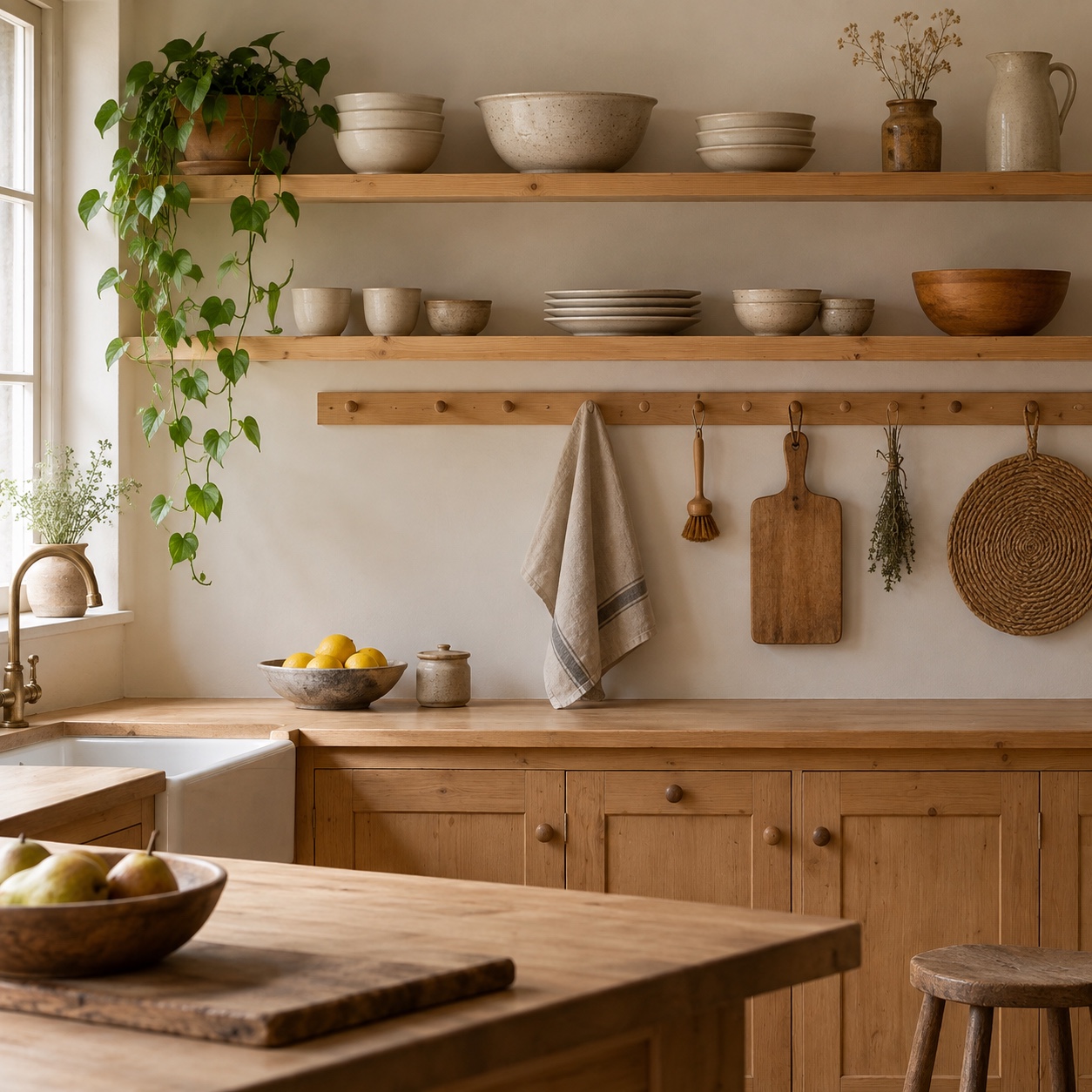
Its objects are the vocabulary.Ladder-back chairs light enough to hang on a peg rail that runs around every room; oval boxes with swallowtail fingers and copper tacks, made from around 1798; built-in cupboards and drawers; whitewashed walls, milk paint in blue, red and ochre, and woven tape seats.Nothing was decorated, everything was placed, and the rooms were kept empty enough to sweep.
The communities dwindled through the twentieth century, and today only Sabbathday Lake in Maine remains, but the design outlived the faith.Danish and postwar American designers studied it, the Whitney Museum's Shaker Design show in 1986 put it in the modern canon, and the current quiet-craft interior, pale wood, peg rails, plain cupboards, is its descendant whether or not the name is used.The honest version credits the source and keeps the rule: make it useful, make it well, and leave it alone.
How to shoot it, how to prompt it, and how to board it.
Photo Direction
How to shoot this aesthetic
"Shoot use, order and daylight: a peg rail, a chair, a box, and a room kept empty enough to sweep"
Shot list
A whitewashed room with a peg rail, two ladder-back chairs hung on it and window light on the floor
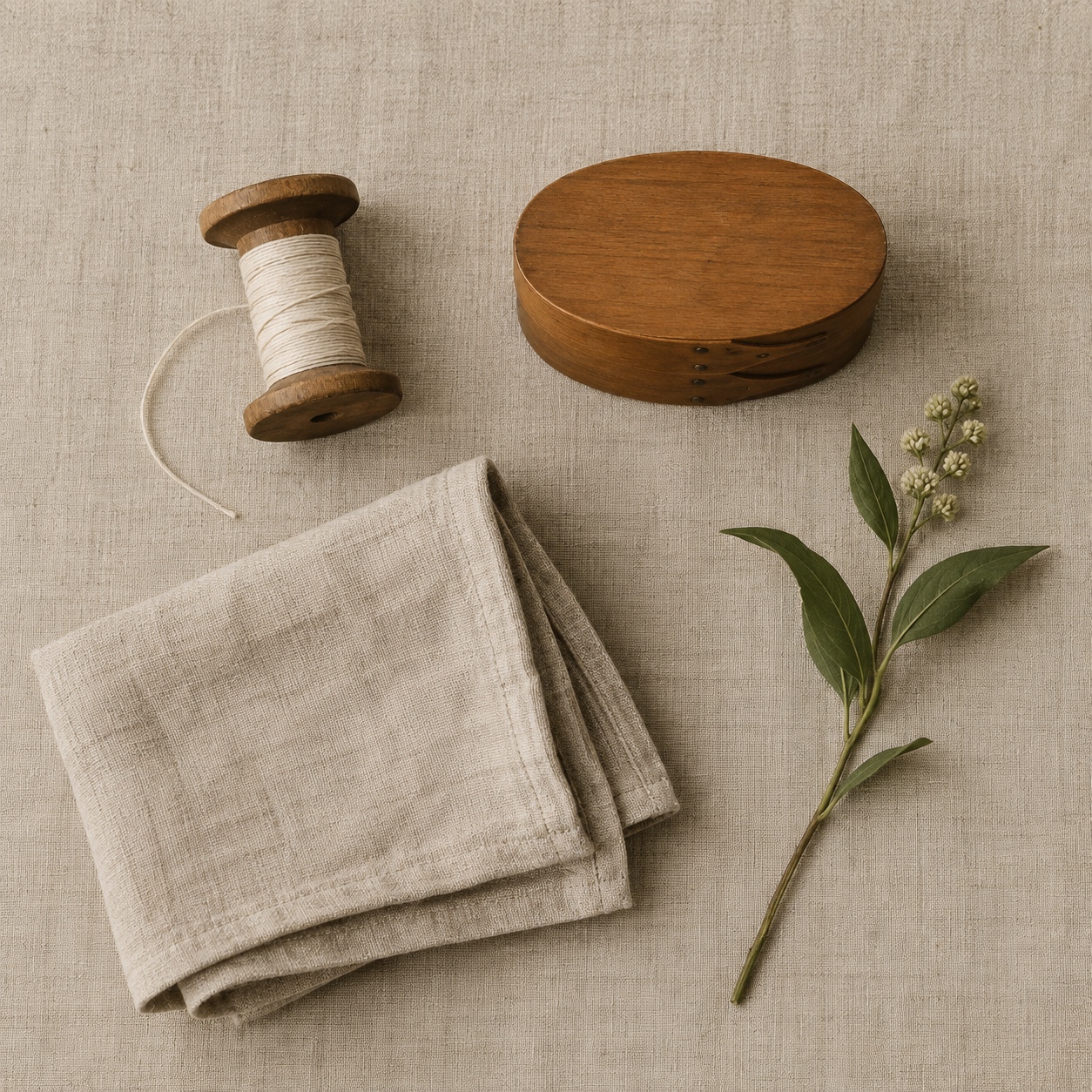
A stack of oval boxes in graded sizes on a plain table
A wall of built-in drawers with one drawer open and a folded cloth inside
Lighting
Plain daylight from tall windows, unmodified. Let the light fall across whitewash and wood so grain and joinery read; no fill, no gels, no golden-hour warmth added in the grade.
Drop this into Studio to generate in this aesthetic
Shaker aesthetic, a whitewashed room with a wooden peg rail, ladder-back chairs hung on the wall, oval boxes with swallowtail joints, a wall of built-in drawers, maple and pine, milk paint in one colour, Shaker blue or barn red, plain daylight from tall windows, everything useful and nothing decorated, calm and orderly, no clutter, no ornament, no readable text
Paste as-is, or append your own subject
Mood Board
The record applied to your project. The record's kit is free; your brand, references and plates come with membership
Demo kit free, the rest with membershipThe record as a demo kit, free. Name a project and it is written for that
Omoro · Mood board · 038-SH
04
The judgement
Whether to use it, what it costs to do properly, and where it stands right now.
Creative verdict, Shaker feasibility and strategic recommendation
Two written calls, seven meters, and when to walk away
Creative verdict
Should Shaker be the call?
7 meters
FIG. 2
Assessment
Build in real wood with visible joinery, paint with milk paint in one colour or none, and give the room a peg rail and built-in storage so surfaces stay empty. Photograph in plain daylight. Fake plainness, a room emptied for the shoot or a chair that exists to look simple, has the shape and none of the reason.
Verdict
Right when the brand makes useful things well and wants that to be the whole message: furniture, kitchens, tools, cabins and restaurants. It rewards honesty and exactness, and it exposes styling.
Production cost
Medium
Solid wood and real joinery cost what they cost; nothing else is expensive.
Creative difficulty
Low
The rules are strict and the vocabulary small; the design is mostly restraint.
Execution difficulty
High
Plainness shows every flaw: joinery, proportion and finish have to be exact.
Risk of misuse
Low
Plain and useful is hard to misuse; the risk is only that it looks like every other pale-wood room.
Prevalence
Common
The quiet-craft interior it underwrites is everywhere, usually under another name.
Longevity
Timeless
Two hundred and fifty years, and the objects are still made and used.
Brand investment
Medium
Real wood and joinery cost up front and last for generations.
Avoid if
The brand needs expression, colour or spectacle
Shaker is restraint; one line of milk paint is the most it allows.
The products are not well made
Plainness hides nothing; bad joinery or finish is the first thing seen.
The plan is to style an empty room
Shaker calm comes from use and storage; an emptied showroom reads as a set.
Omoro · Creative verdict · 038-SH
Editorial Depth
A Pro feature: origins, practitioners, and pitfalls
Editorial depth
The Shaker file
14 sections
FIG. 3
Context02Brands02Perception04Use04Index02
01Common MisconceptionThe principle beneath the surface
02Historical ContextOrigins, cultural moment, and reaction
03Brands That Accidentally Use This StyleNatural alignment, not category claims
04Brands That Perfectly Represent This StyleExceptional execution
07Creative FormulaThe visual system reduced to essentials
08Recognition SignalsHow to recognize it in two seconds
09When To Use This StyleContexts where the language performs
10Common Creative MistakesWhere imitation weakens the signal
11Best Brand ApplicationsIndustries with a natural advantage
12Creative Application AnalysisFit, feasibility, and production reality
13Related StylesClose languages and the key distinction
14Visual DNA SummaryThe sentence to remember
The editorial depth, with membershipOpening soon
Omoro · Editorial depth · 038-SH
05
The index
Neighbours, cross-references, blends, and the questions people ask.
Related concepts
Connected across the creative knowledge graph
Cultural relevance, Shaker cultural relevance today
Where it stands now, and what it costs you to use it
Shaker is the source under the quiet-craft interior: the peg rail, the plain cupboard, the pale wood room with almost nothing in it. Furniture makers, kitchen brands, hotels and slow-fashion labels reach for it when they want calm with a moral spine rather than calm as a look.
Its failure mode is the showroom. Shaker plainness came from use; a room styled empty for a photograph, or a chair that is decorative because it is plain, has the shape and none of the reason. The work that lands makes things that are used, keeps them well made, and leaves them alone.
Honey maple #B68861, cherry #713F1C and walnut #563017 as the woods, with milk paint in one colour where it is used
Raw linen #CDB9A0 and oiled walnut #744D2D as the base
The calls this blend forces
These two disagree on 2 things, and a blend cannot average them: you pick a side. At this mix:
Minimal or Maximal? Shaker is minimal, Craft Modernism is maximal. This mix lands minimal.
Restrained or Expressive? Shaker is restrained, Craft Modernism is expressive. This mix lands restrained.
Use it
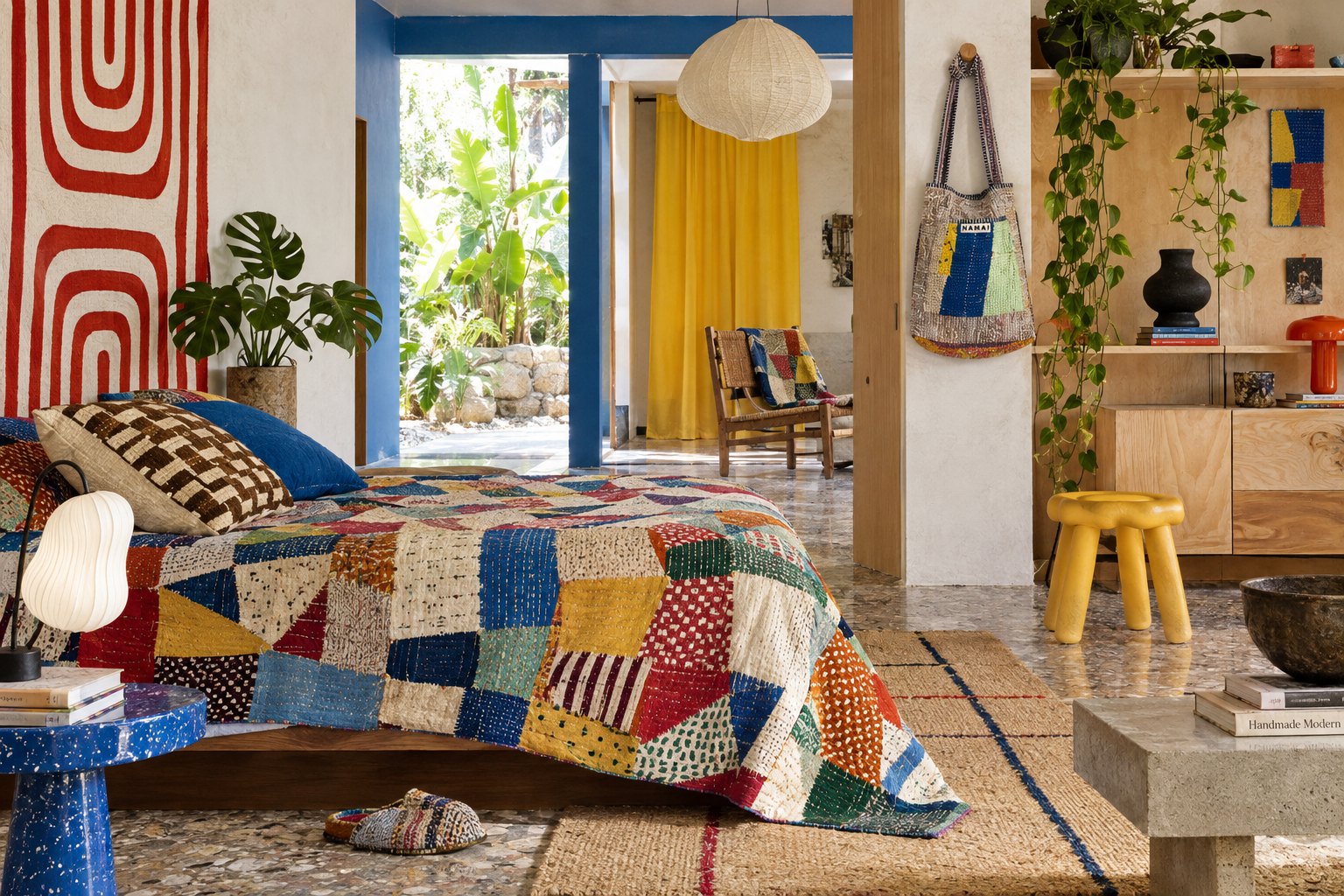
Shaker aesthetic, a whitewashed room with a wooden peg rail, ladder-back chairs hung on the wall, oval boxes with swallowtail joints, a wall of built-in drawers, maple and pine, milk paint in one colour, Shaker blue or barn red, plain daylight from tall windows, everything useful and nothing decorated, calm and orderly, no clutter, no ornament, no readable text (50%), infused with Craft modernism, postwar studio craft meets contemporary interiors, simple modern forms made by hand, hand-stitched kantha patchwork quilts and textiles in bold colour blocks, wheel-thrown stoneware and speckled ceramics, worn wooden tables and rush-seat chairs, paper lanterns, a wire chair, limewashed and plaster walls, bright Mediterranean daylight with soft shadows, a palette of raw linen, cobalt blue, mustard, tomato red, olive and oiled walnut, the maker's marks and running stitches visible, no plastic, no printed patterns, no readable text, color palette strictly #ECE5DD #CDB9A0 #01396E #B68861 #C07B08, leaning minimal over maximal, restrained over expressive, overall character: analog, nostalgic, warm
One-click generation opens with the studio
About this aesthetic
What is Shaker design?+
The furniture, objects and rooms made by the Shaker religious communities of New York and New England from the late 1700s: ladder-back chairs, peg rails, oval boxes, built-in drawers, whitewashed walls and milk paint in blue, red and ochre. Everything useful, nothing decorated, made as an act of faith.
Is Shaker the same as Scandinavian or Japandi?+
They share pale wood and plainness, but Shaker came first and from a different reason: work as worship. Scandinavian design is a modern industrial tradition, and Japandi is a decorating formula. Shaker rooms are stricter, more orderly and more useful, with storage built in and surfaces kept empty.
Why does it feel so calm?+
Because everything has a place. Peg rails, built-in drawers and hung chairs keep the floor and surfaces clear, colour is limited to one milk-paint line, and the proportions are light. The calm is a by-product of order, which is why it survives styling badly.
How do you use it without copying a museum?+
Keep the rule rather than the objects: make things for use, in real wood with visible joinery, painted in one milk-paint colour if at all, and give the room a datum line and built-in storage. Then let the brand's own objects live in that order.
Build with the shaker aesthetic
Every style in the library is broken down like this one: the palette, the typography, the materials and the lineage.