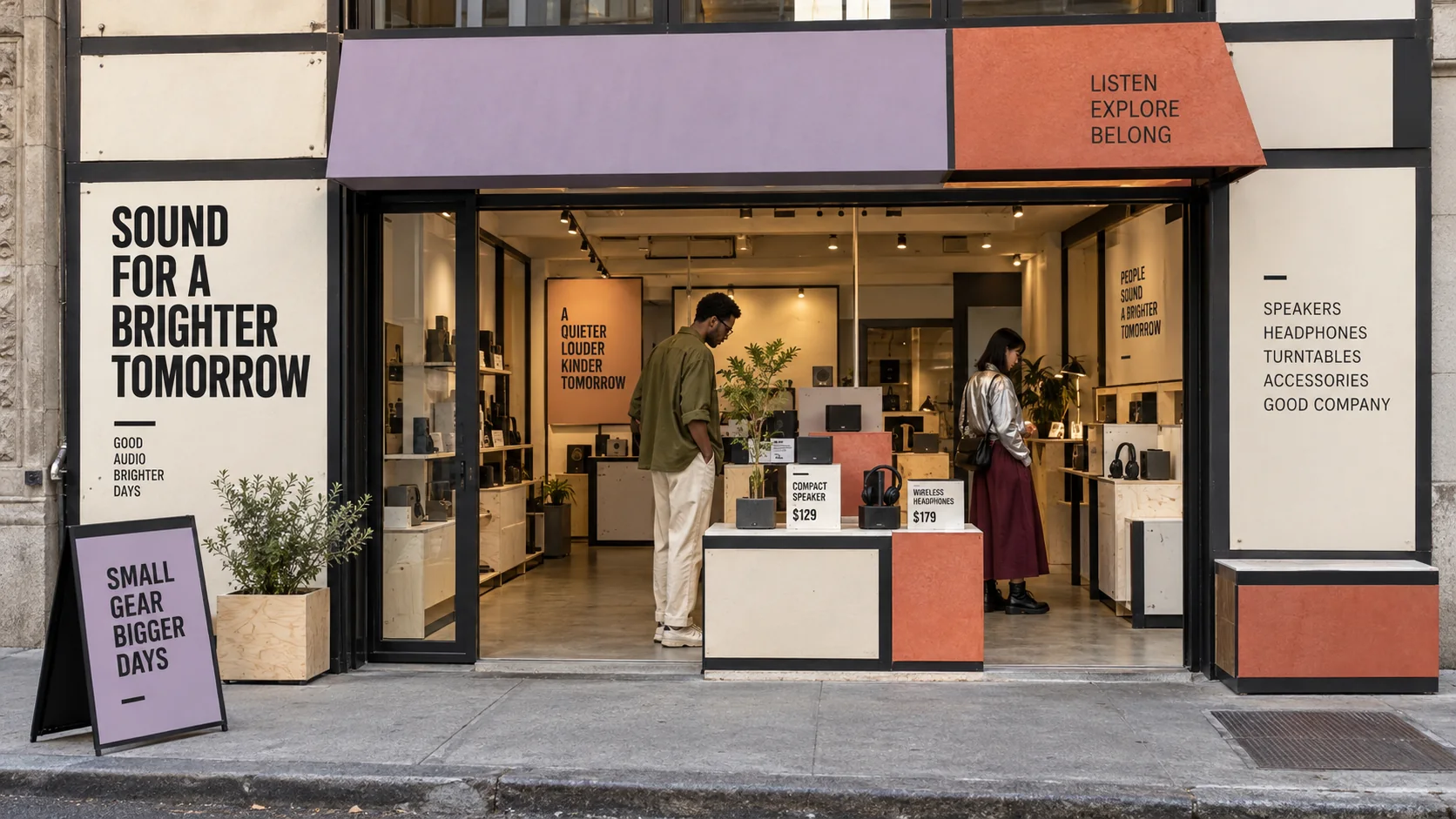
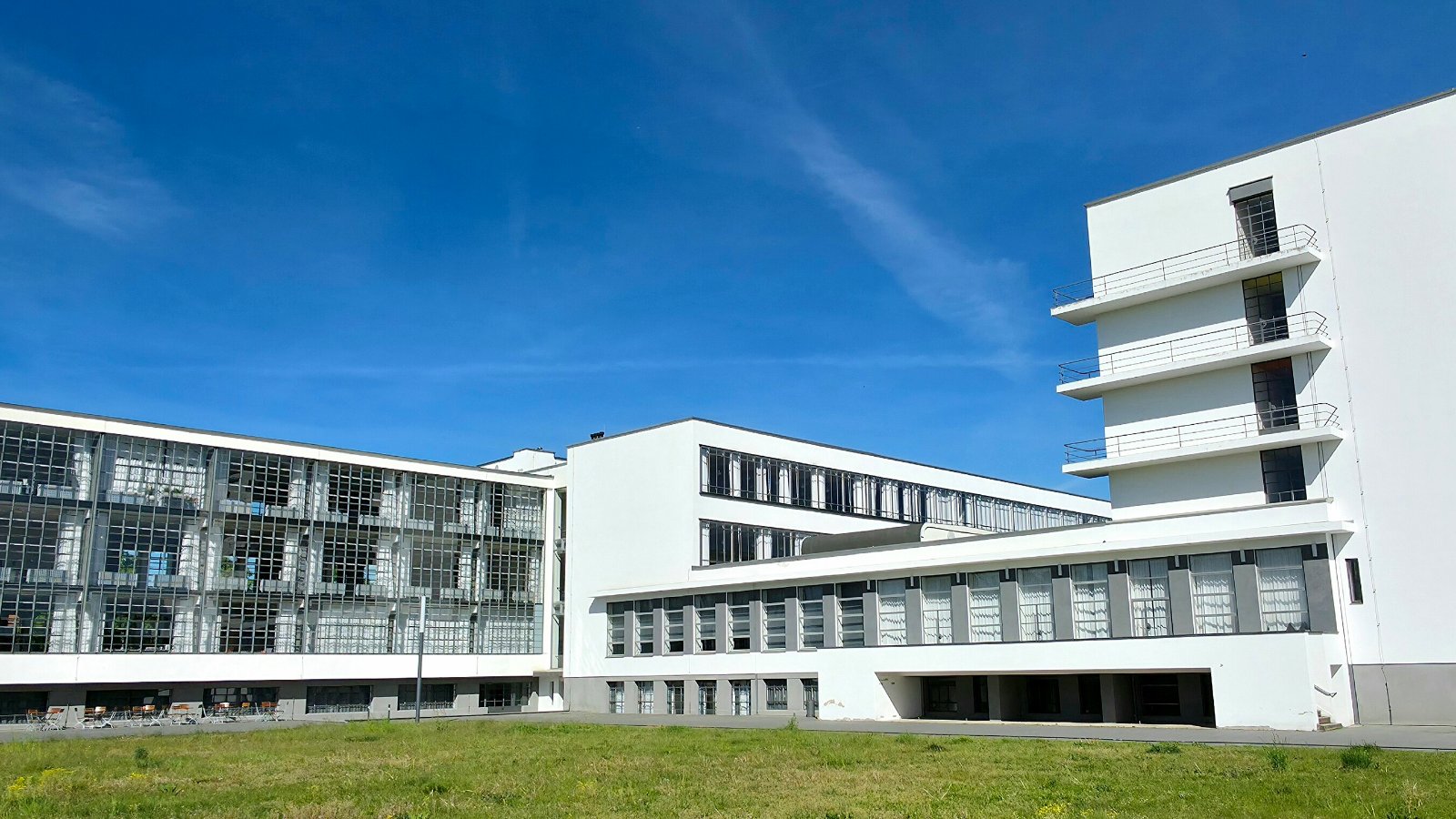
Restrained holds its cards close; expressive puts everything on the table. The gap here is how much emotion the work is willing to show. Neo-Brutalism leans expressive, Bauhaus stays closer to restrained.
Minimal asks the eye to rest; maximal asks it to keep looking. At this distance the two want different amounts of the page. Neo-Brutalism leans maximal, Bauhaus stays closer to minimal.
Analog carries the trace of a hand; digital carries the precision of a system. It is usually the first thing a viewer clocks about how something was made. Neo-Brutalism leans digital, Bauhaus stays closer to analog.
Futuristic points forward; nostalgic points to a specific remembered moment. One promises what is next, the other that something familiar is still true. Bauhaus leans nostalgic, Neo-Brutalism stays closer to futuristic.
Neo-Brutalism vs Bauhaus: 57% affinity (Partial overlap)
Where they split: Neo-Brutalism leans expressive, Bauhaus stays closer to restrained. Also diverging: Minimal vs Maximal (45% gap), Analog vs Digital (45% gap), Futuristic vs Nostalgic (30% gap). Where they agree: both lean geometric.
Blend with intent: Neo-Brutalism and Bauhaus share real ground, but the gaps above need a deliberate choice, not an accident.
Visible structure, hard outlines, flat color and blunt type across interfaces, products and real-world systems
Full style guide →