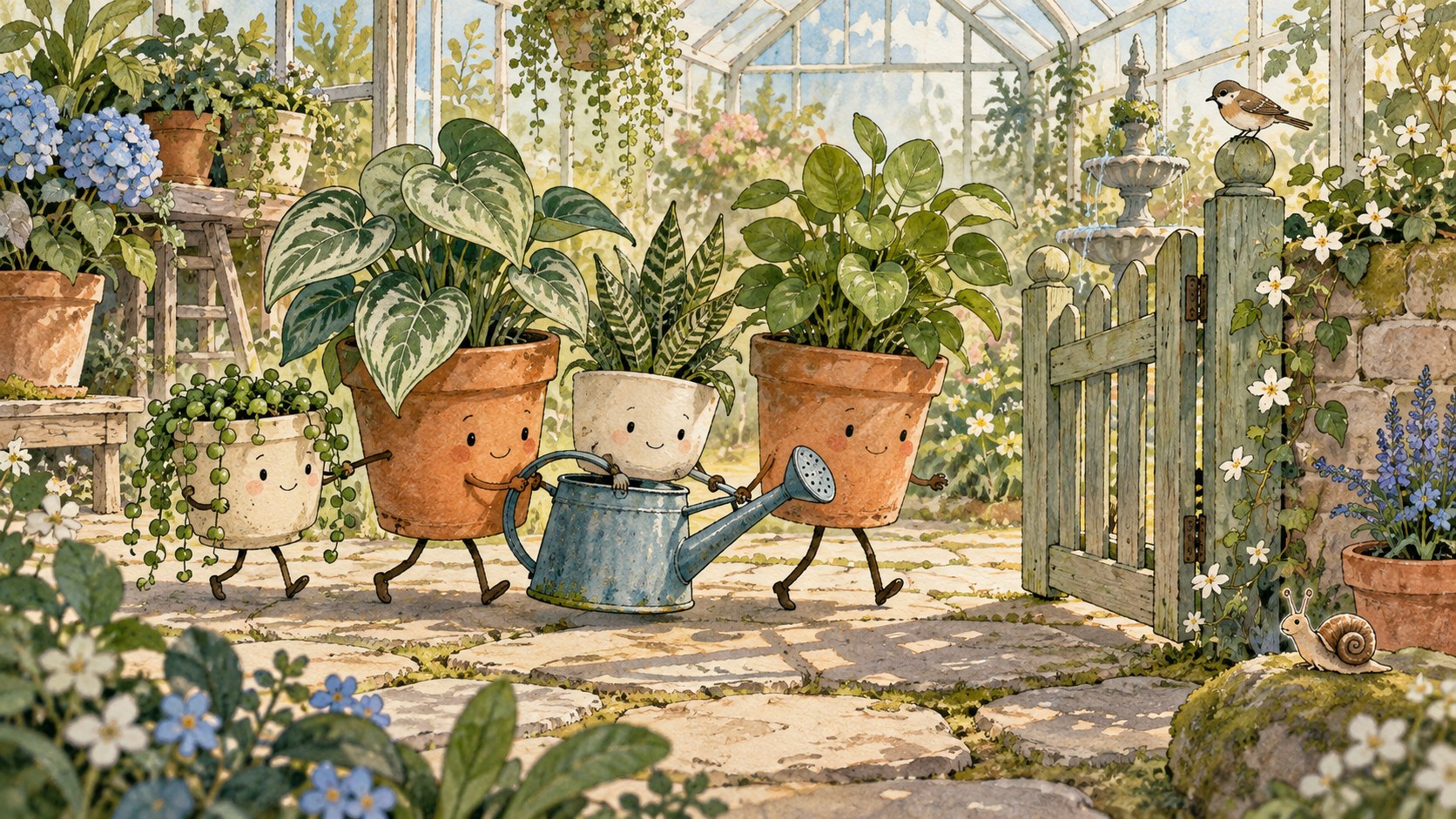
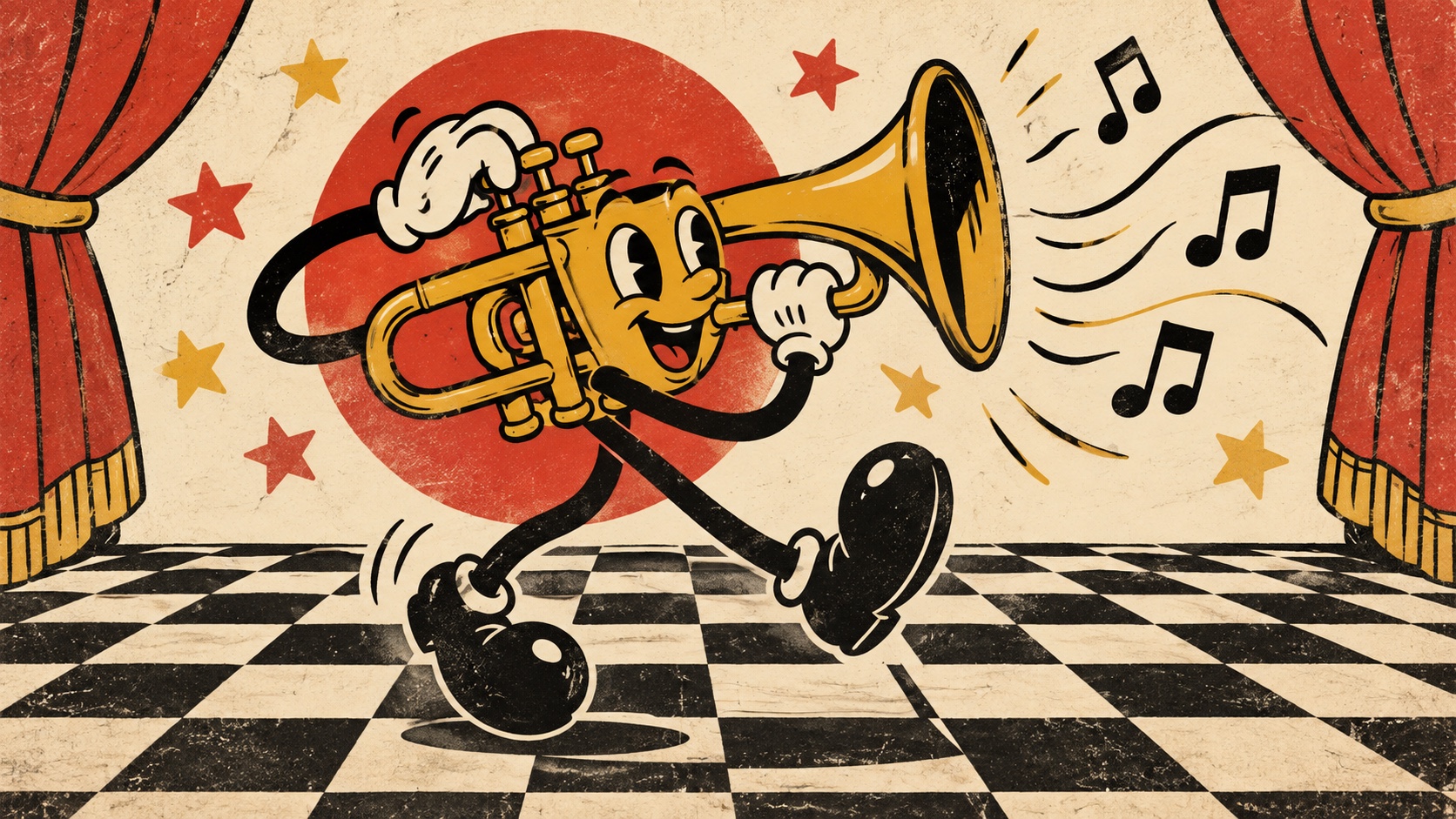
Anthropomorphic

Animals and objects given human posture, clothes, jobs and feelings: a fox in a waistcoat, a teapot with opinions

Compare Anthropomorphic with another style →See the Anthropomorphic typefaces →
Record020-AN
AestheticAnthropomorphic
ClassAnalog / Nostalgic
StatusINGESTING
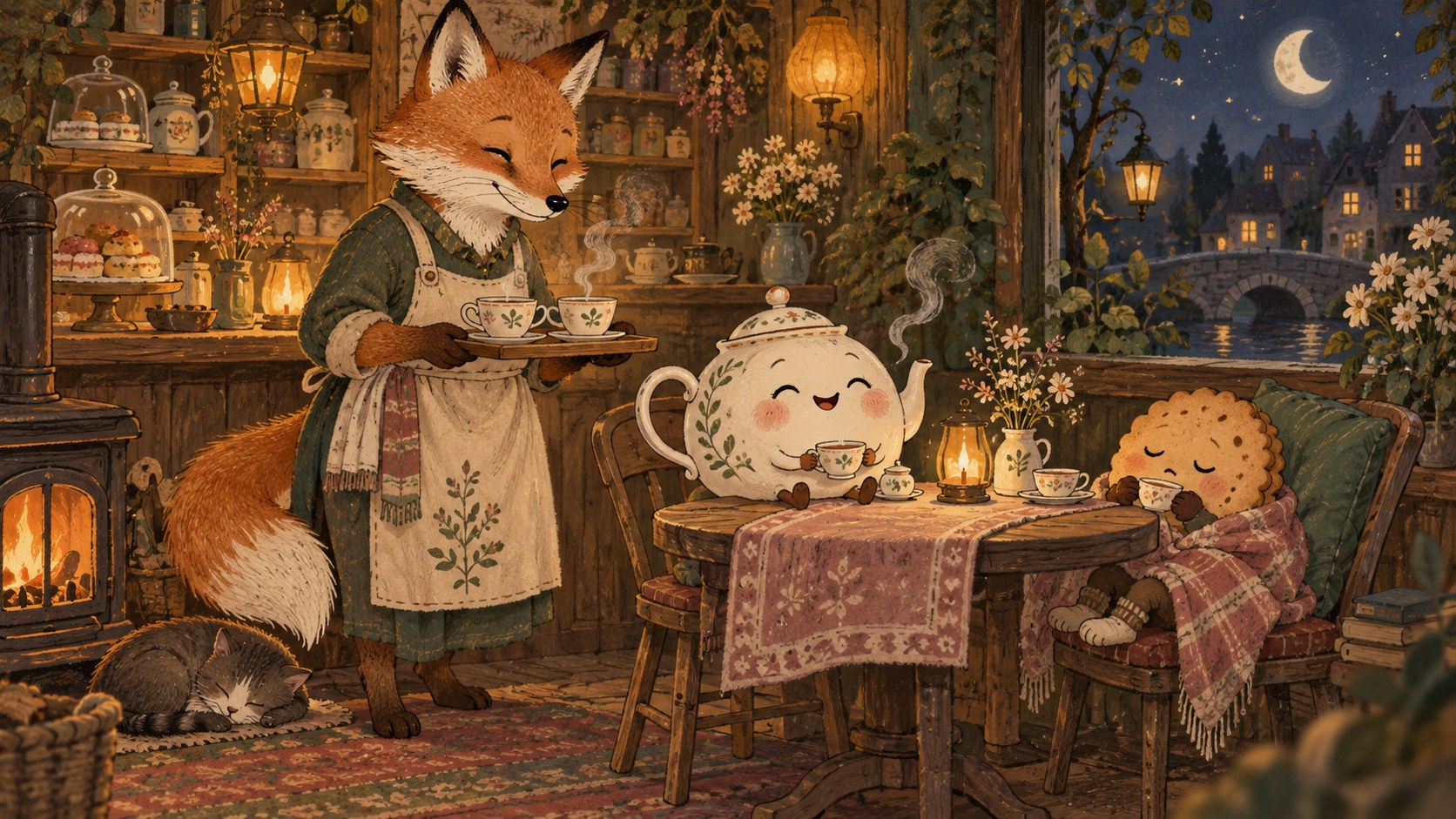
A fox in a green dress and apron serves tea by lamplight in a cottage kitchen, a smiling teapot and a sleepy biscuit at the table.
Archive plate · Anthropomorphic
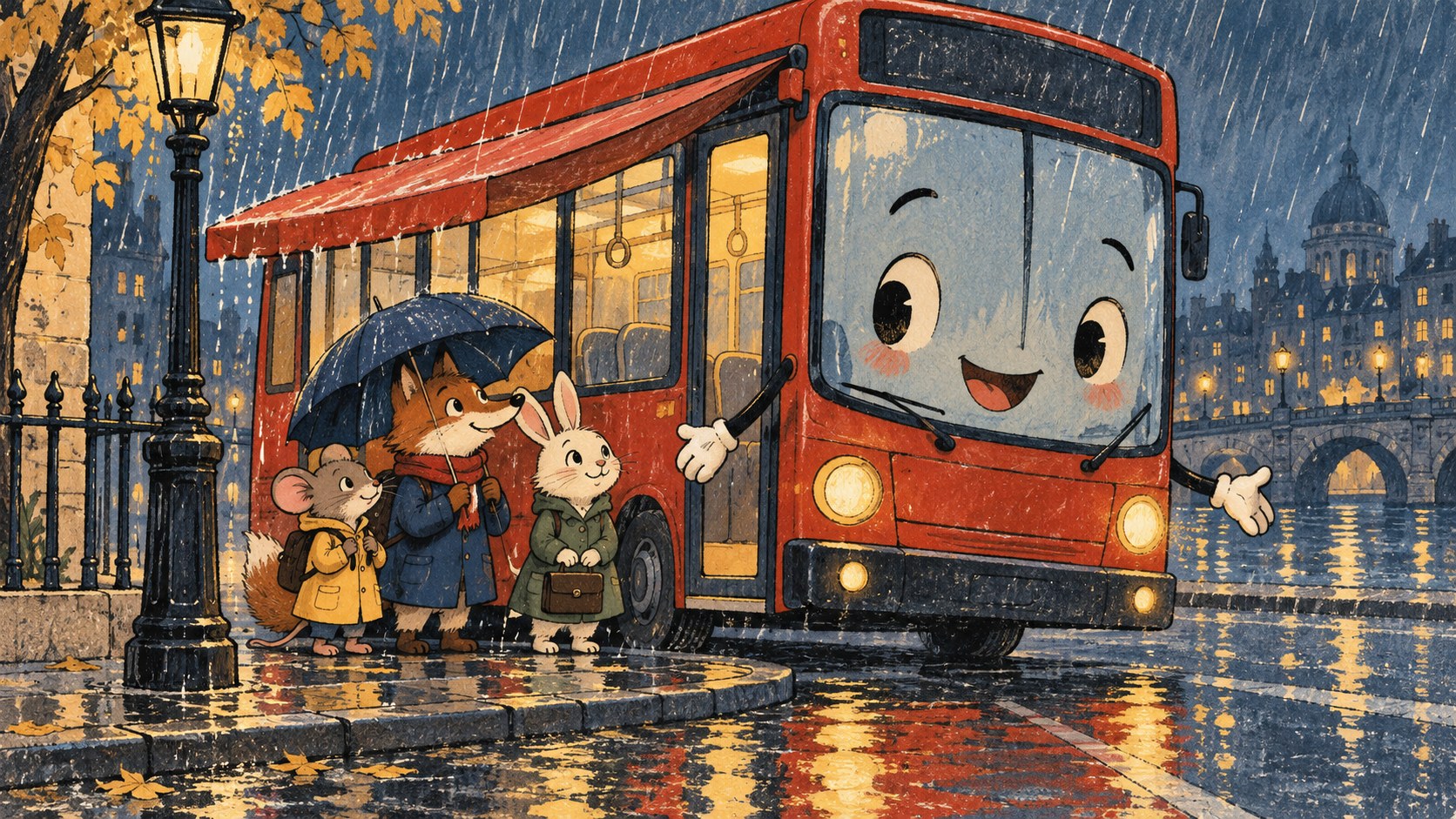
A smiling red bus greets a fox, a mouse and a rabbit in raincoats under an umbrella at a lamplit stop in the rain.
Dossier sceneTransit · 1/5
01
The record

What it is, when it works, who it is for, and where it already exists.

How to use it

Record 020-AN - when it works, who it is for, what it looks like

FIELD 01

When to use it

  • Mascots and spokes-characters that have to carry a brand for decades
  • Children's books, games and family entertainment
  • Satire and editorial illustration where a human target would be too blunt
  • Food, drink and hospitality brands that want warmth and a story
FIELD 02

Perfect for

  • Publishers and children's media
  • Food, drink and confectionery brands
  • Pubs, cafes, hotels and independent shops
  • Editorial and political illustration
FIELD 03

What it looks like

  • Chōjū-jinbutsu-giga, the frolicking animal scrolls of Kōzan-ji, 12th and 13th centuries
  • J. J. Grandville's Les Métamorphoses du jour, 1828 to 1829
  • Beatrix Potter, The Tale of Peter Rabbit, 1902
  • Bibendum, the Michelin Man, 1898

In the wild, Anthropomorphic aesthetic real-world examples

Where this aesthetic shows up in the real world · ↗ opens the source site

Omoro Style GuideEvery aesthetic, every field on this page, in one PDF.
Get the guide →
02
The anatomy

Where Anthropomorphic came from, what makes it recognisable, and the fingerprint it leaves.

History, Anthropomorphic aesthetic history

12th century to now; the book and mascot tradition from the 1820s · Fable and satire across many cultures; formalised in European book illustration and twentieth-century animation and advertising

People have drawn animals behaving like people for as long as they have told stories about them. The most famous early examples are the Chōjū-jinbutsu-giga, four ink handscrolls kept at the temple of Kōzan-ji in Kyoto and made in the twelfth and thirteenth centuries, in which rabbits, frogs and monkeys wrestle, swim, hold ceremonies and chase thieves. They are often described as a distant ancestor of manga. In Europe the same impulse produced illustrated editions of Aesop and the medieval tales of Reynard the Fox, where animals stood in for the powerful so that the powerful could be mocked.

The nineteenth century gave the device its wardrobe. In Paris, J. J. Grandville's Les Métamorphoses du jour of 1828 and 1829 showed fashionable society with animal heads on human bodies, each species chosen to skewer a type. In England John Tenniel drew a White Rabbit in a checked jacket with a pocket watch for Alice's Adventures in Wonderland in 1865. Then, in 1902, Beatrix Potter published The Tale of Peter Rabbit. Potter was a serious naturalist, and her animals kept their true anatomy under their blue jackets, which is why they have stayed convincing for more than a century.

Advertising and animation made it industrial. Michelin's Bibendum, a man made of tyres, appeared in 1898 and is among the oldest trademarks still in use; Mr. Peanut followed in 1916. Mickey Mouse arrived in 1928, and the rubber-hose cartoon made animal stars the default. After the war every breakfast cereal had a spokes-animal. The tradition is still healthy in both directions: handmade, in Wes Anderson's stop-motion Fantastic Mr. Fox of 2009, and digital, in the owl that nags language learners from their phones.

Animals and objects given human manners, and taken completely seriously.

Omoro dossier · 020-AN

Visual markers, Anthropomorphic aesthetic visual markers

The visual DNA: what makes it recognisable

typography

See the fonts
  • Old-style book serifs and italic captions
  • Hand-lettered titles on ribbons, banners and shop signs
  • Decorated initials with a character climbing through them
  • Small plate numbers and titles, as in an illustrated edition

grid

  • Single-figure character plates on a plain ground
  • Vignettes that fade into the page without a frame
  • Full-page plates facing a page of text
  • Formal group portraits in the manner of a family photograph

materials

  • Fox russet #B5652F and waistcoat green #3E5C45 for fur and cloth
  • Storybook cream #F2E6CF as the paper
  • Button brass #C79A3B for details, ink brown #3B2A20 for the line
  • Pen and ink, watercolour, gouache, engraving, felt and tweed

motifs

  • Waistcoats, spectacles, pocket watches and umbrellas
  • Human homes built at animal scale
  • Tea, letters, shops and other small civilised rituals
  • Tails, ears and paws left true to the species

Aesthetic profile

8-channel console with the fingerprint on its display. Save the card, or share the page

Aesthetic Profile
Anthropomorphic
12th century to now; the book and mascot tradition from the 1820s · Fable and satire across many cultures; formalised in European book illustration and twentieth-century animation and advertising
Attribute console · 020-AN
leans analog, nostalgic, organic
8 CH
FIG. 1
MaximalMinimalAnalogDigitalExpressiveRestrainedWarmCoolNostalgicFuturisticChaoticStructuredLightDarkOrganicGeometric
01Minimal
Maximal30%
02Analog
Digital70%
03Restrained
Expressive50%
04Cool
Warm60%
05Futuristic
Nostalgic70%
06Structured
ChaoticEVEN
07Dark
Light30%
08Organic
Geometric70%
AnalogNostalgicOrganic
Omoro · Attribute console · 020-AN
omoro.io/styles/anthropomorphic

Color Palettes, Anthropomorphic color palettes and hex codes

The definitive color scheme for this aesthetic

Anthropomorphic
#B5652F · #3E5C45 · #F2E6CF · #C79A3B · #3B2A20
A well-worn picture book: fox russet and waistcoat green on cream paper, with brass buttons and brown ink
Omoro Palette Pack575 curated palettes across every aesthetic, 5 export formats.
Get the palettes →

Adjacent Palettes, styles related to Anthropomorphic

The colour of the styles sitting closest to this one

Rubber Hose
Illustration
Mid-Century Illustration
Naïve Design
03
The direction

How to shoot it, how to prompt it, and how to board it.

Photo Direction

How to shoot this aesthetic

"Dress the set for the character, at the character's scale"

Shot list

  • A character plate: full figure, plain ground, like a book frontispiece
  • The character at work in a human job, tools in hand
  • A domestic scene at the animal's scale: burrow, nest or under-stairs kitchen

Lighting

Warm and domestic: window light, lamplight, a fire. For illustration reference, soft directional light that models the form. For puppets and stop-motion, small practical lamps in the set so the scale feels true.

Omoro Director's Briefs224 photo shot-lists like this one, ready to shoot from.
Get the briefs →

Generative Prompt

Drop this into Studio to generate in this aesthetic

Anthropomorphic illustration, an animal with accurate anatomy standing upright in human clothes and posture, a fox in a green tweed waistcoat with brass buttons holding a teacup, expressive but animal face, fur and fabric drawn with equal care, pen and ink line with watercolour wash on cream storybook paper, warm russet, waistcoat green, brass and brown ink, a domestic human setting scaled to the animal, wry and civilised mood, in the tradition of nineteenth-century book illustration, no cartoon exaggeration, no human face on an animal body, no readable text

Paste as-is, or append your own subject

Mood Board

The record applied to your project. The record's kit is free; your brand, references and plates come with membership

Mood board
The Anthropomorphic board
8 frames · 4 selected
FIG. 4
Fox RussetB5652FWaistcoat Green3E5C45Storybook CreamF2E6CFButton BrassC79A3BInk Brown3B2A20
Brand and references
IdleBrand and references open with membership
With membership: the brand's own facts and colours in every prompt, references carried into every frame, and the plates generated.
01 · Hero application
02 · Material and finish
03 · Palette in context
04 · Photography direction
05 · Pattern plate
06 · Object
07 · Environment
08 · Digital presence
Demo kit free, the rest with membershipThe record as a demo kit, free. Name a project and it is written for that
Omoro · Mood board · 020-AN
04
The judgement

Whether to use it, what it costs to do properly, and where it stands right now.

Creative verdict, Anthropomorphic feasibility and strategic recommendation

Two written calls, seven meters, and when to walk away

Creative verdict
Should Anthropomorphic be the call?
7 meters
FIG. 2
Assessment

Choose the animal for what it already means. A fox is cunning, an owl is wise, a bear is comforting, and the character is born from agreeing or arguing with that expectation. Keep the animal's real anatomy under the clothes: the ears, the tail and the way it would actually sit. Decide how human it is and hold the rule: whether it walks upright, wears shoes or uses its paws as hands should be the same on every page.

Verdict

Right when a brand needs a face that is not a person: someone to speak, age slowly and be loved without the risks of a real spokesperson. It rewards a well-chosen animal and a strict set of rules, and fails when the character is decoration with nothing to say.

Production cost
Medium

An illustrator's time, and more of it if the character has to work across a whole brand.

Creative difficulty
High

The choice of animal is the whole idea: it has to mean the right thing before it wears a hat.

Execution difficulty
High

Convincing anatomy bent into human posture is difficult, and clothes have to fit a body that was never meant to wear them.

Risk of misuse
Medium

Animals carry cultural meanings that change between markets, and lazy character stereotypes date badly.

Prevalence
Common

Mascots, picture books, animation and apps keep it everywhere.

Longevity
Timeless

At least eight hundred years of continuous use, and much longer counting fable and myth.

Brand investment
High

A character is an asset that needs a bible, consistent drawing and years of use to pay back.

Avoid if
The brand needs to feel expert, clinical or luxurious
A talking animal signals warmth and story, not precision or exclusivity.
The animal means something different in a key market
Owls, pigs, dogs and foxes do not carry the same meaning everywhere.
There is no appetite to maintain a character
A mascot used twice and abandoned looks worse than never having one.
Omoro · Creative verdict · 020-AN

Editorial Depth

A Pro feature: origins, practitioners, and pitfalls

Editorial depth
The Anthropomorphic file
14 sections
FIG. 3
Context02Brands02Perception04Use04Index02
01Common MisconceptionThe principle beneath the surface
02Historical ContextOrigins, cultural moment, and reaction
03Brands That Accidentally Use This StyleNatural alignment, not category claims
04Brands That Perfectly Represent This StyleExceptional execution
05Psychological EffectHow visual decisions change perception
06Visual ChecklistInclude and avoid
07Creative FormulaThe visual system reduced to essentials
08Recognition SignalsHow to recognize it in two seconds
09When To Use This StyleContexts where the language performs
10Common Creative MistakesWhere imitation weakens the signal
11Best Brand ApplicationsIndustries with a natural advantage
12Creative Application AnalysisFit, feasibility, and production reality
13Related StylesClose languages and the key distinction
14Visual DNA SummaryThe sentence to remember
The editorial depth, with membershipOpening soon
Omoro · Editorial depth · 020-AN
05
The index

Neighbours, cross-references, blends, and the questions people ask.

Related concepts

Connected across the creative knowledge graph

Cultural relevance, Anthropomorphic cultural relevance today

Where it stands now, and what it costs you to use it

Putting a human situation on an animal creates distance, and distance is useful. It lets a children's book talk about fear and loss, lets a satirist say what could not be said about a named person, and lets a company have a spokesperson who never ages, never has a scandal and can be redrawn for every decade. The choice of species does half the writing, because audiences already hold opinions about foxes, owls, bears and pigs.

Its failure mode is the costume. A human figure with an animal head, or an animal with a human face, lands in the uncanny. The tradition's best work keeps the creature's real anatomy and behaviour and adds manners on top. The other risk is meaning: what an animal stands for changes between cultures, and a character that charms one market can insult another.

Cross-references

Rubber HoseThe animation style that made animals into film starsIllustrationThe parent disciplineMid-Century IllustrationWhere advertising mascots got their flat, friendly formNaïve DesignShares the storybook directness

Blend

Mix Anthropomorphic with any style in the library

Anthropomorphic×
50%50%
98% alike
Anthropomorphic referenceRubber Hose referenceAnthropomorphic 50%Rubber Hose 50%

Merged palette

#B5652F

#212121

#3E5C45

#F57F17

#F2E6CF

Leads nostalgic, analog, expressive

Typography · from Anthropomorphic

Playfair Display over Crimson Text

Materials

  • Fox russet #B5652F and waistcoat green #3E5C45 for fur and cloth
  • Storybook cream #F2E6CF as the paper
  • Ink black: #1A1510: the color of cel animation ink, slightly warm

Use it

Anthropomorphic illustration, an animal with accurate anatomy standing upright in human clothes and posture, a fox in a green tweed waistcoat with brass buttons holding a teacup, expressive but animal face, fur and fabric drawn with equal care, pen and ink line with watercolour wash on cream storybook paper, warm russet, waistcoat green, brass and brown ink, a domestic human setting scaled to the animal, wry and civilised mood, in the tradition of nineteenth-century book illustration, no cartoon exaggeration, no human face on an animal body, no readable text (50%), infused with Rubber hose animation aesthetic with 1930s Fleischer Studios and early Disney style, boneless limbs of uniform thickness that curve fluidly, pie-cut eyes and round button noses, white gloves and bulbous rounded bodies, high contrast black and cream or limited color palette, Betty Boop and early Mickey Mouse character design language, jazz-age swinging energy, color palette strictly #B5652F #212121 #3E5C45 #F57F17 #F2E6CF, overall character: nostalgic, analog, expressive

One-click generation opens with the studio

About this aesthetic

What does anthropomorphic mean in design?

It means giving human characteristics, such as upright posture, clothing, speech, jobs and emotions, to animals or objects. In illustration and branding it usually refers to animal characters that live and behave like people while keeping their animal appearance.

What is the difference between anthropomorphism and personification?

Personification gives human qualities to an abstract idea, such as Justice or Death. Anthropomorphism gives them to a specific non-human thing, such as a rabbit, a car or a teapot, which then acts as a character.

Why do brands use anthropomorphic mascots?

A mascot gives a company a face that is fully owned, can speak in the brand's voice, never ages and carries less risk than a celebrity. Animal and object characters are also memorable to children and travel well across media, from packaging to animation.

How do I design a convincing anthropomorphic character?

Pick the species for what people already believe about it, keep its real anatomy under the clothes, and set firm rules for how human it is: whether it walks upright, wears shoes or uses tools. Then keep those rules consistent everywhere the character appears.

Build with the anthropomorphic aesthetic

Every style in the library is broken down like this one: the palette, the typography, the materials and the lineage.

Explore the style library →