Arcology

A city compressed into a living vertical ecosystem - housing, transit, farms, water, work, and civic life stacked into one climate-responsive organism.

Compare Arcology with another style →See the Arcology typefaces →
Record020-AR
AestheticArcology
ClassFuturistic / Structured
StatusINGESTING
Arcology aesthetic archive image
Archive plate · Arcology
Arcology aesthetic: City dossier scene
Dossier sceneCity · 1/5

How to use it

Record 020-AR - when it works, who it is for, what it looks like

FIELD 01

When to use it

  • Speculative world-building that needs an optimistic but credible future city
  • Climate, infrastructure, mobility, or urbanism narratives
  • Hospitality and real-estate concepts centered on communal, dense living
  • Editorial systems about resilience, resource sharing, and civic scale
FIELD 02

Perfect for

  • Future-city, climate-tech, and infrastructure storytelling
  • Architecture and planning practices with systemic ambitions
  • Games, films, and cultural projects imagining inhabited megastructures
  • Environmental brands that want collective rather than individual solutions
FIELD 03

What it looks like

  • Paolo Soleri - Arcosanti, Arizona (1970-present)
  • Paolo Soleri - Arcology: The City in the Image of Man (1969)
  • Moshe Safdie - Habitat 67, Montreal (1967)
  • Kenzo Tange - Plan for Tokyo 1960 (unbuilt)
Omoro Style GuideAll 151 aesthetics, every field on this page, in one PDF.
Get the guide →

History, Arcology aesthetic history

1960s–present (visionary urbanism) · Paolo Soleri; American Southwest; speculative urban design

Architect Paolo Soleri coined arcology in the late 1960s by combining architecture and ecology. His proposition was direct: low-density sprawl consumes land, energy, and social life, while a compact city could concentrate resources and leave more landscape intact. His experimental settlement Arcosanti in Arizona became the built laboratory for that idea.

Arcology is not one visual style so much as a spatial argument. Transport becomes vertical and shared, rooftops become productive terrain, and public rooms are stacked with homes and workshops. The most compelling imagery makes this systems thinking visible rather than treating greenery as a decorative layer.

The idea persists in speculative cinema, games, climate fiction, and contemporary discussions of density. It is useful precisely because it is unresolved: a civic ambition with as many social questions as formal answers.
Visual markers, Arcology aesthetic visual markers

The visual DNA: what makes it recognisable

typography

See the fonts
  • Technical humanist sans-serifs with generous wayfinding scale
  • System labels, transit diagrams, and environmental-data notation
  • Clear hierarchy designed for dense public space

grid

  • Terraced vertical districts rather than isolated towers
  • Skybridges and transit spines connecting mixed-use layers
  • Productive roofs, water channels, and planted balconies as infrastructure

materials

  • Weathered concrete and limestone: #B9B29B, #8C887D
  • Deep vegetation: #557A54, #2F4330
  • Amber civic light and solar metal: #D5A45B, #69726C

motifs

  • Integrated food production and water harvesting
  • Habitat modules nested around shared public voids
  • Infrastructure scaled as landscape

Aesthetic profile

8-channel console - dominant channels taped & circled by the registrar

Attribute Console - 020-AR 8 CH ACTIVEFIG. 1
CH01Minimal
Maximal40%
CH02Analog
Digital30%
CH03Restrained
Expressive20%
CH04Cool
Warm30%
CH05Futuristic
Nostalgic80%
CH06Structured
Chaotic70%
CH07Dark
Light40%
CH08Organic
Geometric20%

strongest channels circled - leans futuristic, structured, maximal

Profile card

Save the fingerprint as a card, or share the page

Aesthetic Profile
Arcology
MaximalAnalogRestrainedWarmFuturisticStructuredLightGeometric
FuturisticStructuredMaximal
omoro.io/styles/arcology

Color Palettes, Arcology color palettes and hex codes

The definitive color scheme for this aesthetic

Arcology
#D7D2C7 · #9AB6D2 · #6B6E46 · #8A6B4A · #3C3A34
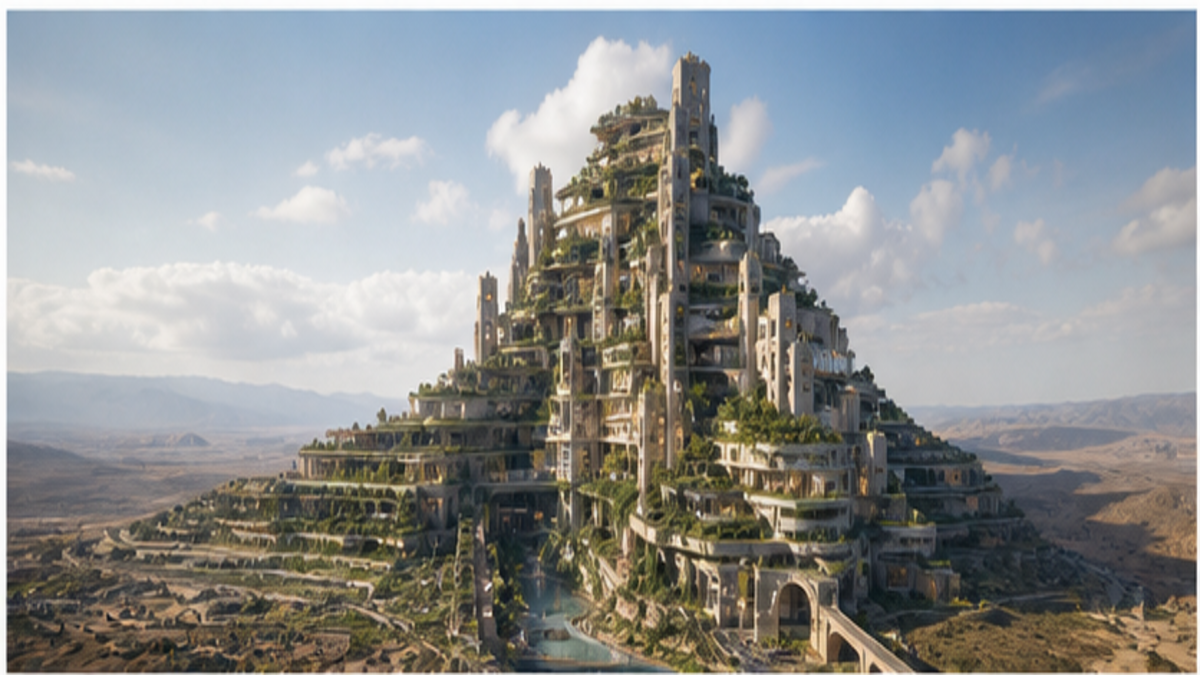
Desert megastructure at midday: pale stone terraces threaded with garden green under a thin high-altitude sky
Omoro Palette Pack575 curated palettes across every aesthetic, 5 export formats.
Get the palettes →

Mood Board

Join waitlist for access

Join the waitlist for full access

Join the waitlist
Creative Application Analysis

Arcology: where the language earns its place

Arcology is most effective when its visual decisions do useful work. A city compressed into a living vertical ecosystem - housing, transit, farms, water, work, and civic life stacked into one climate-responsive organism.

Best industries
Future-city, climate-tech, and infrastructure storytelling
Architecture and planning practices with systemic ambitions
Games, films, and cultural projects imagining inhabited megastructures
Environmental brands that want collective rather than individual solutions
Real-world use
Speculative world-building that needs an optimistic but credible future city
Climate, infrastructure, mobility, or urbanism narratives
Hospitality and real-estate concepts centered on communal, dense living
Editorial systems about resilience, resource sharing, and civic scale
What it looks like
Paolo Soleri - Arcosanti, Arizona (1970-present)
Paolo Soleri - Arcology: The City in the Image of Man (1969)
Moshe Safdie - Habitat 67, Montreal (1967)
Kenzo Tange - Plan for Tokyo 1960 (unbuilt)
Creative feasibility
Production costMedium

Budget goes into art direction and casting, not the toolkit.

Creative difficultyHigh

Anyone can spot the references. A real system out of them is the hard part.

Execution difficultyHigh

One wrong prop or one off color reads as costume instead of conviction.

Overall creative assessment

Arcology earns its keep when it gives a brand a standard of judgment, not just a finish. It falls apart the moment recognizable cues get collected without a point of view behind them. The tell is always proportion: what's shown, what's held back, and whether every choice belongs to the same world.

Strategic Recommendation

Should Arcology be the strategic choice?

Best for
Future-city, climate-tech, and infrastructure storytelling
Architecture and planning practices with systemic ambitions
Speculative world-building that needs an optimistic but credible future city
Climate, infrastructure, mobility, or urbanism narratives
Avoid if
Everyone needs to read the message instantlyA strong point of view asks for a second look. If the work has to land in one glance, that's the wrong ask of this language.
The team can't hold the standardOne inconsistent shoot, one off-brand asset, and the whole system reads as an accident, not a decision.
Risk of misuseHigh

The surface is easy to copy. What separates the real thing from a knockoff is the system underneath.

Contemporary prevalenceCommon

The ingredients are everywhere right now. A disciplined execution is still the minority.

LongevityEnduring

This holds up because it's built on composition and material, not a filter that ages out.

Brand investmentHigh

It only works if every touchpoint agrees. Cut a corner anywhere and the whole thing shows it.

Creative verdict

Use Arcology when the brand can back a real point of view and protect it through execution. Not when the goal is broad, neutral, or cheap to produce. The advantage is differentiation through judgment: the work reads as authored, not packaged. Average executions borrow the signals and lose the coherence. The best ones treat the visual language as a system of choices, including what they leave out.

Editorial Depth

Join waitlist for access

Common Misconception
Historical Context
Brands That Accidentally Use This Style
Brands That Perfectly Represent This Style
Psychological Effect

Join the waitlist for editorial depth

Join the waitlist

Related concepts

Connected across the creative knowledge graph

Cultural relevance, Arcology cultural relevance today

Where it stands now, and what it costs you to use it

Arcology proposes density as an ecological and civic project, not just a real-estate optimization.

Its tension is the point: a highly efficient city must still make room for choice, privacy, and ordinary social life.

It remains a productive reference for climate storytelling because it treats systems, people, and landscape as one design problem.

Cross-references

Metabolismboth imagine additive, systemic cities at monumental scaleSustainable Architecturearcology frames environmental performance as urban organizationBiophilic Designboth make living systems legible within architectureRetrofuturismarcology carries the unresolved optimism of twentieth-century future cities

Blend

Mix Arcology with any of the other 156 styles in the library

Arcology×
50%50%
51% alike
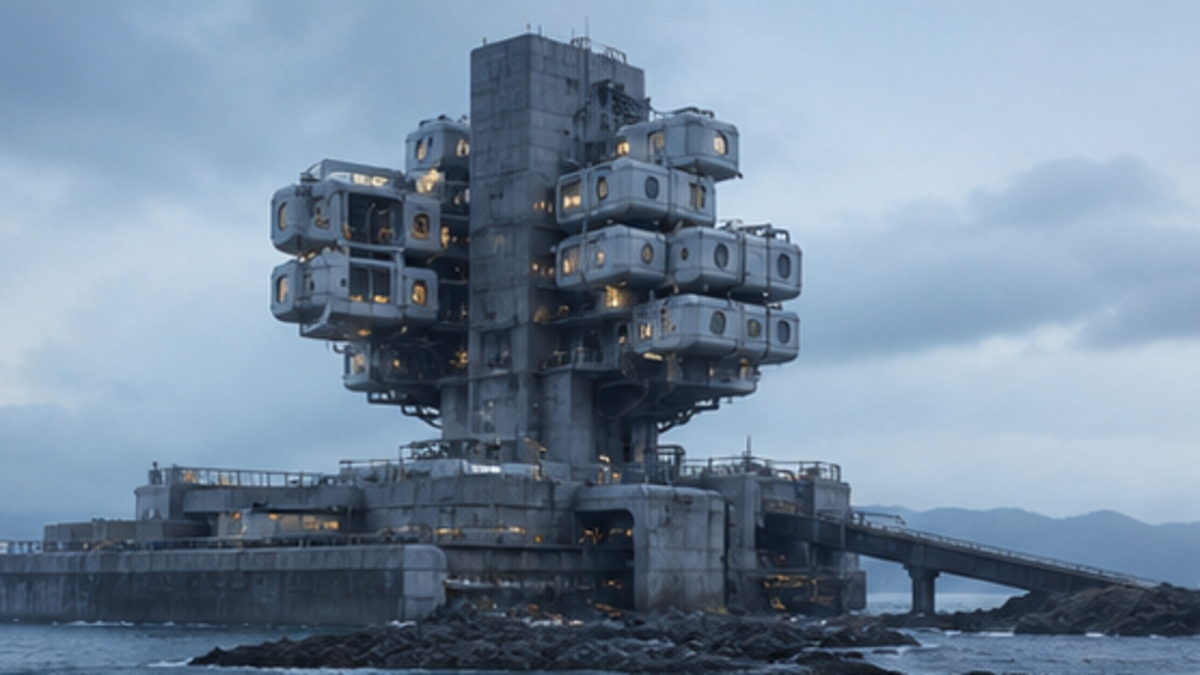
Arcology referenceMetabolism referenceArcology 50%Metabolism 50%

Merged palette

#D7D2C7

#607D8B

#9AB6D2

#4A6741

#6B6E46

Leads futuristic, maximal, geometric

Typography · from Arcology

Space Grotesk over Inter

Materials

  • Weathered concrete and limestone: #B9B29B, #8C887D
  • Deep vegetation: #557A54, #2F4330
  • Raw concrete: #948E84, #8A8478: the megastructure's primary material

The calls this blend forces

These two disagree on 3 things, and a blend cannot average them: you pick a side. At this mix:

Structured or Chaotic? Arcology is structured, Metabolism is chaotic. This mix lands structured.

Analog or Digital? Arcology is analog, Metabolism is digital. This mix lands digital.

Restrained or Expressive? Arcology is restrained, Metabolism is expressive. This mix lands expressive.

Use it

Arcology aesthetic (50%), infused with Japanese Metabolism aesthetic with modular capsule units, megastructure thinking, Kisho Kurokawa and Kenzo Tange influence, plug-in city concepts, color palette strictly #D7D2C7 #607D8B #9AB6D2 #4A6741 #6B6E46, leaning structured over chaotic, analog over digital, restrained over expressive, overall character: futuristic, maximal, geometric

One-click generation opens with the studio

About this aesthetic

What is arcology?

Arcology combines architecture and ecology to describe a compact, self-contained city where living, work, food production, transit, water, and public life are integrated into one dense habitat. The term was coined by architect Paolo Soleri.

What makes arcology different from a megastructure?

A megastructure describes large-scale form; arcology adds ecological and civic systems. An arcology is meant to reduce land use and resource demand by making infrastructure, social life, and environmental cycles work together.

Build with the arcology aesthetic

Omoro turns aesthetic references into on-brand visuals. Generate, compose and publish from one studio.

Join the waitlist