History, Dada aesthetic history
1916-1924 · Zurich, then Berlin, Hanover, Paris and New York
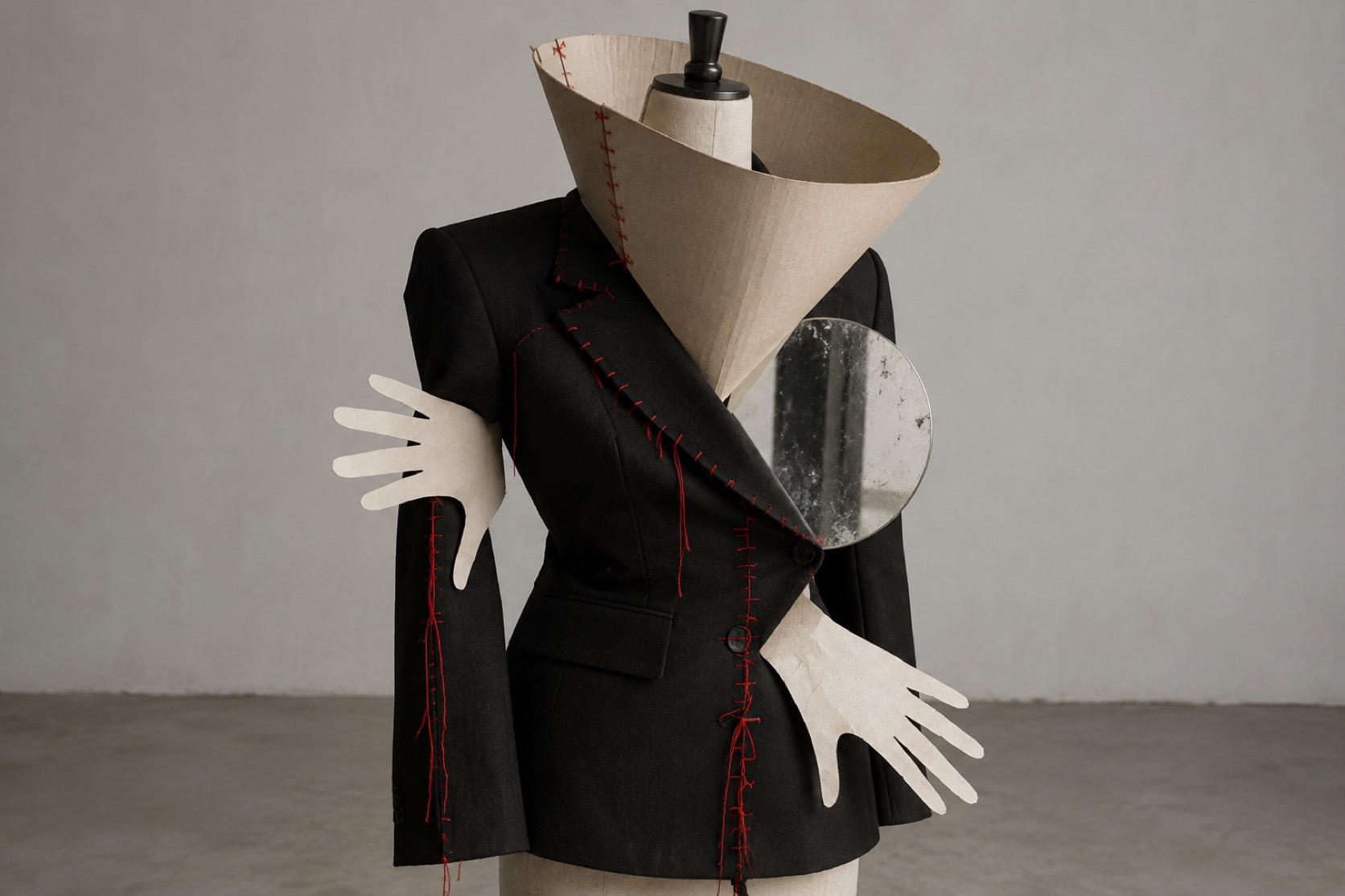
Dada began in February 1916 at the Cabaret Voltaire in Zurich, a bar where Hugo Ball, Emmy Hennings, Tristan Tzara, Marcel Janco and Hans Arp performed sound poems, wore cardboard costumes and read manifestos to a room that had come for entertainment. The war was a few hundred kilometres away and the founders were refugees from it. Their position was that a civilisation capable of the Somme had forfeited the right to ask art to be beautiful or logical, so they made work that was neither and insisted on it with total seriousness. The name, according to the most repeated of several competing stories, was found by stabbing a dictionary with a paperclip.
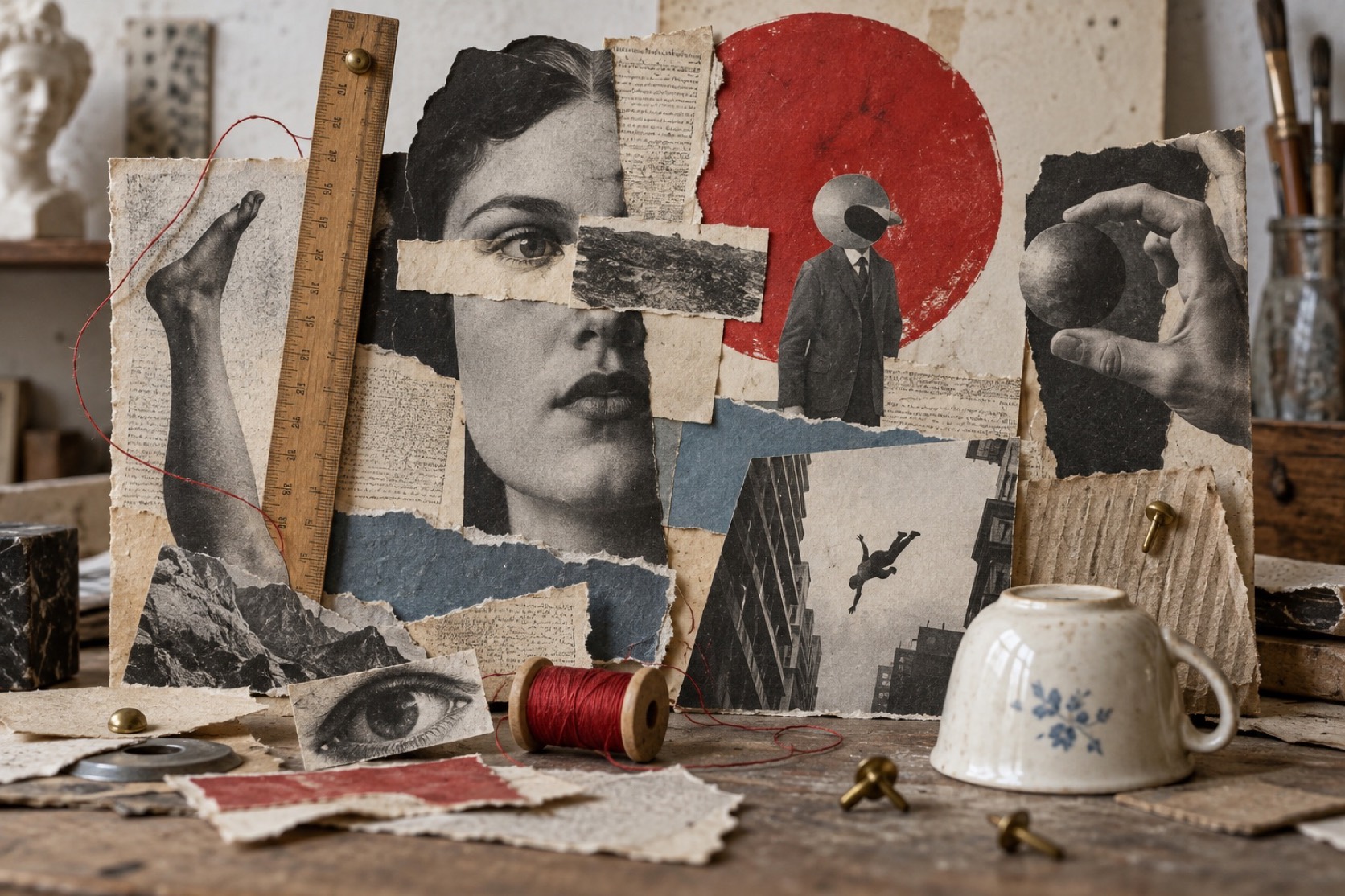
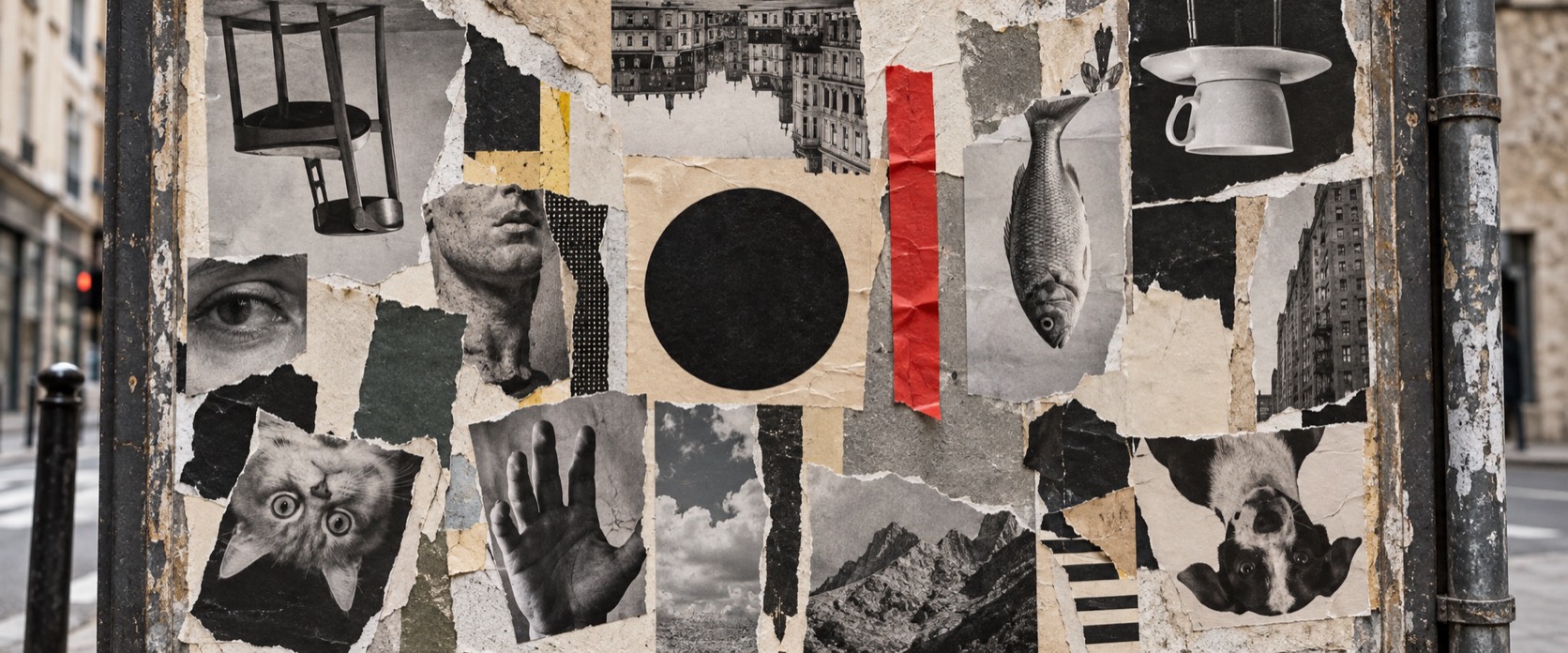
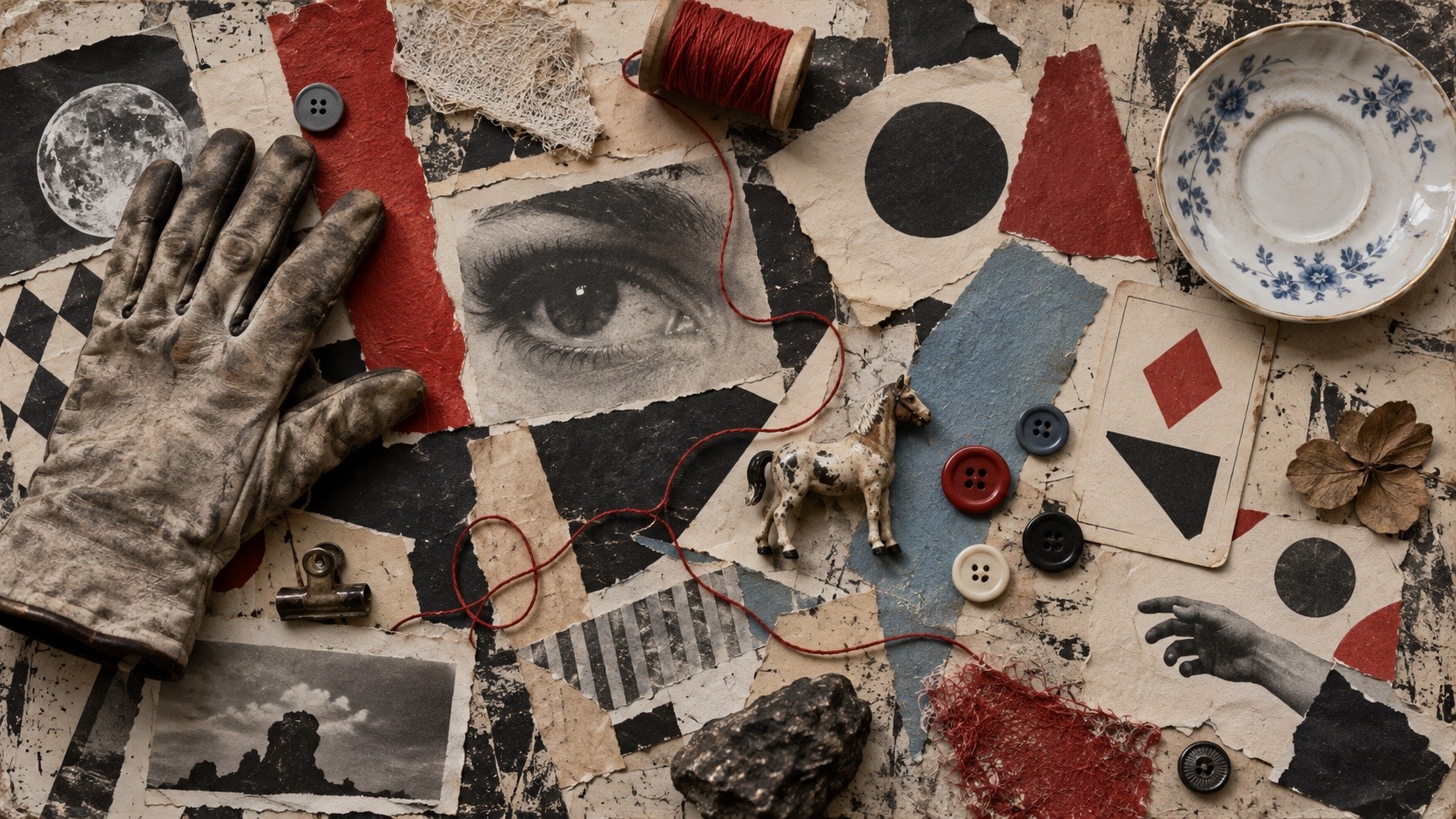
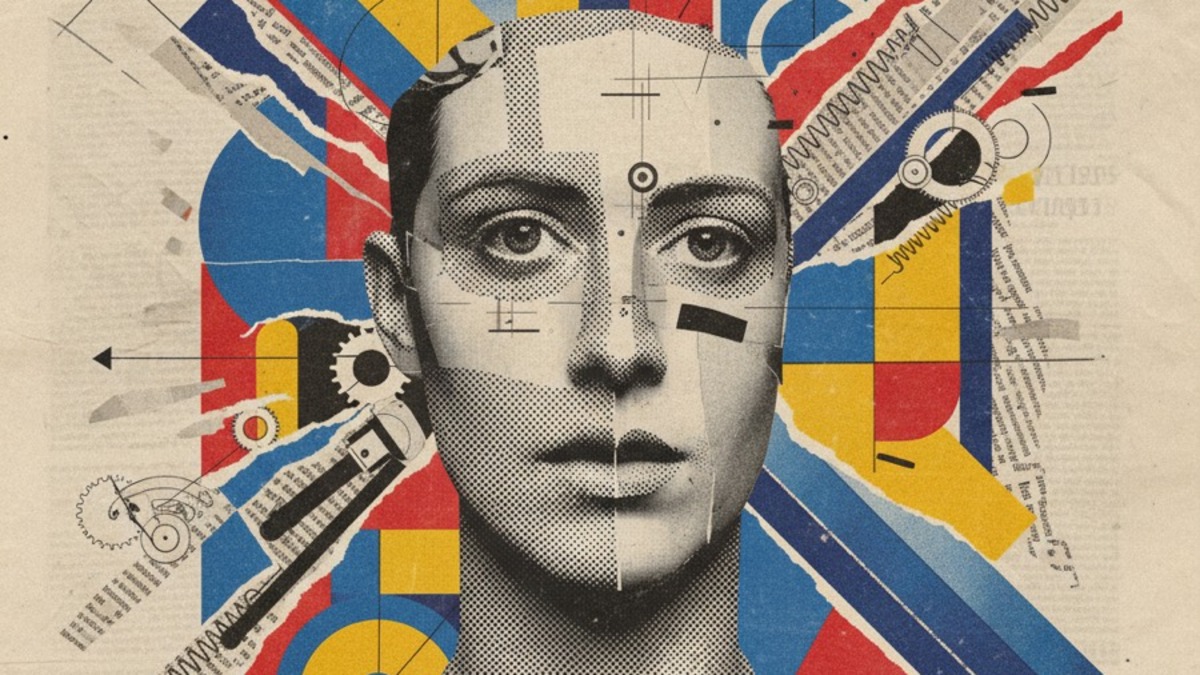
Photomontage was Berlin Dada's invention and its sharpest weapon. Hannah Hoch, Raoul Hausmann, George Grosz and John Heartfield cut photographs out of the illustrated press and reassembled them so that politicians wore the wrong bodies, machines grew faces and the scale of everything was wrong on purpose. Hoch's Cut with the Kitchen Knife, from 1919, is the summary image: a metre-wide field of severed heads, gears, dancers and type that reads as a newspaper page that has been through a shredder and put back by someone with an argument. Kurt Schwitters in Hanover took the same scissors to tickets, labels and packaging and called the result Merz, a fragment of the word Kommerz cut from an advertisement.
The movement was over by 1924, absorbed into surrealism or abandoned by its own members, but its method never stopped being used. Punk flyers, ransom-note type, the cut-up, the meme, the remix and every collage that puts the wrong head on the right body descend from it. The visual language is easy to imitate and hard to mean: torn edges and mismatched type can be pasted onto anything, but Dada worked because the disruption had a target. Used as decoration it is a texture; used as a method it is still one of the few ways a picture can say no.