When to use it
- Campaigns that need a single unforgettable image
- Accessories and fragrance, where an object can carry the idea
- Editorial covers and openers
- Brands with wit, when the wit is precise
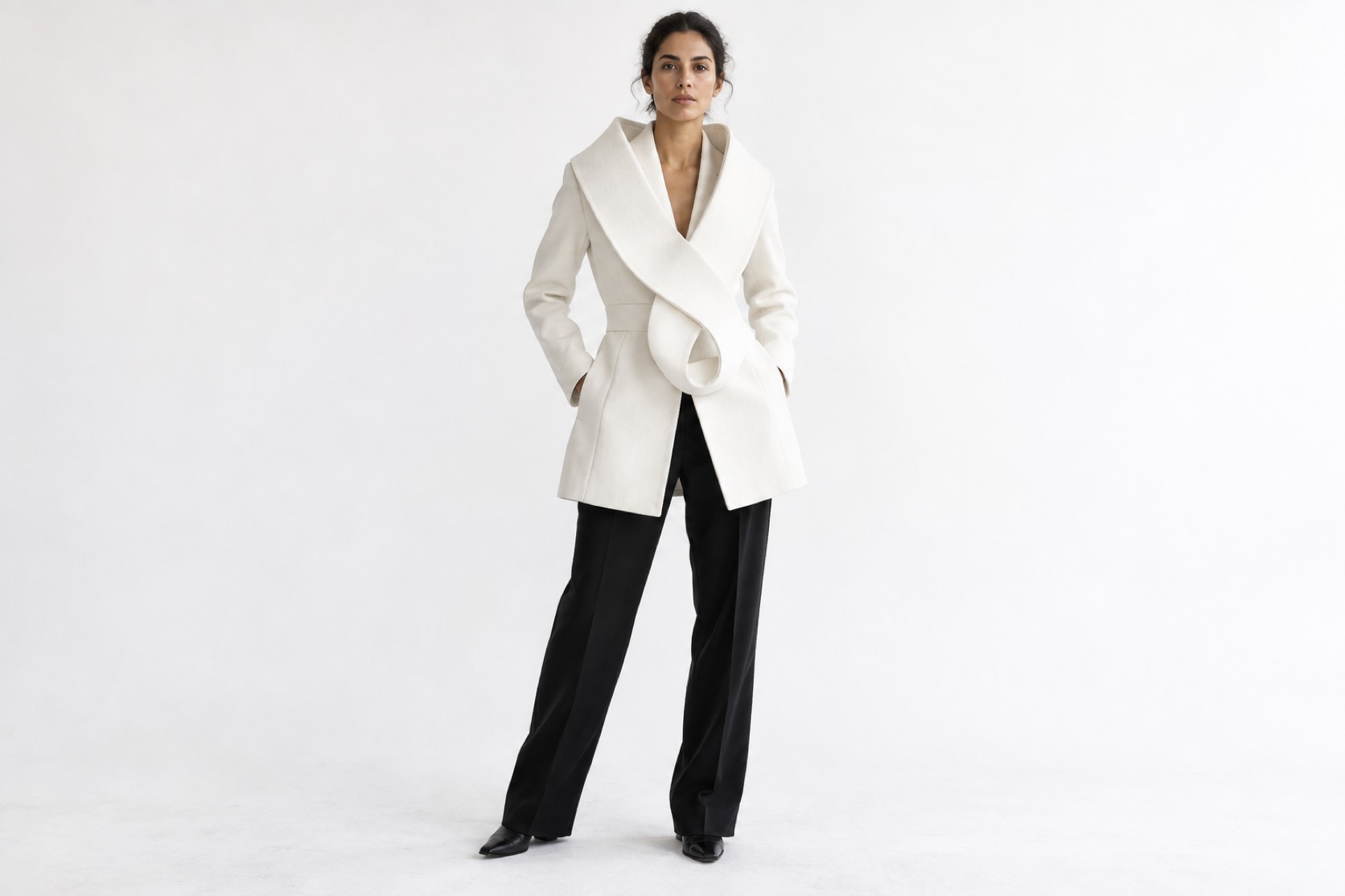
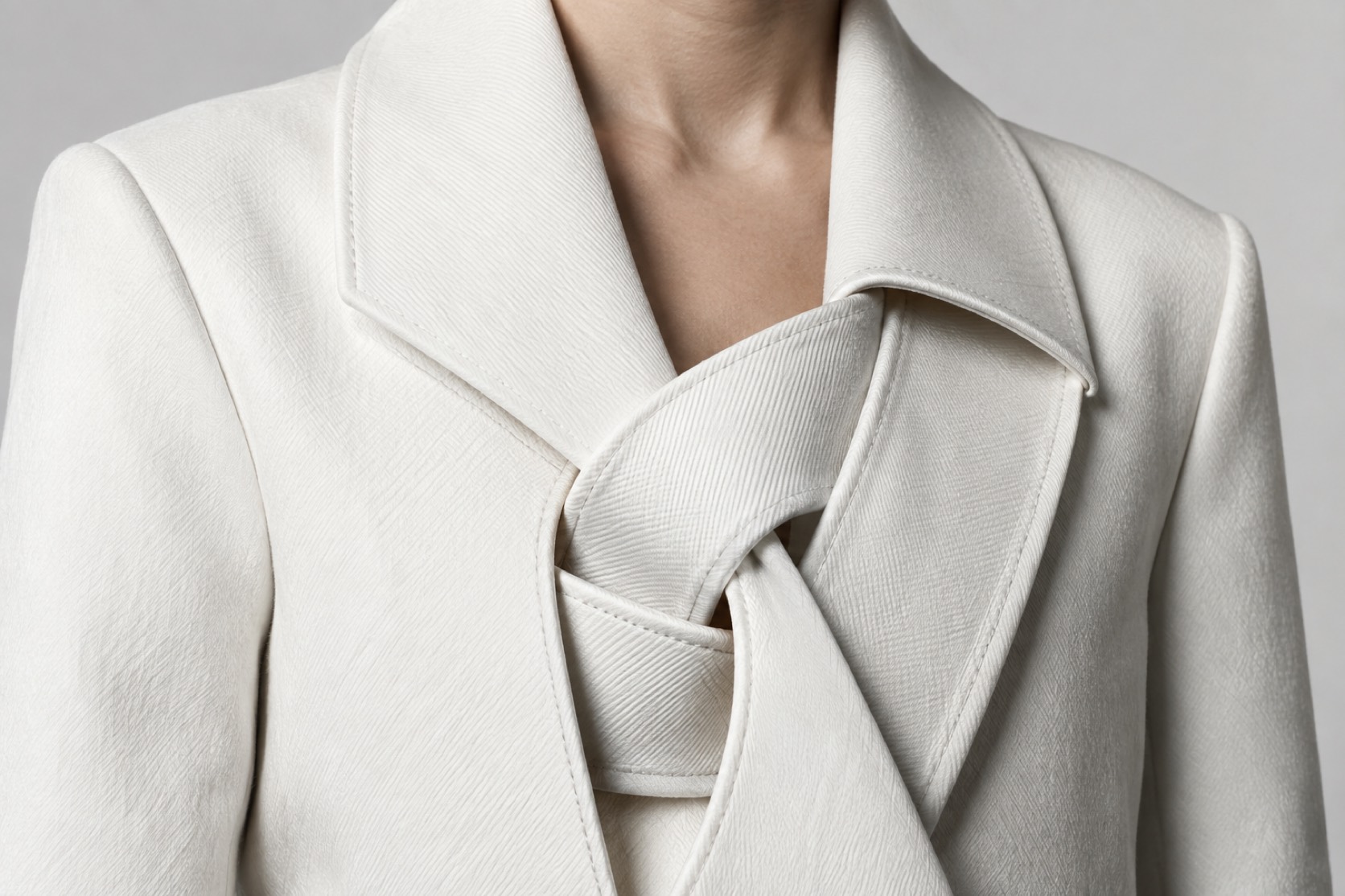
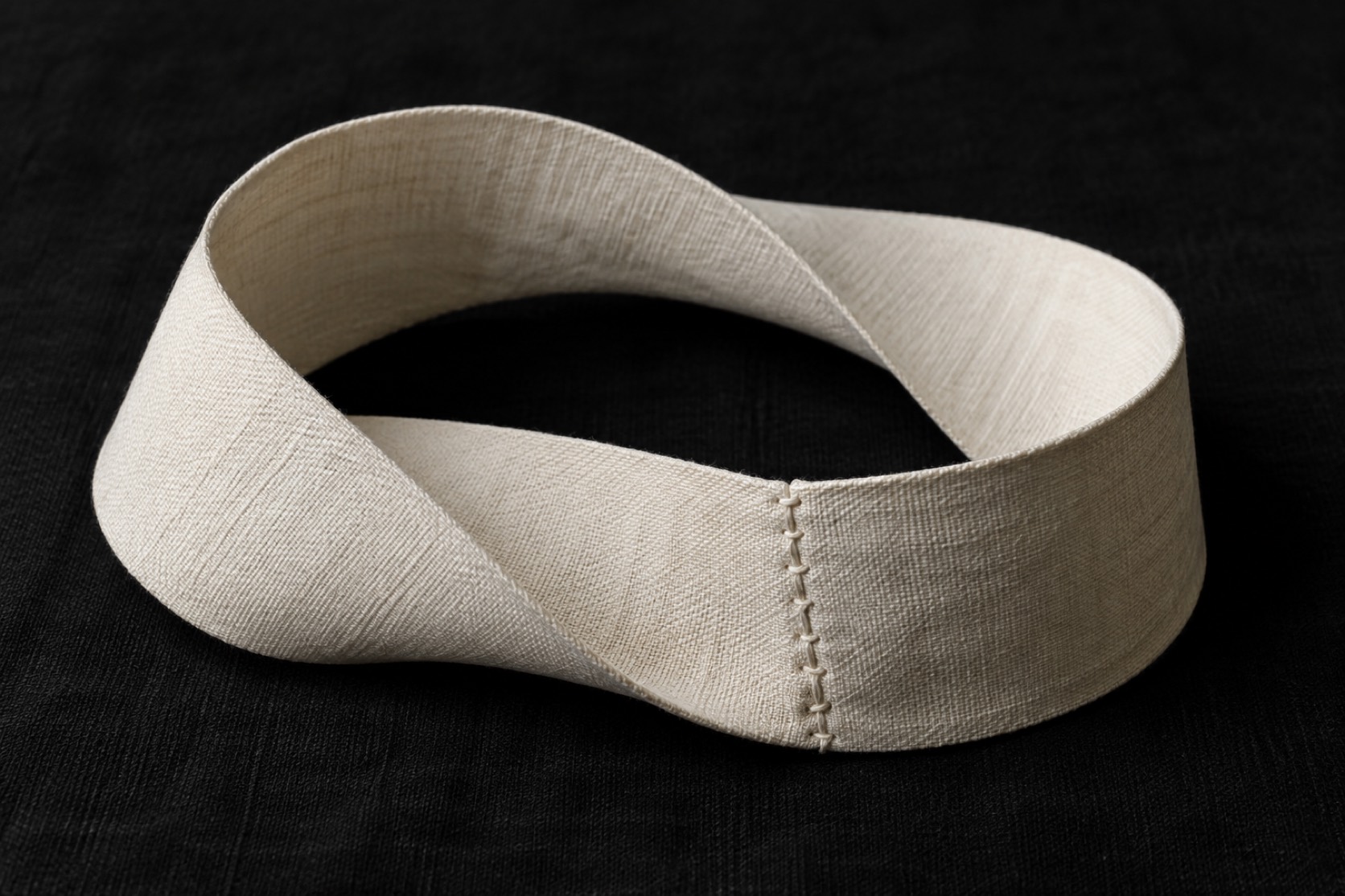
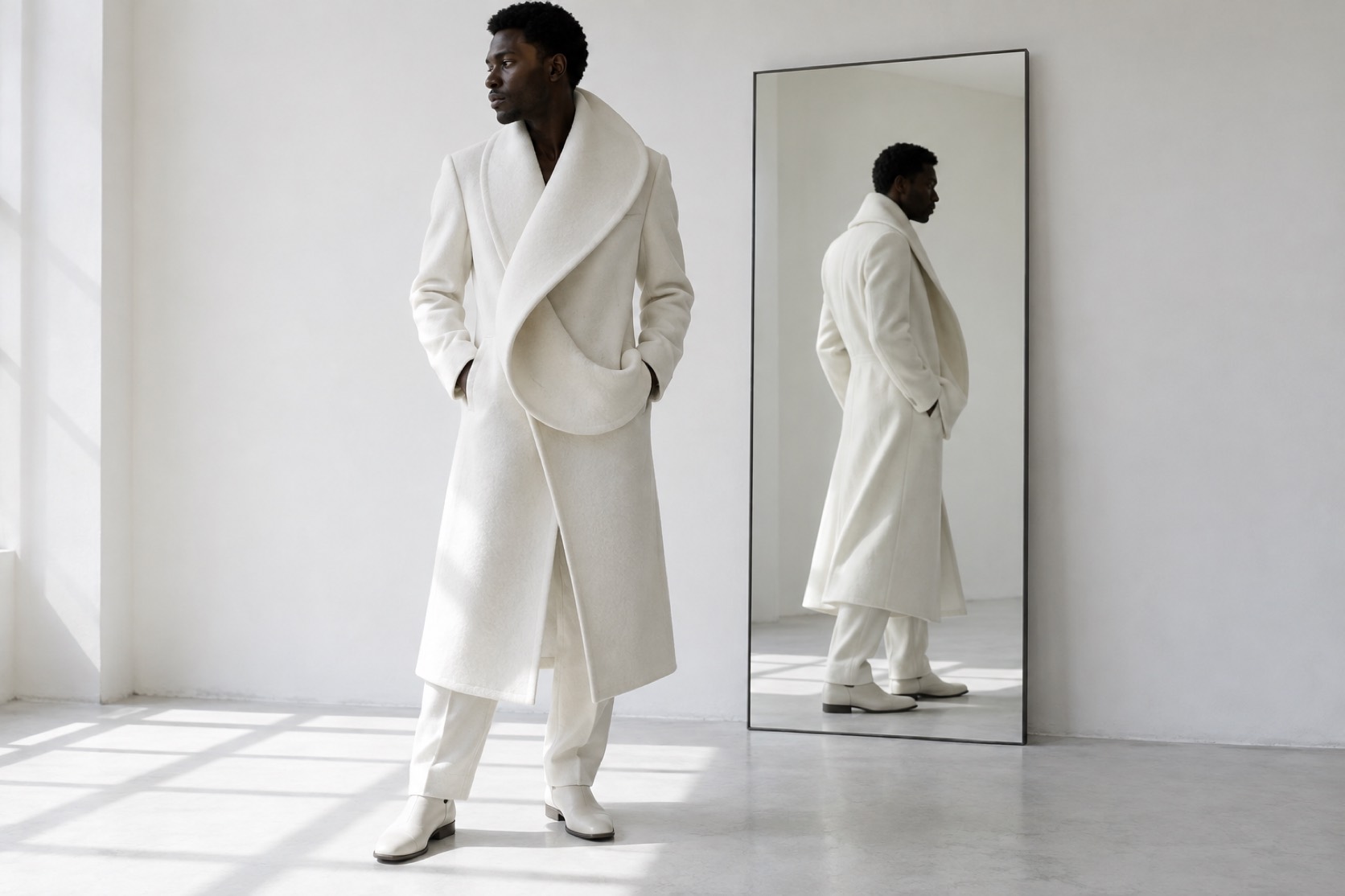
One physically legible illusion per picture, built from real construction, with bodies, fabric and light kept photographic
What it is, when it works, who it is for, and where it already exists.
Record 038-SF - when it works, who it is for, what it looks like
Where this aesthetic shows up in the real world · ↗ opens the source site
Where Surrealist Fashion came from, what makes it recognisable, and the fingerprint it leaves.
1930s, revived from the 1980s · Paris, between couture and the surrealist circle
Elsa Schiaparelli was working in Paris in the 1930s among the surrealists themselves, and the collaborations that resulted are the origin of the whole language. With Salvador Dali she made the lobster dress in 1937, a white silk organza evening gown with a single large lobster printed across the skirt, and the shoe hat in the same year, a black felt hat in the form of an upturned shoe. In 1938 came the skeleton dress, a black crepe gown with the ribs and spine raised in trapunto quilting, so the body's interior appeared on its surface. Each is one clear idea, executed with couture technique and worn with a straight face.
That combination is the whole method. The garments were not photographed strangely or lit strangely; they were built strangely and then treated as clothes. The tension comes from the ordinariness around the illusion, and from the fact that a viewer can work out how it was made. Schiaparelli also made the strangeness a house colour, registering shocking pink in 1937 and using it as the signature of a brand built on wit.
The idea returned once fashion could afford it again. Viktor and Rolf, founded in 1993, built collections around single conceptual devices. Museums consolidated the reading: the Metropolitan Museum's Schiaparelli and Prada, Impossible Conversations, in 2012, set the 1930s work beside a contemporary house. The failure mode has stayed constant for ninety years. Floating objects, distorted bodies and dream imagery are decoration; the style only works when one illusion is physically legible and everything else in the frame is plain.
“A single impossible thing, made in real cloth, photographed as if nothing unusual were happening.
The visual DNA: what makes it recognisable
8-channel console with the fingerprint on its display. Save the card, or share the page

The definitive color scheme for this aesthetic
How to shoot it, how to prompt it, and how to board it.
How to shoot this aesthetic
"One illusion per picture, built in real cloth, with the body, the light and the ground kept completely ordinary"
Shot list
Lighting
Conventional and photographic: one soft key, a little fill, a clean shadow. The light must never be part of the trick. If the lighting is strange as well, the eye stops believing the garment.
Drop this into Studio to generate in this aesthetic
Surrealist fashion, one clear physically legible illusion built from real construction, a garment that appears to fold through itself, a sleeve at the wrong scale, a sculptural accessory or a void where cloth should be, made with boned and wired interlinings, duchesse satin, felt and leather, body, fabric and light kept photographic, shocking pink, black and bone, no floating objects, no distorted anatomy
The record applied to your project. The record's kit is free; your brand, references and plates come with membership
01 · Hero application02 · Material and finish03 · Palette in context04 · Photography directionWhether to use it, what it costs to do properly, and where it stands right now.
Two written calls, seven meters, and when to walk away
One illusion, made for real, photographed plainly. Decide what the garment appears to do, then build the construction that actually does it, and describe that construction in the brief so nobody reaches for retouching. The figure, the light and the ground stay conventional; the strangeness lives in the garment alone. Two illusions in one frame cancel each other, and a quotation of a famous surrealist piece is a museum caption, not a picture.
Right when a single image has to be remembered and the brand can afford to build the trick: a cover, a fragrance, an accessory launch. One illusion, physically made, plainly photographed. A second illusion in the frame halves the first, and a nod to a famous surrealist piece hands the picture to someone else.
The illusion has to be built, not composited: wired interlinings, boning, a pattern cutter who can make cloth do one impossible thing.
One clear idea per picture is harder than ten dream objects. The trick has to be legible and physically explicable.
Everything except the illusion must stay ordinary and photographic, or the eye stops believing any of it.
Dream objects, floating hats and stretched bodies are a filter, and the audience knows the filter.
Schiaparelli made it a house language; a handful of covers a year reach for it.
A lobster on a dress in 1937 is still the reference, because the joke was built, not pasted.
One illusion, constructed for real, is a couture commission with a photographer attached.
A Pro feature: origins, practitioners, and pitfalls
Neighbours, cross-references, blends, and the questions people ask.
Connected across the creative knowledge graph
Where it stands now, and what it costs you to use it
This is fashion's most efficient device for producing a single unforgettable image, which is why it recurs on covers, in fragrance and in accessory launches. It also carries wit, a quality most luxury imagery has abandoned, and wit that is precisely built reads as confidence.
It is easy to do badly and the failures all look alike: floating objects, warped anatomy, dreamlike haze. Those are effects rather than constructions, and the viewer cannot work out how they were made, so the pleasure disappears. The rule that keeps it honest is that the illusion has to exist in the room.
Mix Surrealist Fashion with any style in the library
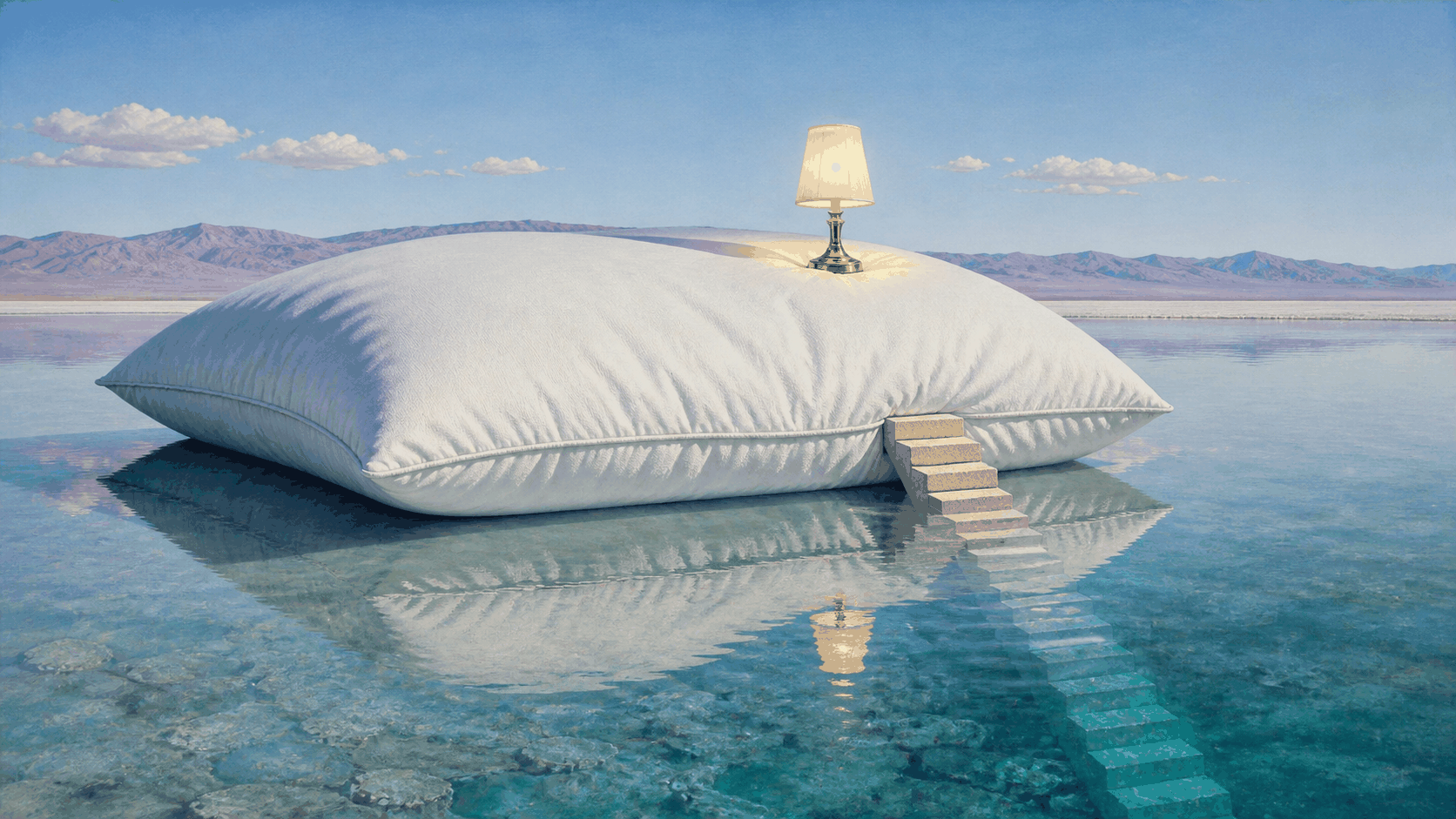 Surrealist Fashion 50%Surrealism 50%
Merged palette
#E4007C
#1A1A2E
#141416
#E84393
#EDE6DA
Leads expressive, analog, chaotic
Typography · from Surrealist Fashion
Cormorant Garamond over Lora
Materials
Use it
Surrealist fashion, one clear physically legible illusion built from real construction, a garment that appears to fold through itself, a sleeve at the wrong scale, a sculptural accessory or a void where cloth should be, made with boned and wired interlinings, duchesse satin, felt and leather, body, fabric and light kept photographic, shocking pink, black and bone, no floating objects, no distorted anatomy (50%), infused with Surrealist art with dreamlike impossible juxtapositions, Salvador Dalí and René Magritte influence, hyperrealistic rendering of illogical scenes, melting or floating objects defying physical law, uncanny symbolic imagery, the unconscious mind made visible, color palette strictly #E4007C #1A1A2E #141416 #E84393 #EDE6DA, overall character: expressive, analog, chaotic
A surrealist garment presents one legible impossibility built from real construction, in an otherwise ordinary scene. The strangeness is in the object, not in the lighting, the retouching or the pose, and a viewer can reason out how it was made.
Elsa Schiaparelli, working in Paris in the 1930s in collaboration with surrealist artists including Salvador Dali. The lobster dress and shoe hat of 1937 and the skeleton dress of 1938 established the method: one clear idea per garment, executed with couture technique.
With the same tools couture uses for shape: wire, buckram, boned and wired interlinings, concealed openings and facings. Deciding the construction first is what keeps the fabric and light photographic, and it is why the finished picture survives scrutiny.
Every style in the library is broken down like this one: the palette, the typography, the materials and the lineage.
Explore the style library →