When to use it
- Outdoor, cycling, running and mountain brands
- Product stories where construction is the proof
- Campaigns that need movement and weather rather than a studio
- Any brand whose promise is that the thing works
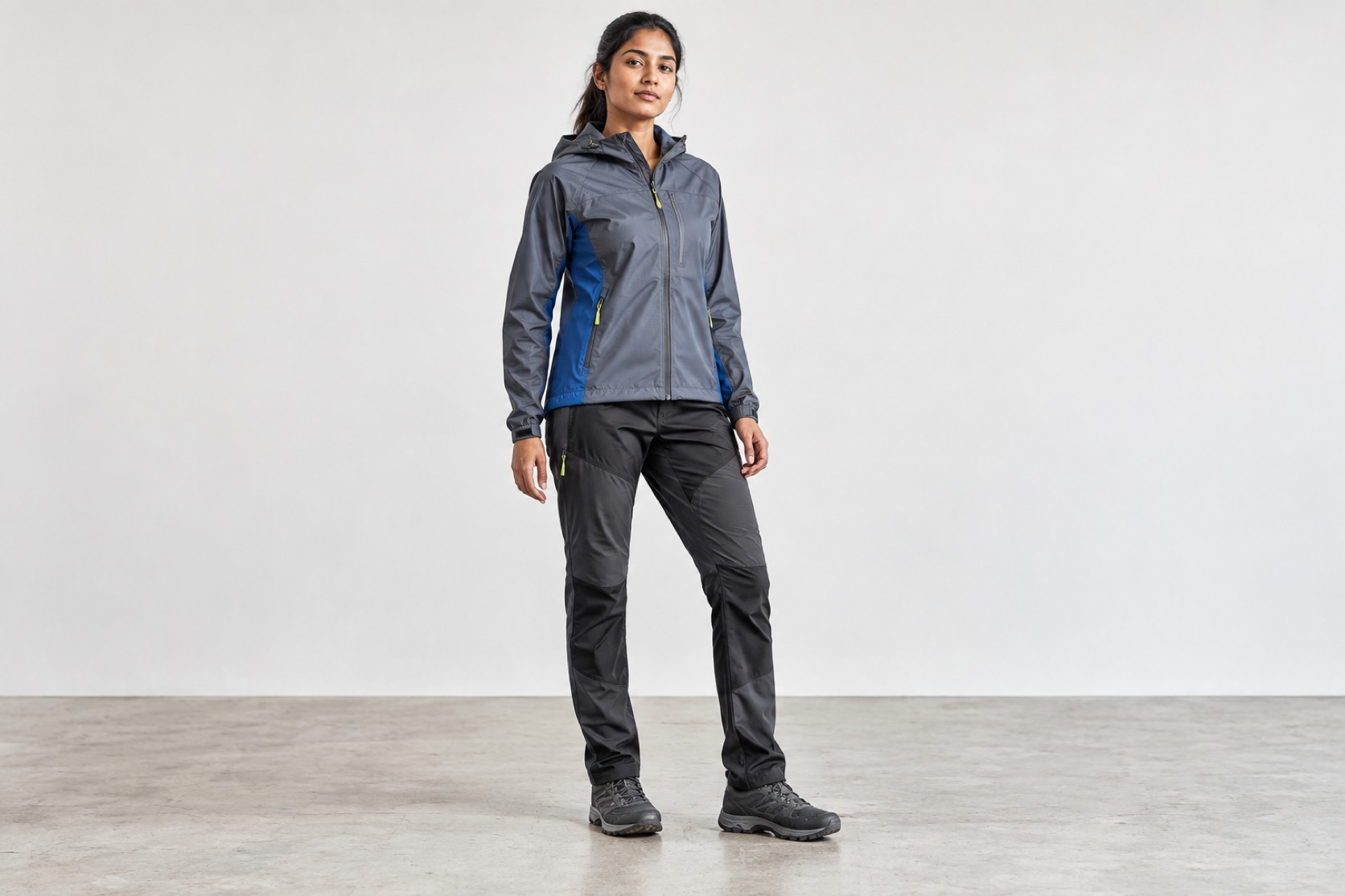
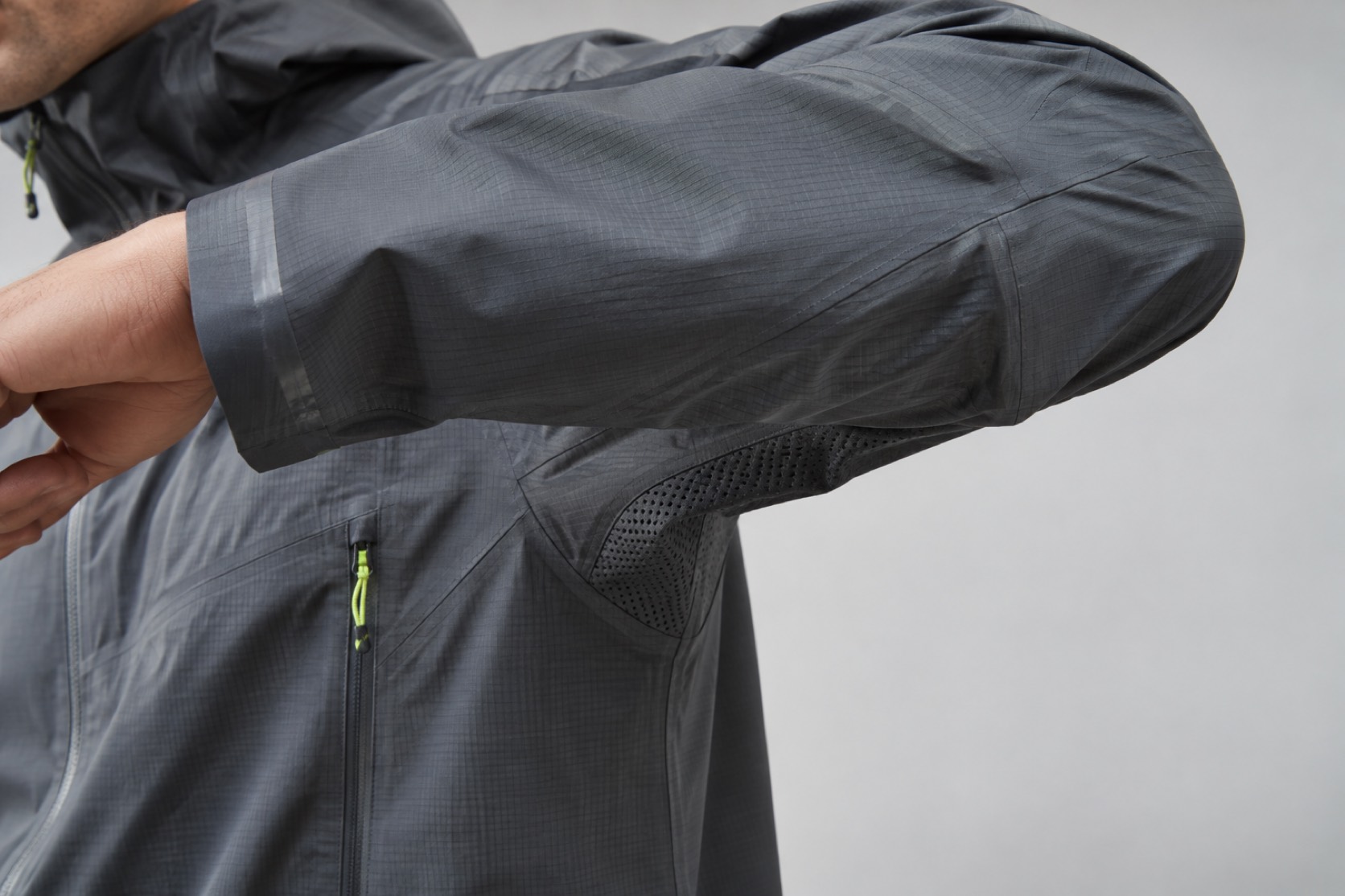
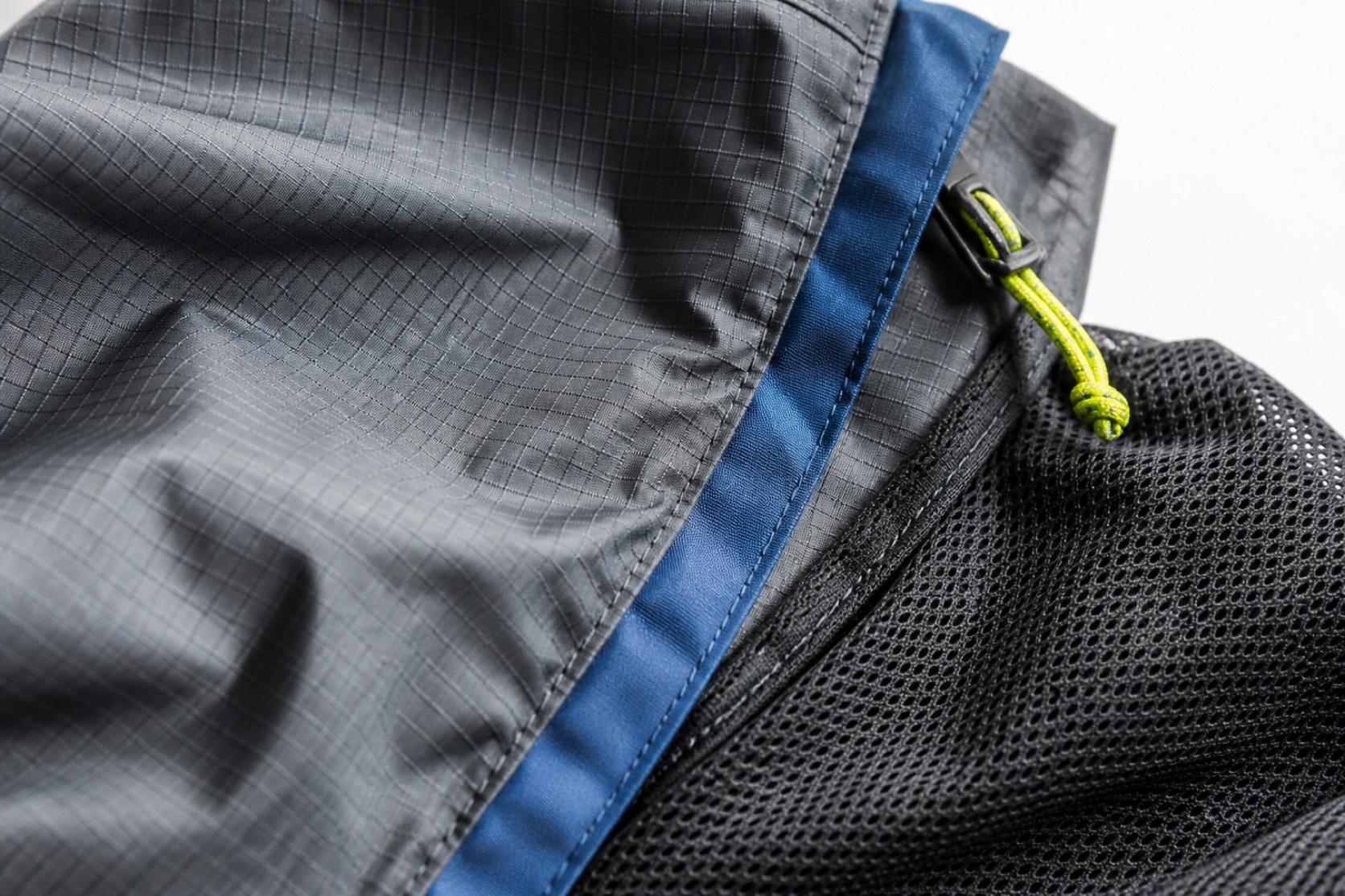
Function shown in the garment: articulated joints, mapped ventilation, taped seams, purposeful closures and a shell that keeps real weather out
What it is, when it works, who it is for, and where it already exists.
Record 039-TS - when it works, who it is for, what it looks like
Where this aesthetic shows up in the real world · ↗ opens the source site
Where Technical Sportswear came from, what makes it recognisable, and the fingerprint it leaves.
1970s to present · North American and European outdoor manufacturing
The modern technical shell begins with a material. In 1969 Bob Gore stretched polytetrafluoroethylene into a microporous membrane with pores small enough to stop liquid water and large enough to pass vapour, and from 1976 it was sold as Gore-Tex. A garment could now be waterproof without being a bag, which made the rest of the vocabulary necessary: seams had to be taped, because a needle hole is a leak; zips had to be laminated or covered; and vents had to be placed where the body actually overheats, since the membrane alone could not keep up with a climbing pace.
Two traditions then developed the language in different directions. In Europe, Massimo Osti founded Stone Island in 1982 and treated fabric research as the design: garment dyeing, reflective and thermosensitive finishes, and a lens badge that made the technical claim visible. In North America, Arc'teryx was founded near Vancouver in 1989 in a climate that punishes a bad seam, and pushed articulation and laminated construction to the point where a jacket's pattern is drawn around a bent arm rather than a straight one. Nike launched ACG in 1989, bringing the same ideas to a mass audience.
Since the 1990s the vocabulary has leaked steadily into fashion, through Acronym, through what the internet came to call gorpcore, and through every luxury house that has put a taped seam on a coat. The leak is where the style goes wrong. Straps, pouches, harnesses and plates that no body needs turn a working garment into a costume, and a taped seam on a jacket that is not waterproof is a claim the fabric cannot keep. The honest version shows three details that each do a job, in weather that proves it.
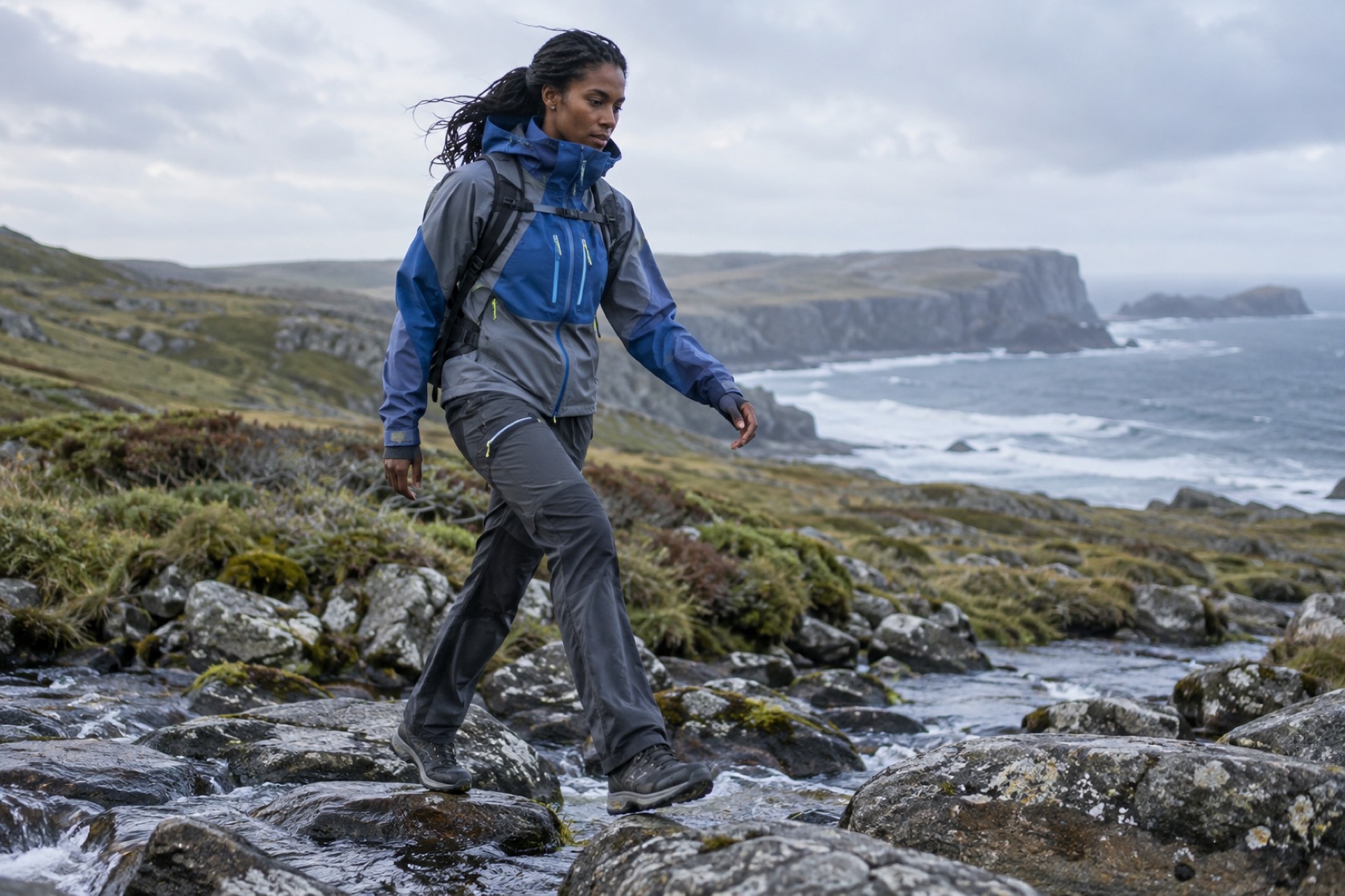
“Clothing that has to work, photographed in the weather it was made for.
The visual DNA: what makes it recognisable
8-channel console with the fingerprint on its display. Save the card, or share the page

The definitive color scheme for this aesthetic
How to shoot it, how to prompt it, and how to board it.
How to shoot this aesthetic
"Photograph the garment working: real weather, real movement, and three details that each do a job"
Shot list
Lighting
Available daylight in the weather the garment is for: overcast, rain, wind, or the last of the light. One small hard source at dusk to wake the reflective detail. No studio, no beauty light.
Drop this into Studio to generate in this aesthetic
Technical sportswear, a lightweight shell in ripstop or stretch woven fabric with articulated knees and elbows, mapped mesh ventilation, taped seams, laminated zips and one restrained reflective detail, worn in motion in real weather, rain or wind on a hillside or a wet street, storm grey, black and slate blue, photographic, no tactical costume, no extra straps, no armour
The record applied to your project. The record's kit is free; your brand, references and plates come with membership
01 · Hero application02 · Material and finish03 · Palette in context04 · Photography directionWhether to use it, what it costs to do properly, and where it stands right now.
Two written calls, seven meters, and when to walk away
Prove the garment works and show nothing it does not need. Photograph in the weather it was made for and let the articulation read in motion: a bent knee, a raised arm, a hood in wind. Keep the palette to grey, black and one blue, and let one reflective detail catch the light. Add a strap, a pouch or a panel the body does not need and it becomes a costume; claim a performance the fabric cannot deliver and it becomes a lie.
Right when the product's promise is that it works, and the picture can prove it: outdoor, cycling, running, a wet city. Movement and weather are the brief; the studio is not. Every detail shown must do a job the body needs, and every claim made must be one the fabric can keep.
Real technical fabric and a location with weather. The shell has to be a shell or the whole premise is false.
The kit is documented: articulation, ventilation, taped seams. The craft is in restraint, showing three details rather than twelve.
Rain, wind and movement in one frame, with the seam tape still legible. It is a location shoot with a macro brief.
Straps, pouches and invented specs turn a working garment into a costume in one accessory.
Outdoor and performance brands own it, and fashion borrows it every winter.
As long as it rains, a shell that works and looks like it works will sell.
Real fabric and real weather; the restraint costs nothing.
A Pro feature: origins, practitioners, and pitfalls
Neighbours, cross-references, blends, and the questions people ask.
Connected across the creative knowledge graph
Where it stands now, and what it costs you to use it
Technical sportswear is the aesthetic of demonstrable competence. Its details are legible as proof, which is why it has become the default visual language not only for outdoor brands but for anything wanting to say that it works: transit, tooling, cycling, cities with weather.
The failure mode is costume. Because the details read as capability, adding more of them looks like adding more capability, and the result is a garment covered in straps that do nothing. The discipline is subtraction: show only what the body needs, and shoot in conditions that make the claim true.
Mix Technical Sportswear with any style in the library
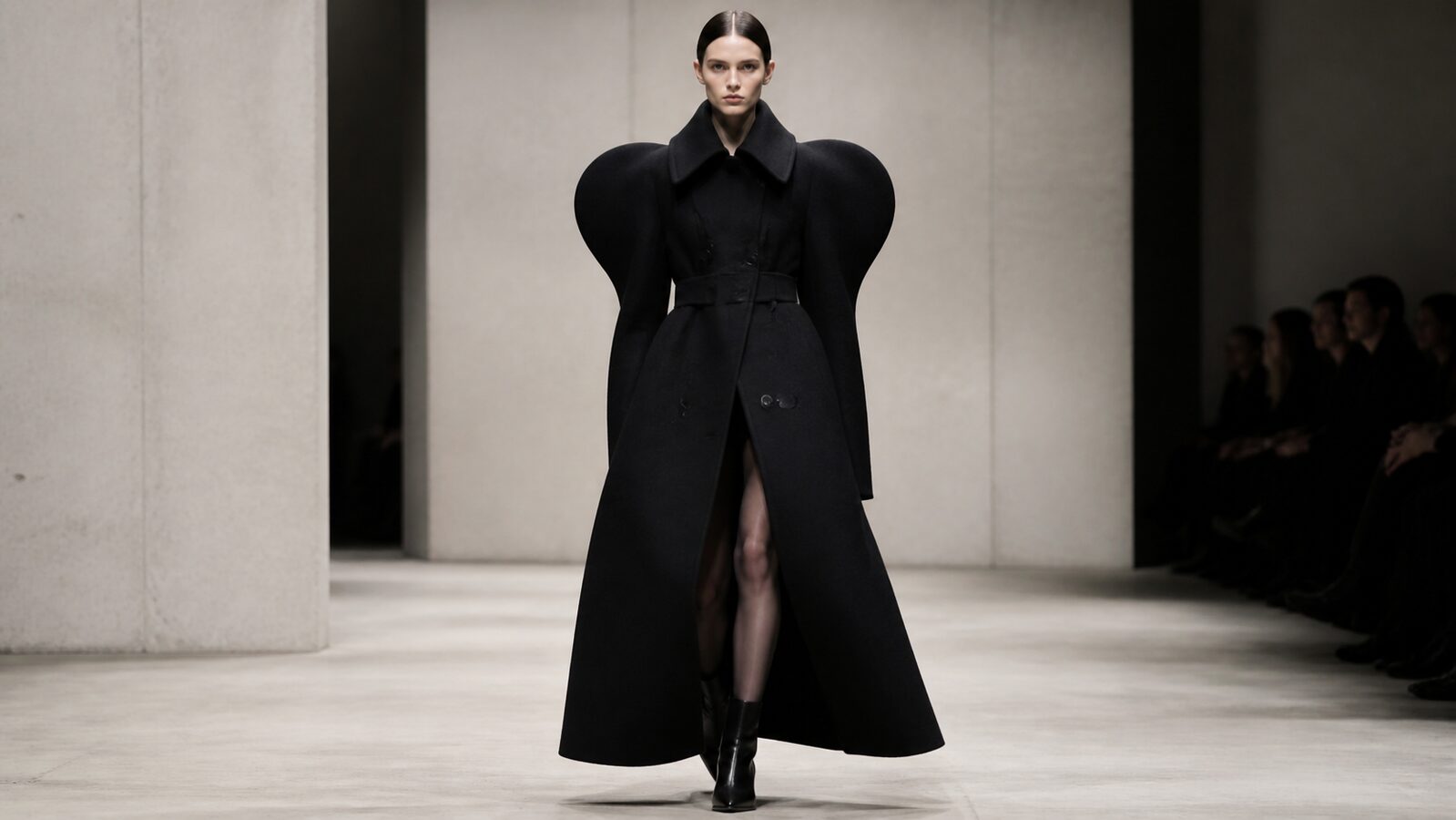 Technical Sportswear 50%Fashion Design 50%
Merged palette
#5A6068
#2A2018
#111214
#8A7A6A
#2F6F8F
Leads structured, futuristic, digital
Typography · from Technical Sportswear
Bebas Neue over Roboto
Materials
The calls this blend forces
These two disagree on 3 things, and a blend cannot average them: you pick a side. At this mix:
Restrained or Expressive? Technical Sportswear is restrained, Fashion Design is expressive. This mix lands expressive.
Cool or Warm? Technical Sportswear is cool, Fashion Design is warm. This mix lands cool.
Minimal or Maximal? Technical Sportswear is minimal, Fashion Design is maximal. This mix lands minimal.
Use it
Technical sportswear, a lightweight shell in ripstop or stretch woven fabric with articulated knees and elbows, mapped mesh ventilation, taped seams, laminated zips and one restrained reflective detail, worn in motion in real weather, rain or wind on a hillside or a wet street, storm grey, black and slate blue, photographic, no tactical costume, no extra straps, no armour (50%), infused with Fashion design aesthetic with considered silhouette and garment construction, runway-quality styling and fabric drape, editorial fashion-photography lighting, seasonal collection cohesion, haute couture attention to tailoring detail, color palette strictly #5A6068 #2A2018 #111214 #8A7A6A #2F6F8F, leaning restrained over expressive, cool over warm, minimal over maximal, overall character: structured, futuristic, digital
Sewing a waterproof fabric punches thousands of needle holes, each one a potential leak. A heat-bonded tape is applied over the seam on the inside to seal them. It is the detail that separates a genuinely waterproof shell from a water-resistant one, and it is visible on the garment's interior.
Cutting the pattern around a joint in its bent position rather than straight, usually with a curved or darted panel at the knee and elbow. An articulated garment moves without riding up or binding, and the shaping is visible as a seam that curves where the body does.
Technical sportswear is defined by construction that serves a real performance need. Techwear is a styling movement that borrows the look, and tactical clothing borrows a military one. The test is whether each feature does a job for the wearer's activity; straps and pouches with no function belong to the other two.
Every style in the library is broken down like this one: the palette, the typography, the materials and the lineage.
Explore the style library →