Where Fabric Over Photo came from, what makes it recognisable, and the fingerprint it leaves.
History, Fabric Over Photo aesthetic history
2010s to now; the veiled portrait it descends from, 1920s · Surrealist photography and painting in Paris, carried into fashion photography and revived by contemporary lookbooks
The Surrealists worked out that covering something makes people look harder at it.In 1920 Man Ray photographed an object, a sewing machine, wrapped in cloth and bound with cord, and called it The Enigma of Isidore Ducasse after Lautreamont's line about a chance meeting of a sewing machine and an umbrella.In 1928 Rene Magritte painted The Lovers, two heads kissing through white cloth, the first of four versions.In both, the fabric is not decoration.It is a refusal, and the refusal is the subject.
Fashion photography absorbed the idea quickly, because it needed a way to sell mood rather than detail. Erwin Blumenfeld, who came out of Dada and Surrealism before he emigrated and became one of the defining photographers at Harper's Bazaar and American Vogue, built a career on distortion, veils and screens between lens and face. At the other end of the scale, Christo and Jeanne-Claude wrapped the Reichstag in 1995 in a hundred thousand square metres of silvery fabric and drew millions of people to look at a building they had walked past for decades.
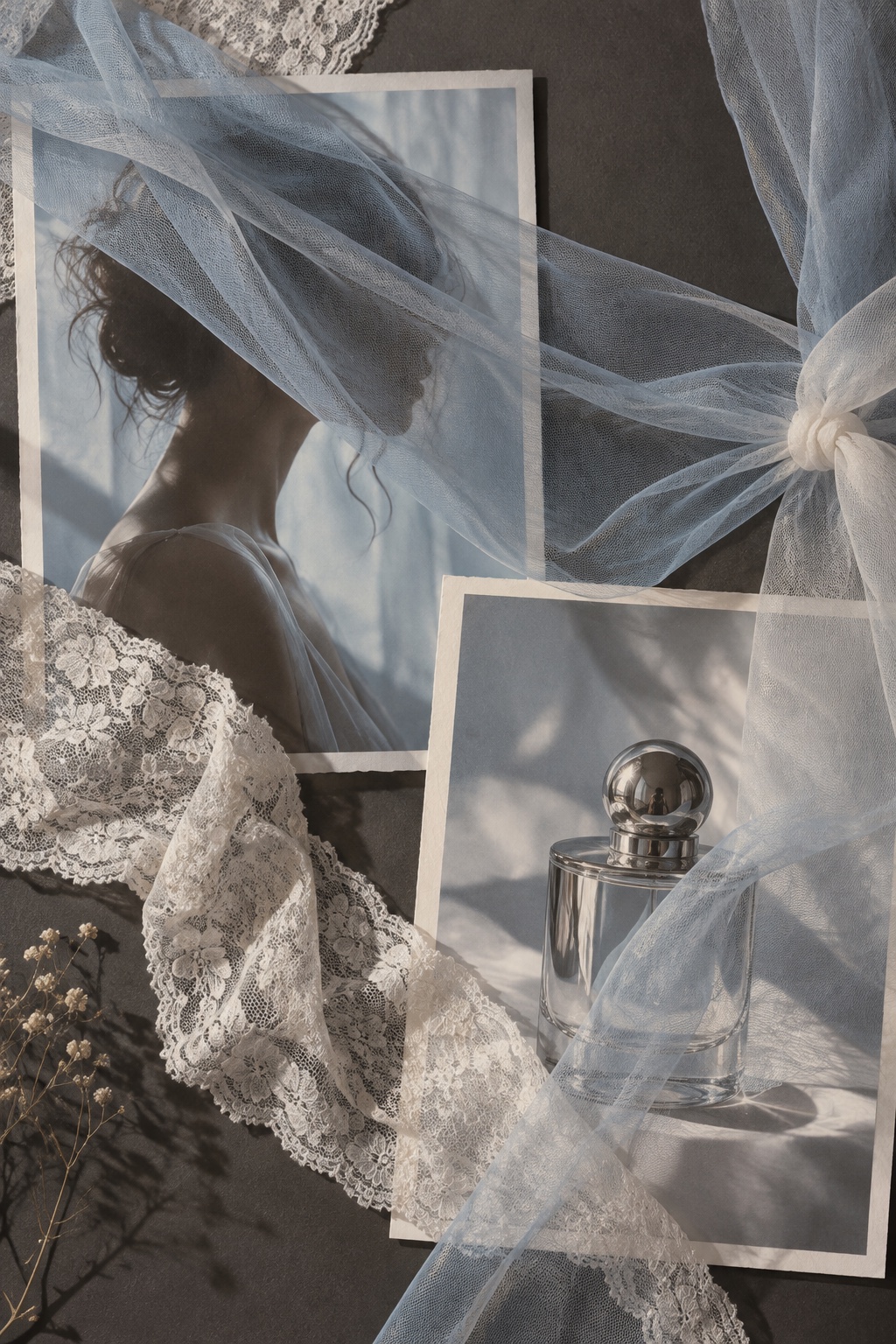
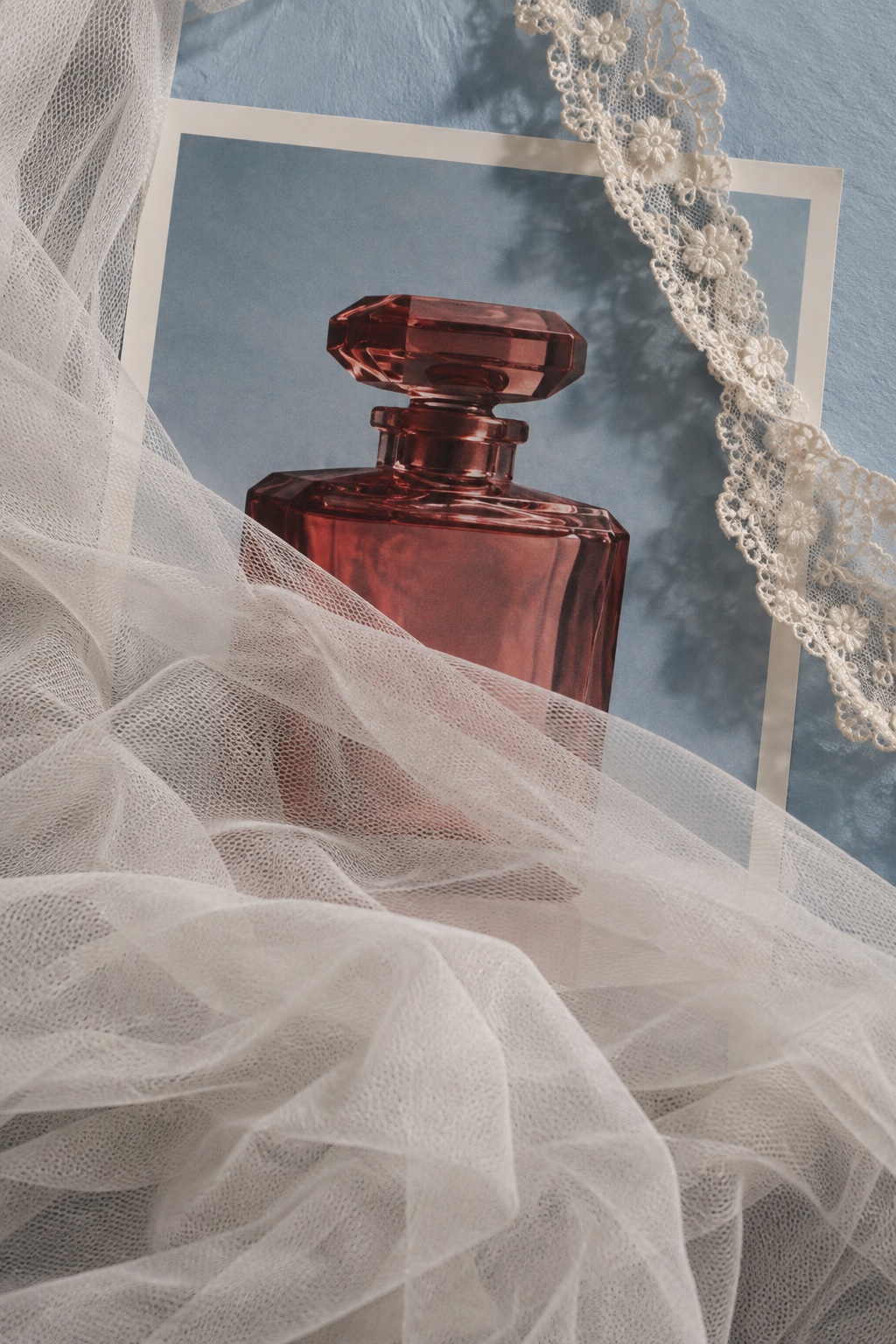
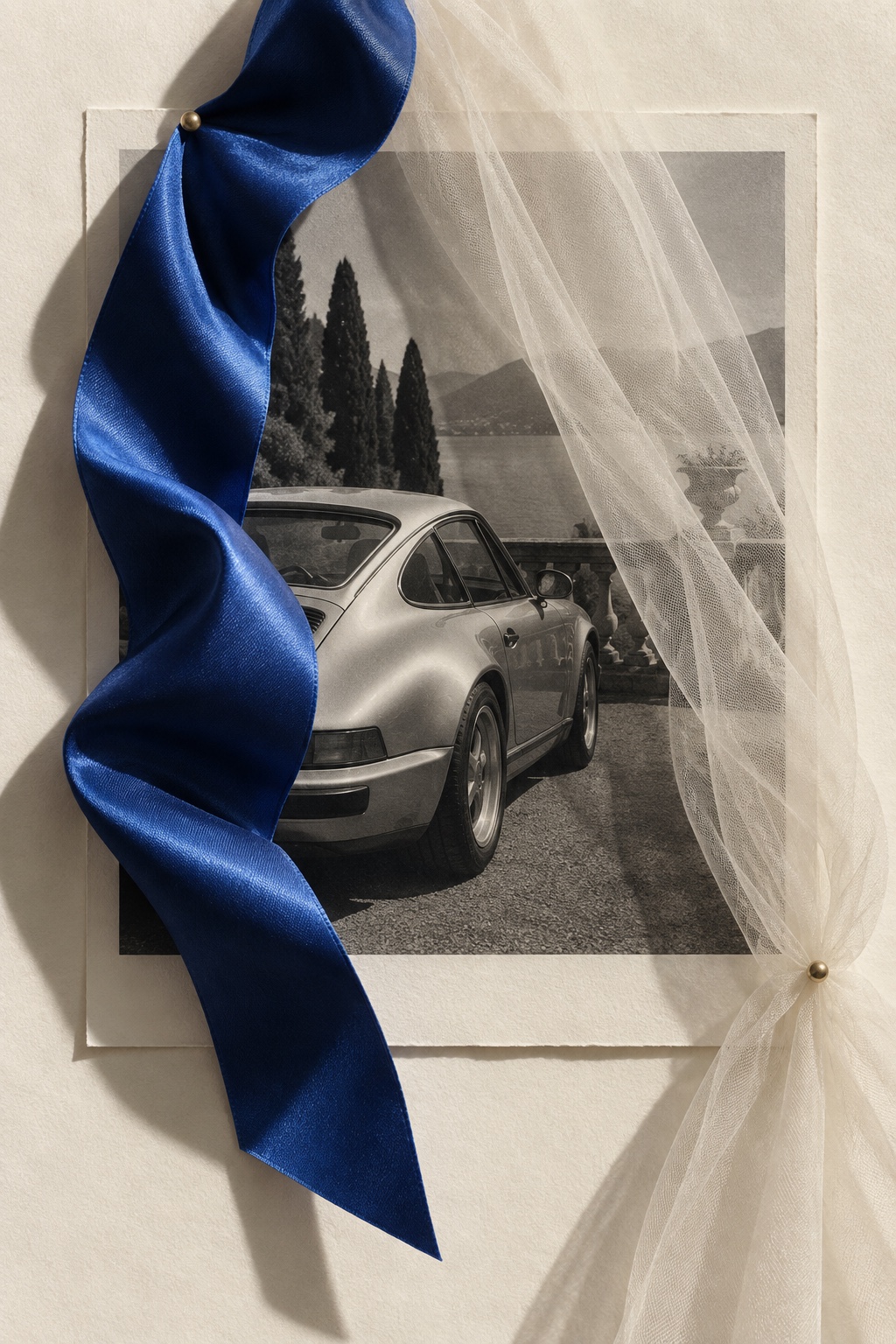
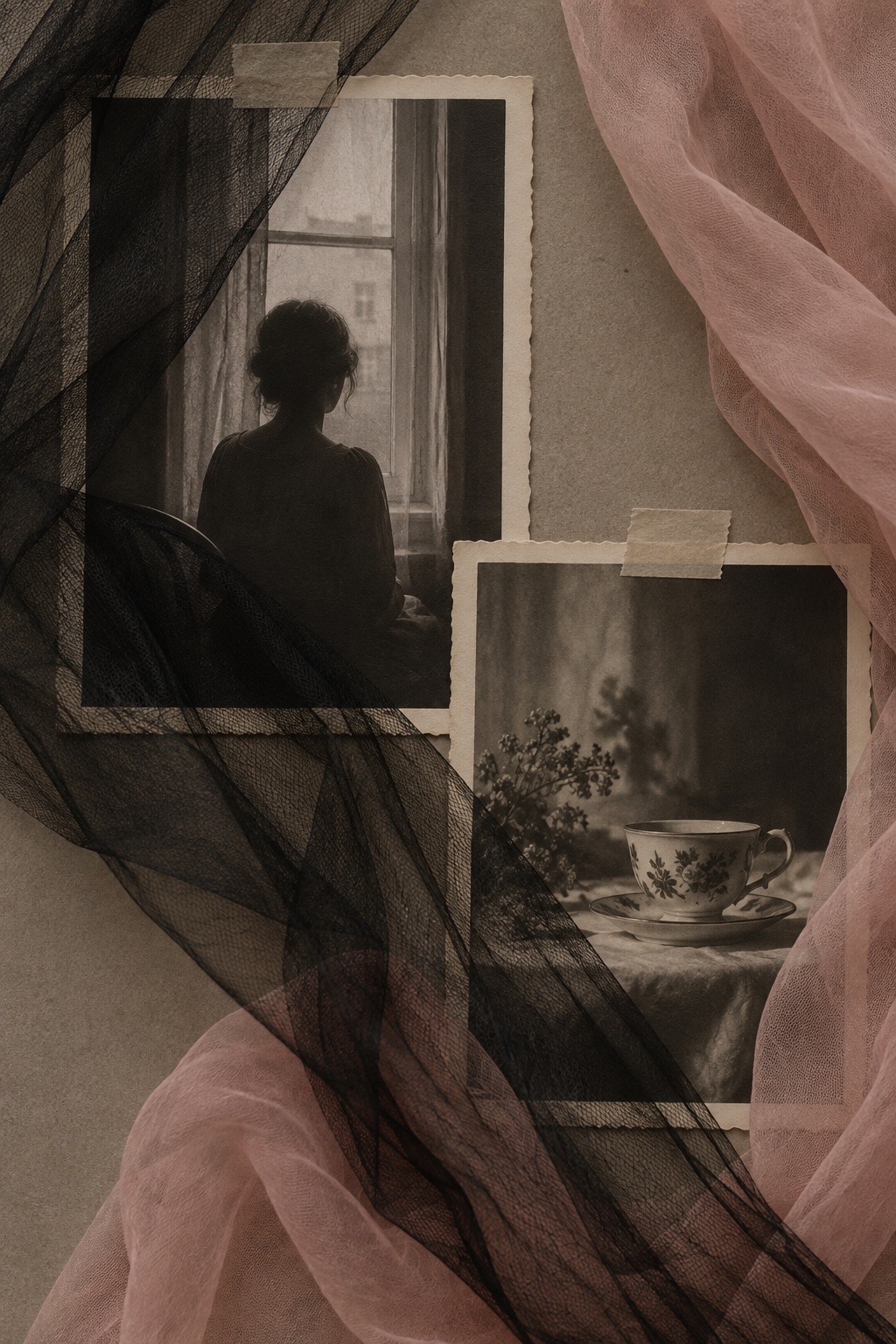
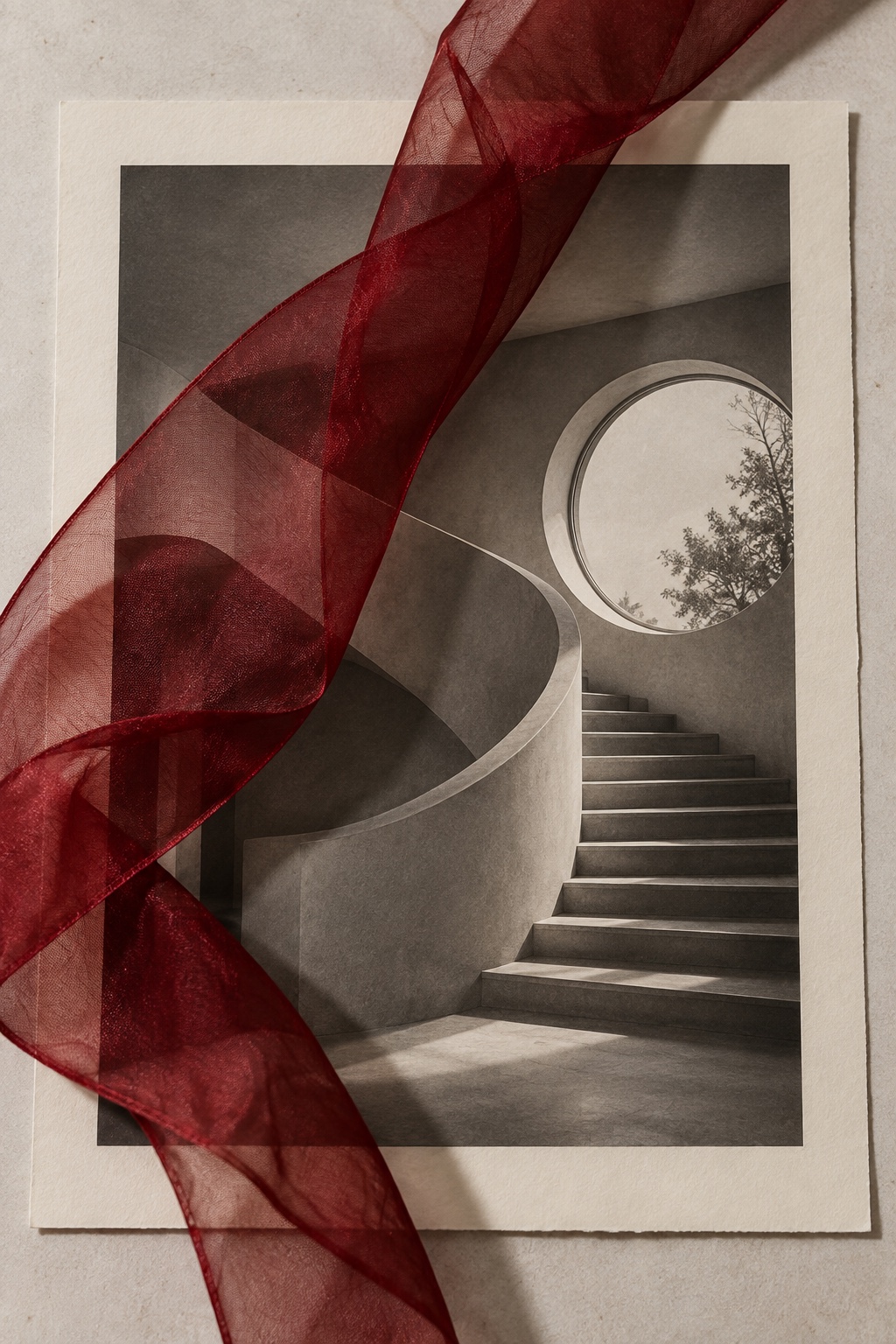
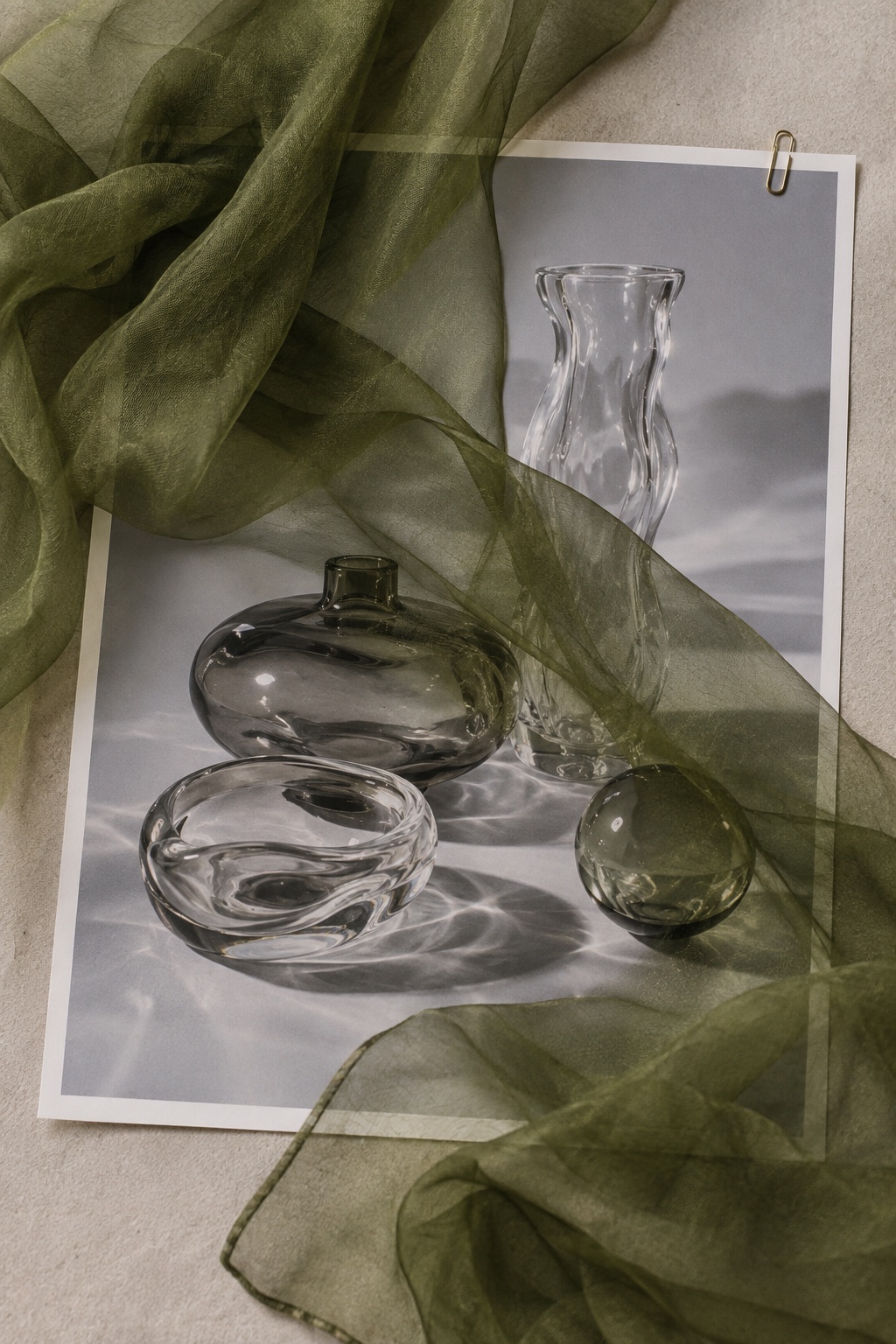
The current version is deliberately small and physical. A portrait is printed matte, real cloth, lace, tulle, organza or gauze, is draped, knotted or pinned across the print, and the whole arrangement is photographed a second time. That second exposure is the entire technique: the fabric casts a shadow onto the paper, the weave falls sharp while the printed face behind it goes soft, and the two live at different depths in a way that a texture layer set to multiply never does.
“
Real cloth laid on a real print, so half the face is taken away.
Visual markers, Fabric Over Photo aesthetic visual markers
One high-contrast serif line, usually on the facing page
Wide margins and a single caption
No type laid over the veil
grid
02
A single portrait filling the frame with the cloth crossing it
Half the face covered, never all of it
A clean page facing the veiled one
Macro crops where the weave is sharp and the face is not
materials
03
Print ivory #D8D3C6 and warm paper #B5A296 as the ground
Tulle grey #8C97A3 and organza lilac #E3DCE4 as the cloth
Veil shadow #3A3F47 where the fabric lifts off the paper
Lace, tulle, organza, gauze and silk over matte photographic prints, with pins, tape and thread
motifs
04
A weave falling sharp on paper while the face behind goes soft
Knots and pins holding cloth at the edge of the frame
A fabric shadow that proves the cloth is real
A face half withheld
Aesthetic profile
8-channel console with the fingerprint on its display. Save the card, or share the page
Aesthetic Profile
Fabric Over Photo
2010s to now; the veiled portrait it descends from, 1920s · Surrealist photography and painting in Paris, carried into fashion photography and revived by contemporary lookbooks
Attribute console · 025-FO
leans analog, organic, nostalgic
8 CH
FIG. 1
01Minimal
Maximal20%
02Analog
Digital80%
03Restrained
Expressive20%
04Cool
Warm10%
05Futuristic
Nostalgic50%
06Structured
Chaotic10%
07Dark
Light20%
08Organic
Geometric70%
AnalogOrganicNostalgic
Omoro · Attribute console · 025-FO
omoro.io/styles/fabric-over-photo
Color Palettes, Fabric Over Photo color palettes and hex codes
How to shoot it, how to prompt it, and how to board it.
Photo Direction
How to shoot this aesthetic
"Print it, lay the cloth on it, then photograph the whole thing again"
Shot list
A printed portrait on matte paper with grey tulle pulled taut across the eyes
Lace laid loose over a face so the weave falls sharp on the paper and soft on the skin beneath
A print half covered by knotted organza, the knot pinned at the edge of the frame
Lighting
Soft, directional daylight. The fabric has to cast a real shadow onto the print: a raking window light separates cloth from paper, while flat light makes the whole thing look composited.
Drop this into Studio to generate in this aesthetic
Fabric over photo, a printed portrait on matte photographic paper with real cloth laid across it, lace or tulle or organza or gauze draped, knotted and pinned over the print and photographed again, the weave of the fabric sharp and casting its own soft shadow on the paper while the face behind goes soft, half the face obscured, creases and knots left in, print grain reading through the cloth, soft directional daylight, ivory, grey and pale lilac, romantic and withheld, no type over the fabric, no readable text
Paste as-is, or append your own subject
Mood Board
The record applied to your project. The record's kit is free; your brand, references and plates come with membership
Demo kit free, the rest with membershipThe record as a demo kit, free. Name a project and it is written for that
Omoro · Mood board · 025-FO
04
The judgement
Whether to use it, what it costs to do properly, and where it stands right now.
Creative verdict, Fabric Over Photo feasibility and strategic recommendation
Two written calls, seven meters, and when to walk away
Creative verdict
Should Fabric Over Photo be the call?
7 meters
FIG. 2
Assessment
Shoot the portrait, print it matte, then put real cloth on the print and photograph it again. The shadow the fabric throws onto the paper is the entire effect, so light from the side and keep the fill off. Let the weave go sharp while the face behind stays soft. A lace PNG set to multiply has no shadow and sits at one depth, and it reads as a filter at any size.
Verdict
Right when the brand sells a feeling rather than a specification: fashion lookbooks, beauty, fragrance, hospitality and editorial. It rewards real cloth and a real shadow, and fails as an overlay.
Production cost
Low
A print, a metre of fabric and a second exposure.
Creative difficulty
Medium
Deciding what to hide is the whole idea; hide the wrong half and the picture says nothing.
Execution difficulty
Medium
Getting the weave sharp and the face soft in one frame takes a careful focal plane and light that separates them.
Risk of misuse
Medium
Applied as a digital overlay it flattens into a filter, and the softness reads as a blur rather than a decision.
Prevalence
Emerging
Beauty, fragrance and fashion lookbooks are taking it up as they move away from hard retouching.
Longevity
Enduring
The veiled face runs from Magritte through a century of fashion photography; it does not date the way a treatment does.
Brand investment
Low
A metre of tulle, a matte print and a second exposure.
Avoid if
The product has to be seen clearly
The style exists to take half the picture away; a specification shot fights it.
There is no budget for a second pass
It is a print, a cloth and another exposure; skip that and all you have is an overlay.
The brand's register is clinical or technical
Veiling reads as romance and reticence, which undercuts a claim of precision.
Omoro · Creative verdict · 025-FO
Editorial Depth
A Pro feature: origins, practitioners, and pitfalls
Editorial depth
The Fabric Over Photo file
14 sections
FIG. 3
Context02Brands02Perception04Use04Index02
01Common MisconceptionThe principle beneath the surface
02Historical ContextOrigins, cultural moment, and reaction
03Brands That Accidentally Use This StyleNatural alignment, not category claims
04Brands That Perfectly Represent This StyleExceptional execution
07Creative FormulaThe visual system reduced to essentials
08Recognition SignalsHow to recognize it in two seconds
09When To Use This StyleContexts where the language performs
10Common Creative MistakesWhere imitation weakens the signal
11Best Brand ApplicationsIndustries with a natural advantage
12Creative Application AnalysisFit, feasibility, and production reality
13Related StylesClose languages and the key distinction
14Visual DNA SummaryThe sentence to remember
The editorial depth, with membershipOpening soon
Omoro · Editorial depth · 025-FO
05
The index
Neighbours, cross-references, blends, and the questions people ask.
Related concepts
Connected across the creative knowledge graph
Cultural relevance, Fabric Over Photo cultural relevance today
Where it stands now, and what it costs you to use it
Fabric over photo is what a brand reaches for when it wants a picture to be a mood rather than a catalogue entry. Beauty, fragrance and fashion have moved toward it as retouching has become too clean to be interesting: covering half a face is a way of admitting that the product is not the point of the picture, which is a more honest position than pretending it is.
The failure mode is the overlay. A lace PNG set to multiply reads as a filter, because it has no shadow, no depth and no relationship to the light in the photograph. The real version needs a print, a metre of cloth and a second exposure, and every one of those is cheap. What is not cheap is the willingness to hide the thing you paid to photograph.
Print ivory #D8D3C6 and warm paper #B5A296 as the ground
Tulle grey #8C97A3 and organza lilac #E3DCE4 as the cloth
Studio linen #E1D7C9 as the ground, worktable brown #824923 underneath
Use it
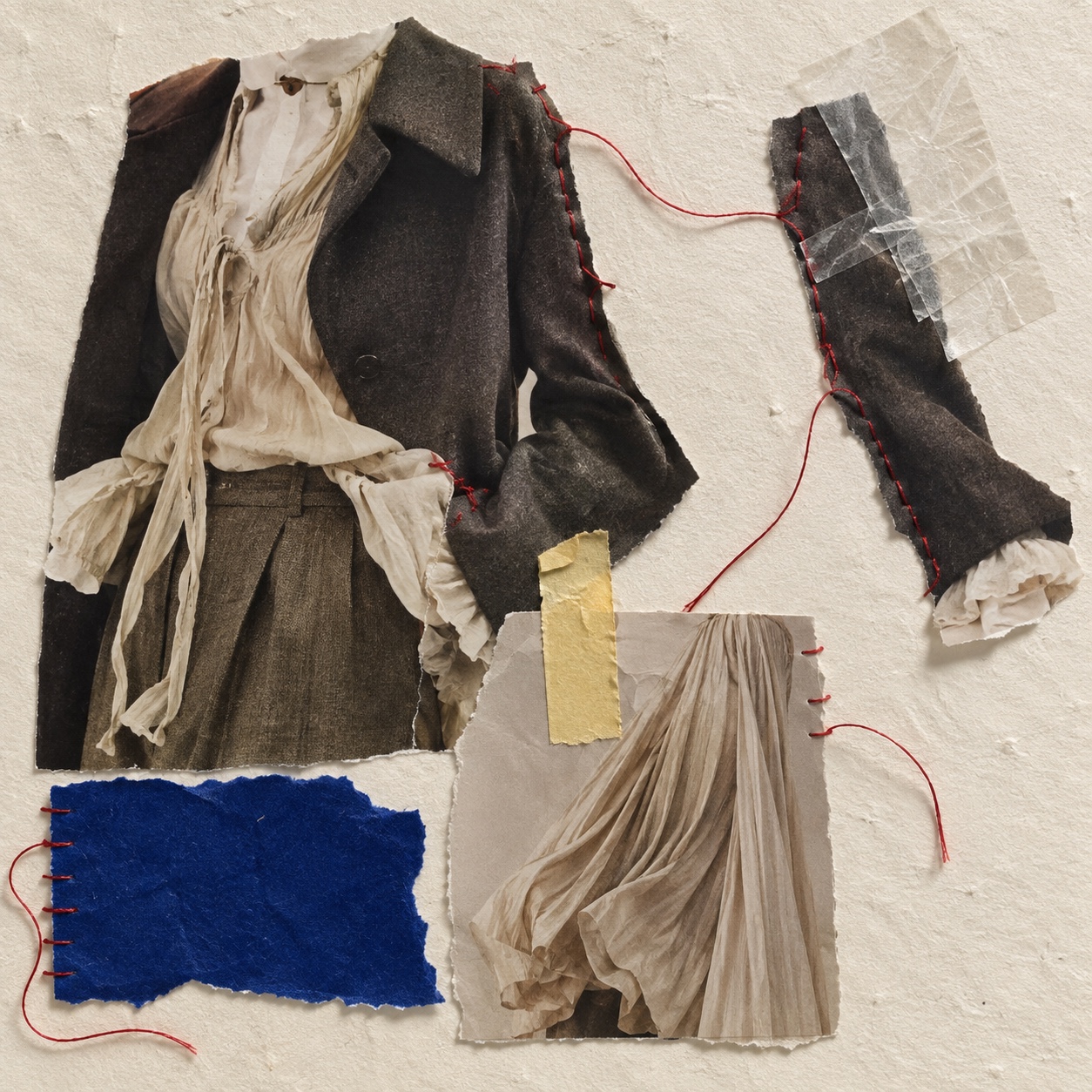
Fabric over photo, a printed portrait on matte photographic paper with real cloth laid across it, lace or tulle or organza or gauze draped, knotted and pinned over the print and photographed again, the weave of the fabric sharp and casting its own soft shadow on the paper while the face behind goes soft, half the face obscured, creases and knots left in, print grain reading through the cloth, soft directional daylight, ivory, grey and pale lilac, romantic and withheld, no type over the fabric, no readable text (50%), infused with Thread and tape aesthetic, an assembled composition held together in plain sight, torn and cut photograph fragments joined with visible stitched thread, strips of transparent and yellow tape with lifted edges, cobalt-blue and red paper pieces, pins casting small shadows, running stitches through photographic paper, handwritten labels on tape, laid on linen or a worktable, soft directional daylight, tactile, patient and domestic, art-directed and calm, no stickers, no glitter, no clip art, no readable text, color palette strictly #D8D3C6 #8C97A3 #DFB04F #E3DCE4 #A8302A, overall character: analog, organic, nostalgic
One-click generation opens with the studio
About this aesthetic
What is fabric over photo?+
A technique in which a photograph is printed on matte paper and then covered with real cloth, usually lace, tulle, organza or gauze, which is draped, knotted or pinned across the print and rephotographed. The fabric's weave and shadow become part of the image, and half the subject is obscured.
Why not just add the texture in software?+
Because the whole effect is depth. Real cloth sits above the paper, catches the light separately and throws a shadow, so the weave can be sharp while the face behind it is soft. A texture layer sits at the same depth as the image, has no shadow and reads as a filter at any size.
Where does the veiled portrait come from?+
From Surrealism: Man Ray's wrapped and corded object of 1920, and Magritte's The Lovers of 1928, where two heads kiss through white cloth. Fashion photography took it up through figures like Erwin Blumenfeld, who shot through veils and screens for Vogue and Harper's Bazaar.
What kind of work is it wrong for?+
Anything that has to show detail. The style exists to remove information, so a specification shot, a technical product or a clinical brand will fight it the whole way. It also needs a second shoot, and a schedule with no room for one will end up with an overlay instead.
Build with the fabric over photo aesthetic
Every style in the library is broken down like this one: the palette, the typography, the materials and the lineage.