Wrought Iron

Hand-forged, malleable iron. The craft material of balconies, gates, and the first skeletal iron-framed buildings before steel replaced it.

Move over it to light it
Finish
Light
ReadingsIn use 700 BCE to now
WeightVery heavy
WarmthCold to the touch
CostExpensive
PermanenceLasts centuries
PrecisionMachine-precise
CarbonAmong the highest

Making one kilo releases about 1.9 kg of CO₂: historic material; modern equivalents are mild steel.

It saysCraft laborOrnamental disciplinePre-industrial care
Best for: Balconies, Gates, Heritage restoration.

01The building that proves it

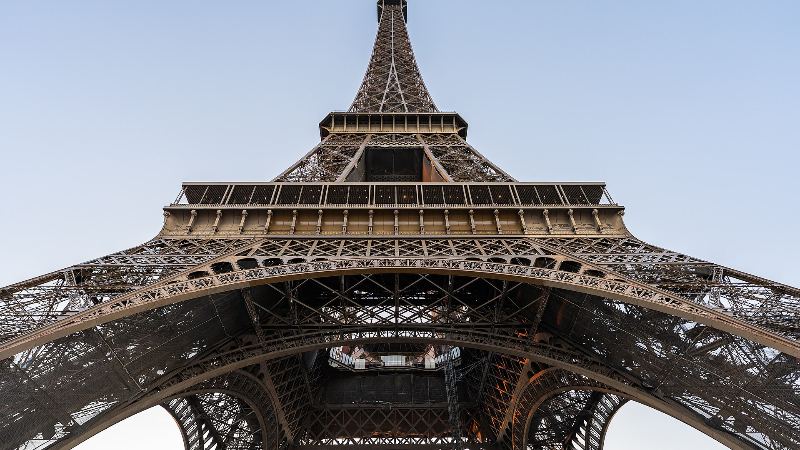
Eiffel Tower, Paris
Photo: Maksim Sokolov (maxergon.com), CC BY-SA 4.0, Wikimedia Commons
Eiffel Tower
Gustave Eiffel, Maurice Koechlin, Émile Nouguier · Paris · 1889

Wrought Iron here: 18,038 wrought-iron pieces and 2.5 million rivets.

About the building ↗

02Try it on a board

Pick up to three materials to sit beside wrought iron. The board shows the styles that use all of them, and writes a prompt you can take to an image or video generator.

Wrought IronLimestone
Styles that use all of themClassical ArchitectureGothic ArchitectureMediterranean Architecture
Setting
Scale
Light
Camera
Output

A house, on a dense urban street. Materials: wrought iron that reads as craft labor, limestone that reads as antiquity. Golden hour, warm raking light. Eye level from across the street, 35mm. Architectural photograph, medium format, no people, no text.

03The styles built on it

Classical ArchitectureGothic ArchitectureArt NouveauMediterranean ArchitecturePueblo Revival
Also in these styles, in their own words
  • Industrial Architecture"Cast and wrought iron: #3C3C3C, #4A4A4A, #5C5C5C"
  • Shaker"Maple, pine and cherry, milk paint, woven tape, wrought iron and copper tacks"

04Questions

Which design styles use wrought iron?

Classical Architecture, Gothic Architecture, Art Nouveau, Mediterranean Architecture and Pueblo Revival, and 2 more.

What goes well with wrought iron?

Wrought Iron pairs well with limestone, sandstone and oak.

What does wrought iron communicate?

Craft labor, Ornamental discipline and Pre-industrial care. It suits balconies, gates and heritage restoration.

What is the carbon footprint of wrought iron?

Making one kilo of wrought iron releases about 1.9 kg of CO₂, cradle to gate: historic material; modern equivalents are mild steel.

05More metal

Structural SteelCor-Ten SteelTitaniumCopperAnodized AluminumChromeBronzeZinc CladdingCast Iron
Every materialOpen the materials sampler →
MarbleLimestoneGraniteTravertineBasaltSandstoneSlateStructural SteelCor-Ten SteelTitaniumCopperWrought IronAnodized AluminumChromeBronzeZinc CladdingCast IronPlate GlassGlass BlockLeaded Art GlassStructural GlassETFE MembraneElectrochromic GlazingOakTeakBambooCedarCLTReclaimed TimberBirch PlywoodPineFired BrickTerracotta TileAdobe BrickCeramic MosaicGlazed FaïenceRoman BrickPolychrome BrickRammed EarthHempcreteClay PlasterLiving Roof SubstrateExposed ConcreteBoard-Formed ConcretePolished ConcretePrecast Concrete PanelGlass-Fibre Reinforced ConcreteSprayed ConcreteFibreglass ShellCarbon Fibre CompositeAluminium Composite PanelTensile FabricPerforated Steel ScreenPolycarbonateVitrolitePorcelain Enamel Panel