ReadingsIn use 1140 to now
WeightVery heavy
WarmthCold to the touch
CostExpensive
PermanenceLasts centuries
PrecisionMachine-precise
CarbonAmong the highest
Making one kilo releases about 2.7 kg of CO₂: high per kilogram, recycled almost indefinitely.
It saysLiving patinaTime made visibleOrganic aging
Best for: Roofing, Facade accents, Heritage-adjacent builds.
01The building that proves it
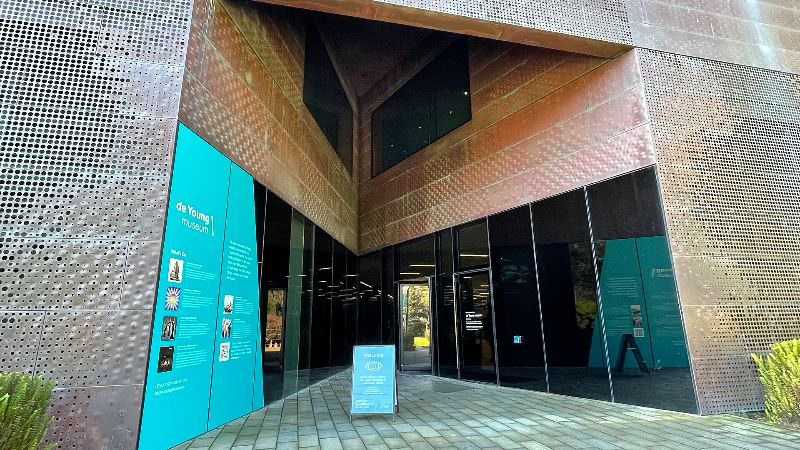
de Young Museum
Herzog & de Meuron · San Francisco · 2005
Copper here: perforated copper skin patinating toward the park's green.
About the building ↗02Try it on a board
Pick up to three materials to sit beside copper. The board shows the styles that use all of them, and writes a prompt you can take to an image or video generator.
03The styles built on it
Also in these styles, in their own words
- Photorealism"Oxidised copper and rust on painted metal: #A96D4D"
- Steampunk"Verdigris copper: #4F8076, #3D6B60: oxidized metal surfaces"
- Classical Architecture"Patinated bronze and copper: #6B7C5C, #7C8C6C"
- Organic Architecture"Copper and bronze for hardware: #8B7355, #6B5C4C"
- Scandinavian Architecture"Copper and bronze aging to verdigris: #6B8C6C, #4A7C5C"
- Shaker"Maple, pine and cherry, milk paint, woven tape, wrought iron and copper tacks"
04Questions
Which design styles use copper?
Art Nouveau, Architectural Expressionism, Biophilic Design, Gothic Architecture and Neo-Modernism, and 6 more.
What goes well with copper?
Copper pairs well with oak, zinc cladding and limestone.
What does copper communicate?
Living patina, Time made visible and Organic aging. It suits roofing, facade accents and heritage-adjacent builds.
What is the carbon footprint of copper?
Making one kilo of copper releases about 2.7 kg of CO₂, cradle to gate: high per kilogram, recycled almost indefinitely.
05More metal
Structural SteelCor-Ten SteelTitaniumWrought IronAnodized AluminumChromeBronzeZinc CladdingCast Iron
Every materialOpen the materials sampler →
MarbleLimestoneGraniteTravertineBasaltSandstoneSlateStructural SteelCor-Ten SteelTitaniumCopperWrought IronAnodized AluminumChromeBronzeZinc CladdingCast IronPlate GlassGlass BlockLeaded Art GlassStructural GlassETFE MembraneElectrochromic GlazingOakTeakBambooCedarCLTReclaimed TimberBirch PlywoodPineFired BrickTerracotta TileAdobe BrickCeramic MosaicGlazed FaïenceRoman BrickPolychrome BrickRammed EarthHempcreteClay PlasterLiving Roof SubstrateExposed ConcreteBoard-Formed ConcretePolished ConcretePrecast Concrete PanelGlass-Fibre Reinforced ConcreteSprayed ConcreteFibreglass ShellCarbon Fibre CompositeAluminium Composite PanelTensile FabricPerforated Steel ScreenPolycarbonateVitrolitePorcelain Enamel Panel