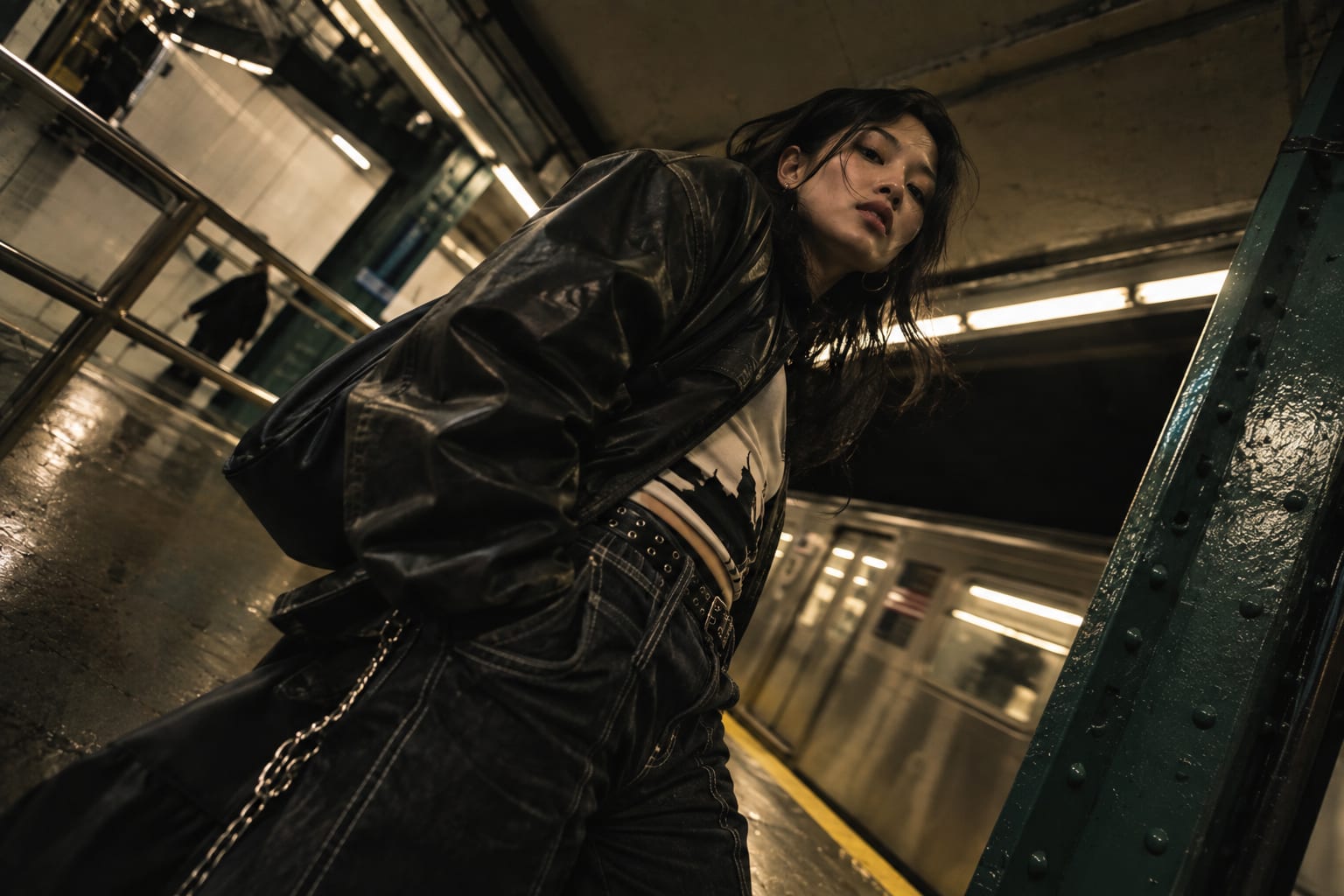
Every other view moves the camera; the Dutch tilt only twists it. Nothing about the subject changes, yet the picture stops being stable, and the viewer's own sense of level protests. It is the cheapest way to make a frame feel wrong, which is why cinema uses it for madness, dread and intoxication, and why fashion uses it for energy. The risk is that it is also the cheapest way to look like a beginner.
Try it
Move the strength and the camera moves. Change the lens and the field of view changes. Pick a subject and the direction is written for it.
0% · Level. Horizon level, no roll.
20% · Slight cant. Camera rolled about 5 degrees; the horizon barely slopes and the frame feels alert rather than wrong.
50% · Clear cant. Camera rolled about 15 degrees; verticals lean visibly and the frame reads as deliberately unstable.
80% · Heavy cant. Camera rolled about 30 degrees; strong diagonals, the world sliding toward one corner.
100% · Extreme cant. Camera rolled 45 degrees or more; the frame is a diamond and the world is falling.
The physical relationship between lens and subject, before any lens or light is chosen.
- Height
- Any. The tilt is independent of height and can be combined with a low or high angle.
- Vertical angle
- Any. Roll is a third axis, separate from tilt.
- Horizontal angle
- Any.
- Relationship
- Unchanged. The relationship is with the frame, not the subject.
- Distance
- Unchanged. The cant reads the same at any distance; it is more obvious with strong horizontals in view.
Perspective, depth, scale and distortion: what changes in the picture when the camera is here.
- Perspective
- Unchanged. Only the frame's relationship to the world's verticals changes.
- Depth
- Unchanged, though diagonals can suggest movement into depth.
- Scale
- Unchanged.
- Distortion
- None optically. The whole picture leans; nothing inside it deforms.
- Spatial feeling
- Unstable. The floor is sloping and the viewer's head is tilted.
What it tends to communicate
Tendencies, not laws. What the geometry usually reads as, and where that reading breaks.
A slight cant on an action shot reads as energy; the same cant on a still portrait reads as unease; a heavy cant on anything reads as a music video. The angle is a volume knob for wrongness, and the subject sets what wrongness means.
Use it for
- Psychological tension in narrative work
- Skate, sport and nightlife editorial
- Fashion that wants kinetic energy
- Music and youth culture
- Breaking the grid in a series of level frames
Less suited to
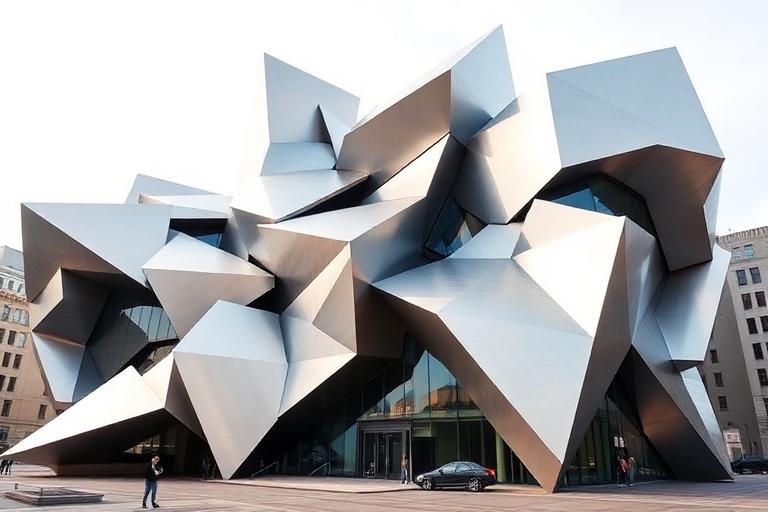
- Architecture, where the tilt reads as an error
- Product that must be judged accurately
- Calm, formal or trustworthy subjects
- Any series where every frame is canted
It says
The same camera position asks for different things from a face, a shoe, a facade and a car.
Attitude and energy at a few degrees; menace or madness at more. The face stays undistorted, so the tilt is pure mood.
Prompt phrasing
portrait with a canted camera, horizon tilted, the subject undistorted but the frame unstable
The decisions that sit on top of the camera position and change what it produces.
How the lens changes it
Recommended: Wide, Normal. The tilt reads at every size, but a tight frame with few straight lines can hide it entirely.
- Ultra-wide · 14 to 20mm
- The tilt plus wide-angle stretch produces the most disorienting frames; the nightclub and skate register.
- Wide · 24 to 35mm
- Enough context to show the world leaning. The usual pairing.
- Normal · 40 to 60mm
- A cleaner, subtler cant, felt more than seen.
- Telephoto · 85 to 200mm
- Isolates the subject so the tilt is read only against them; subtle and moody.
Composition
Which compositions this camera position rewards, and why the pairing works.
- Subject placement
- Along the new diagonal. A subject placed on the tilted axis feels intentional; one placed against it feels like it is sliding.
- Horizon
- Deliberately sloped. The angle of slope is the strength of the effect.
- Foreground
- Unchanged, but diagonal foreground lines amplify the lean.
- Background
- Strong horizontals and verticals in the background broadcast the tilt; soft or organic backgrounds hide it.
- Negative space
- Triangular. The tilt creates wedges of empty space in the corners.
- Geometry
- Diagonals everywhere. The rectangle of the frame fights the rectangles of the world.
Light
- Hard, contrasty light and deep shadows suit the tilt's tension.
- Neon, mixed colour temperatures and practicals suit the intoxicated reading.
- Flat, soft light neutralises the tilt into mere quirk.
Motion
In motion, a slow roll into or out of level is a device of its own: the world tipping, then righting.
A view is where the camera is. A movement is where it goes. They combine.
Read from the shot lists in each style's photo brief, not assigned by hand. A style is here because its own brief asks for this camera.
The failures that make this camera position read as an accident rather than a decision.
- The accidental few degrees. Either the frame is level or it is clearly canted; two degrees reads as sloppy.
- Canting every frame in a series, which turns tension into wallpaper.
- Tilting architecture or product where accuracy is expected.
- Stacking the tilt with an extreme low angle and an ultra-wide lens until nothing is legible.
- Using it for mood the subject already carries; the tilt should add, not underline.
Negative guidance for a model
Prompt language
Geometry, not labels. Models read camera words inconsistently; they read positions the same way every time.
Nearby views



Contrast with
The opposite decisions. If this view is wrong for the picture, one of these is usually right.



In the knowledge graph
Questions
What is a Dutch tilt?
A camera rolled around the lens axis so the horizon and verticals lean in the frame. Nothing in the scene changes; only the frame's relationship to level does. It is called Dutch by a corruption of Deutsch, from the German expressionist films that popularised it.
How much should I tilt?
Enough to be clearly deliberate. Around 5 degrees reads as alert energy, 15 as clearly unstable, 30 as dramatic, and 45 or more as abstract. Two or three degrees reads as an error, so commit or stay level.
Does a Dutch tilt work in AI image generation?
Models often ignore the words Dutch angle or produce lens distortion instead. Describe the roll: the horizon sloping at roughly a given angle, verticals leaning, the frame canted, with the subject itself undistorted.