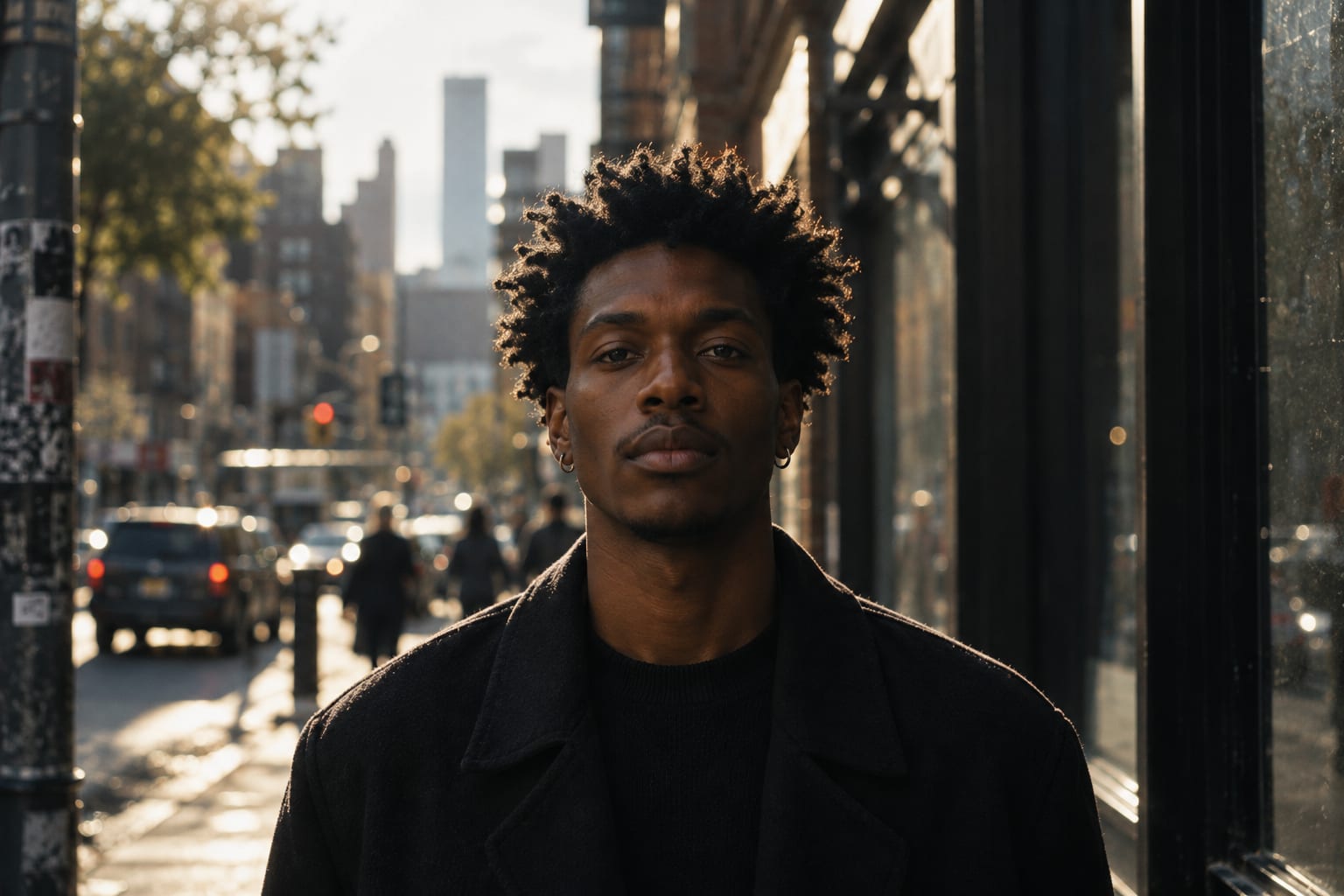
Eye level is the angle the viewer never notices, and that is its power. Because it withholds comment, everything else in the frame has to carry the meaning: the light, the lens, the distance, the face. It is the control against which every other angle is measured.
Try it
Move the strength and the camera moves. Change the lens and the field of view changes. Pick a subject and the direction is written for it.
0% · Level. Camera exactly at the subject's eye line, lens axis level with the ground.
35% · Held level. Camera at eye line, held steady and square to the subject so no edge of the frame tilts.
70% · Close and level. Camera at eye line and close enough that the subject fills the frame, still perfectly level.
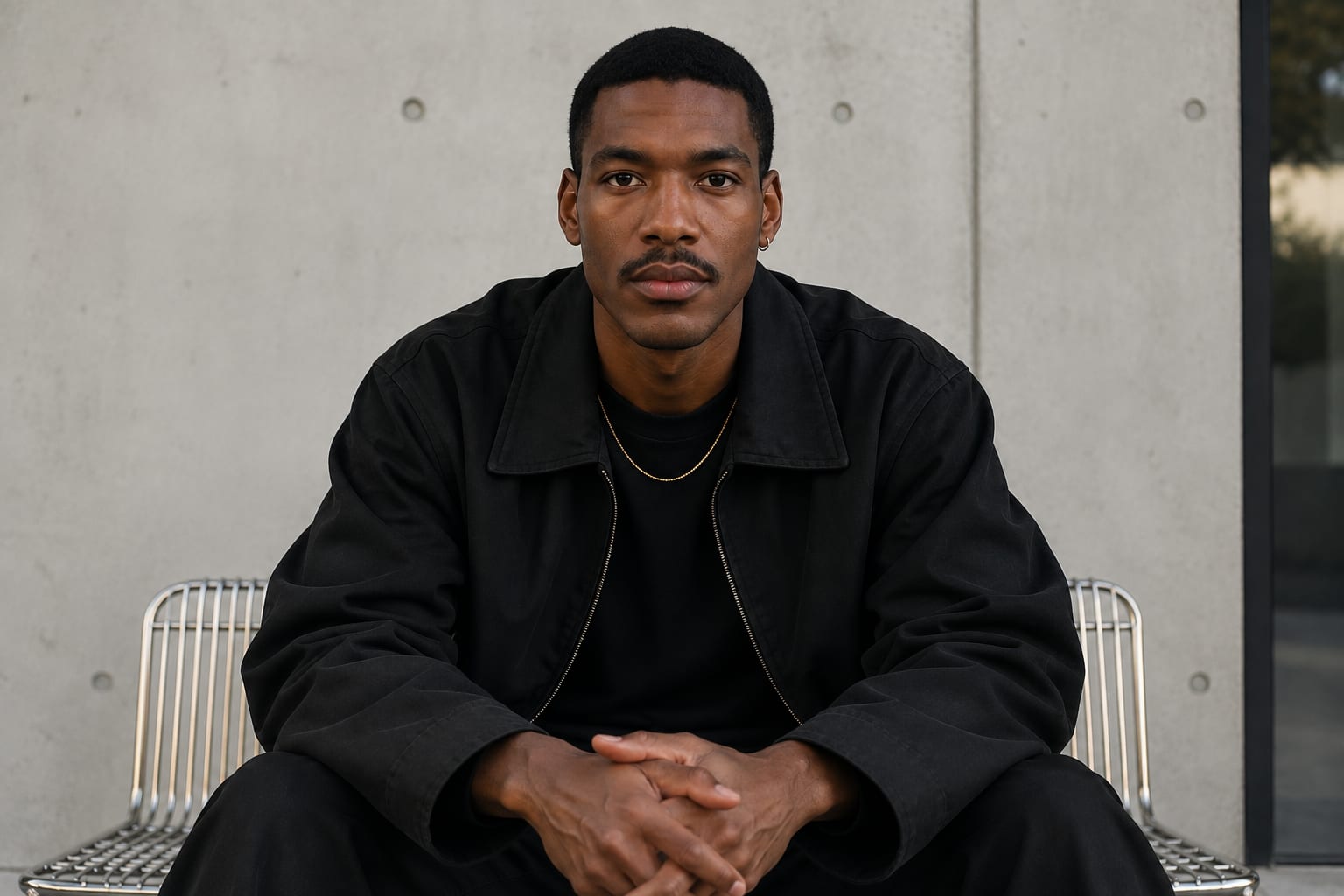
100% · Confrontational. Camera at eye line, close, centred, the subject looking directly into the lens.
The physical relationship between lens and subject, before any lens or light is chosen.
- Height
- At the subject's eye line for people, at the visual centre of mass for objects and buildings.
- Vertical angle
- Zero. The lens axis is parallel to the ground.
- Horizontal angle
- Any. Eye level says nothing about which side of the subject faces the lens.
- Relationship
- Peer. Camera and subject share a horizon.
- Distance
- Distance changes shot size only. The geometry stays level whether the camera is a metre away or twenty.
Perspective, depth, scale and distortion: what changes in the picture when the camera is here.
- Perspective
- Verticals stay vertical. Only horizontal lines converge, and only toward the horizon.
- Depth
- Depth reads through overlap, scale and lens choice rather than through the angle itself.
- Scale
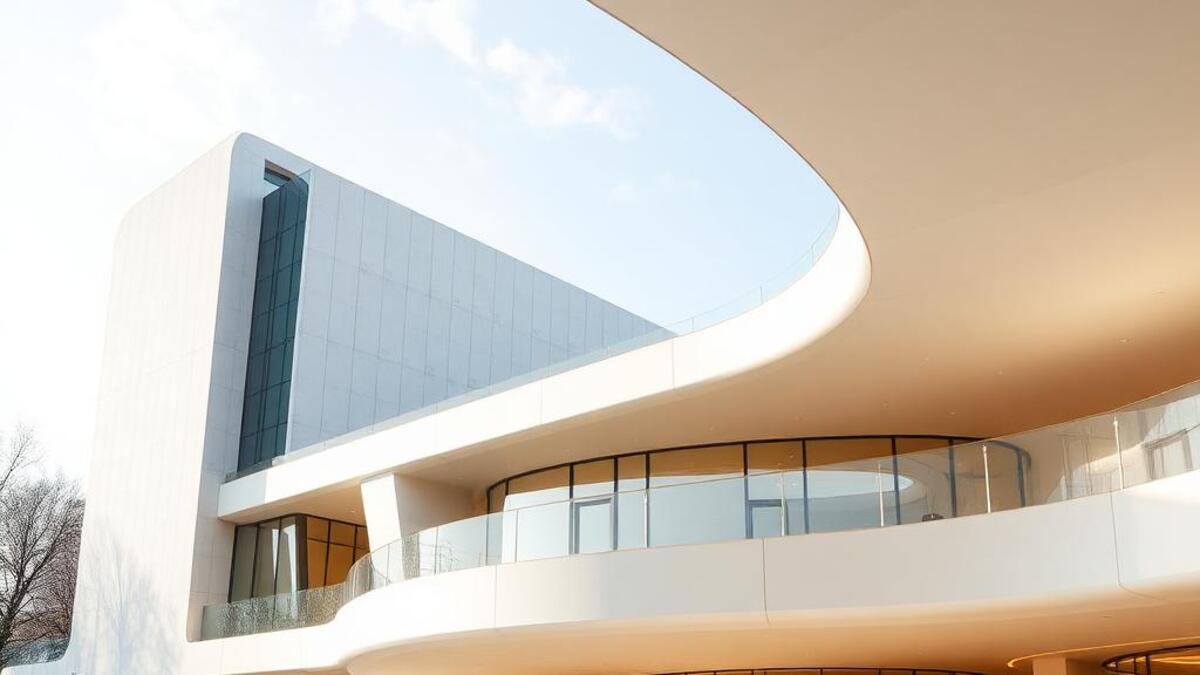
- True to life. The subject is neither enlarged by proximity from below nor shrunk from above.
- Distortion
- None from the angle. Any distortion comes from the lens and the distance.
- Spatial feeling
- Shared space. The viewer stands in the room with the subject.
What it tends to communicate
Tendencies, not laws. What the geometry usually reads as, and where that reading breaks.
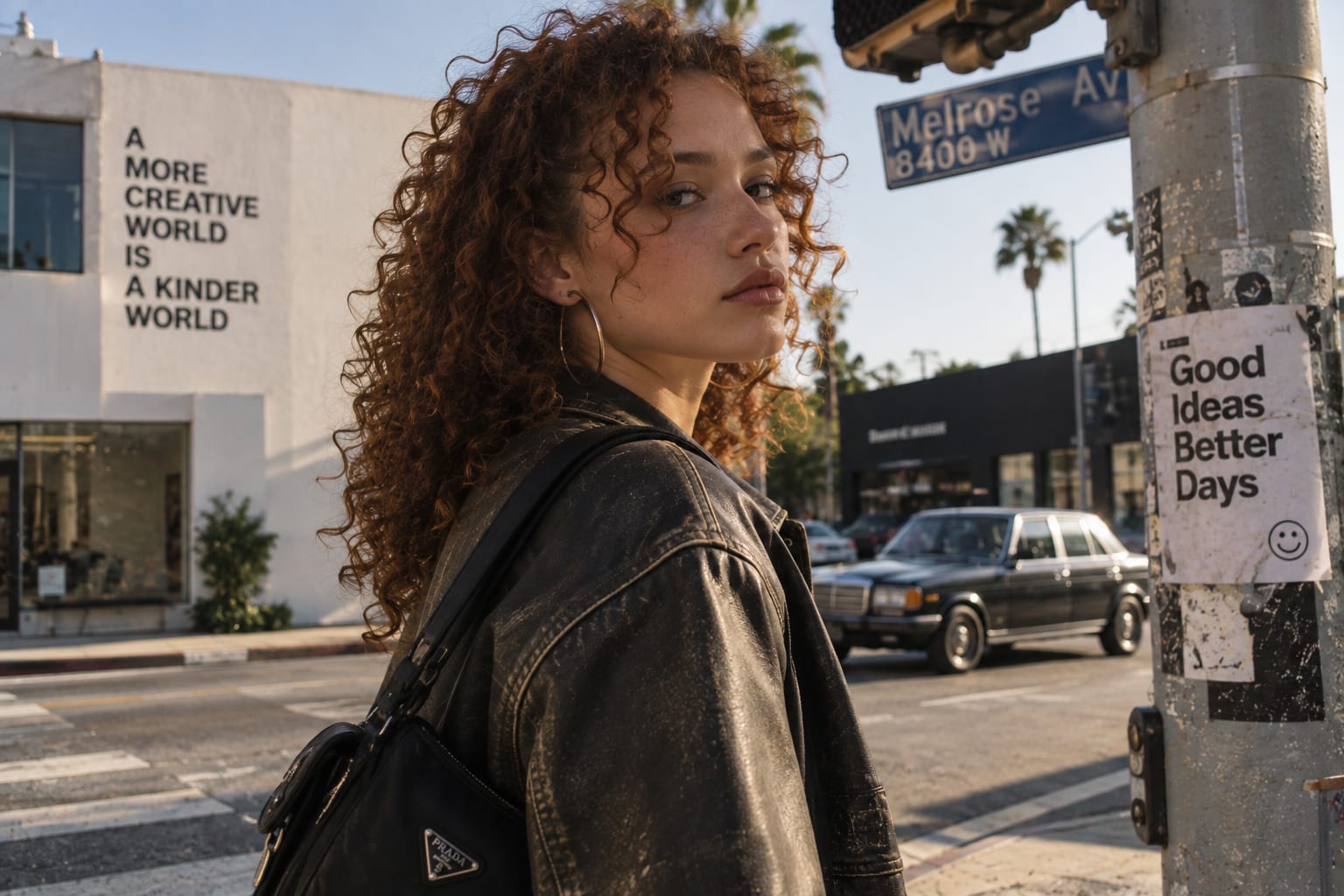
Neutral is not the same as flat. At close distance with a direct gaze, eye level is confrontational; with the subject looking off frame it is observational. The angle keeps quiet so the gaze can speak.
Use it for
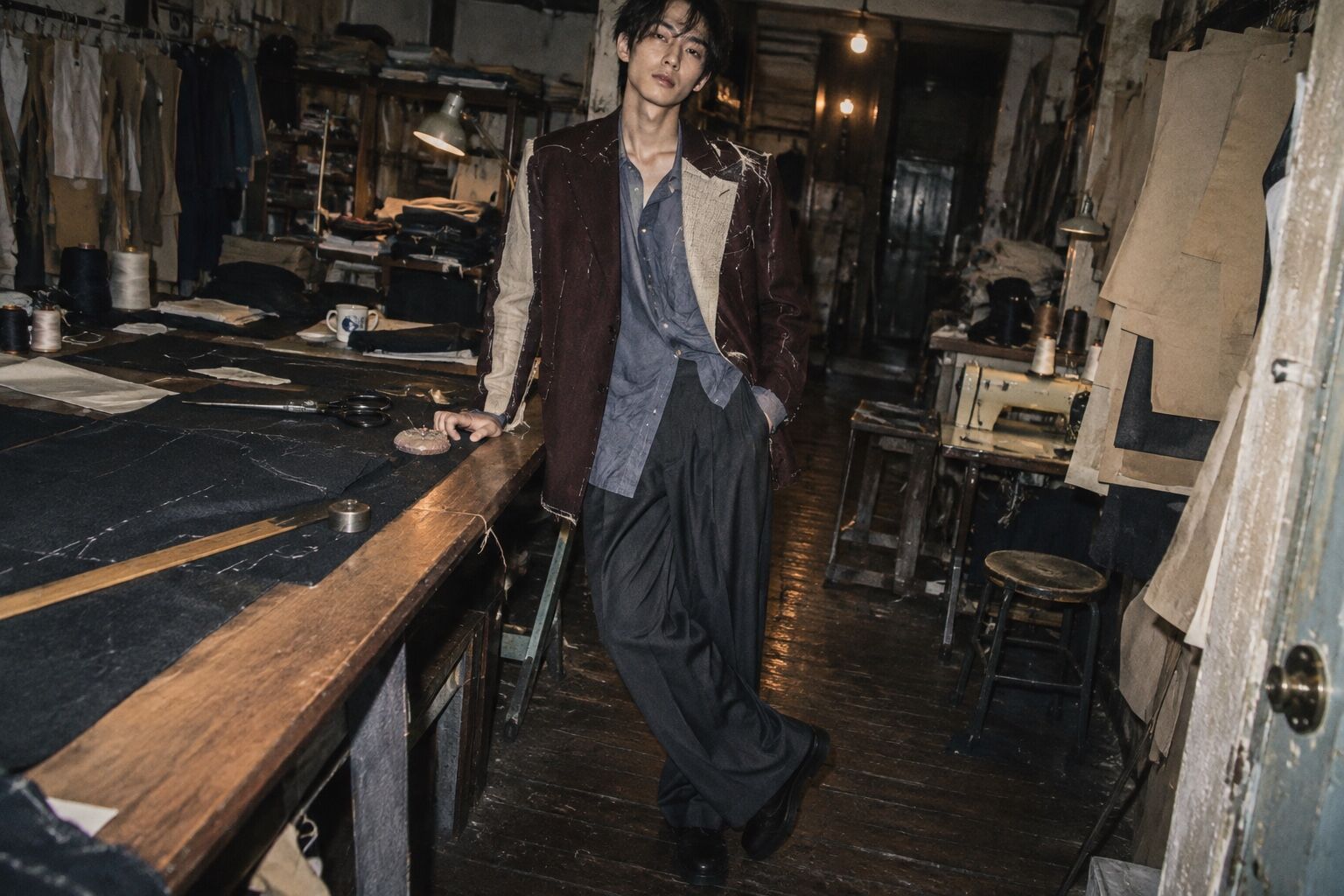
- Portraits that want the person, not the pose
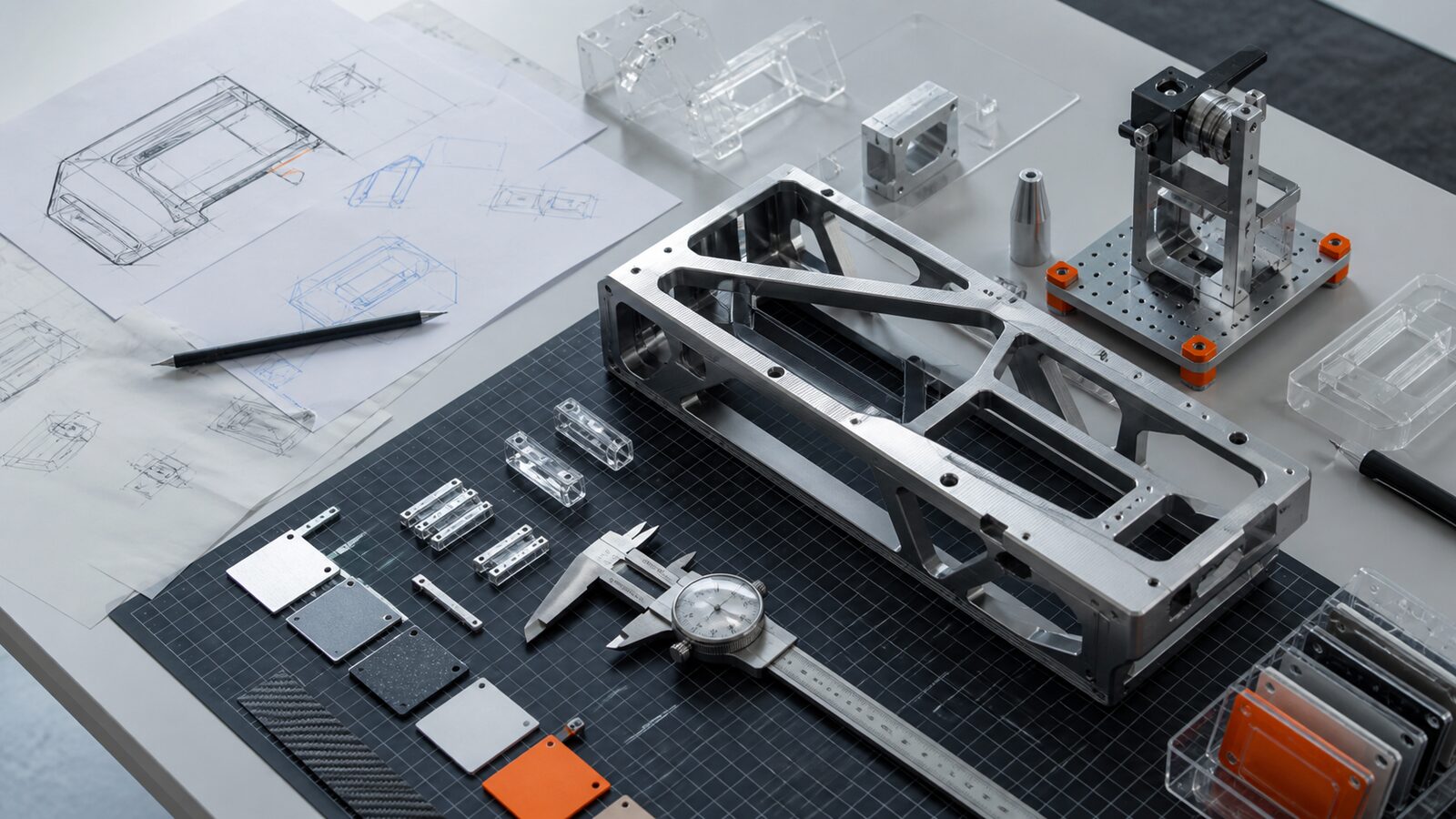
- Product that must be judged accurately
- Documentary and street work
- Lookbooks and e-commerce
- Any picture where the subject's own presence is enough
Less suited to
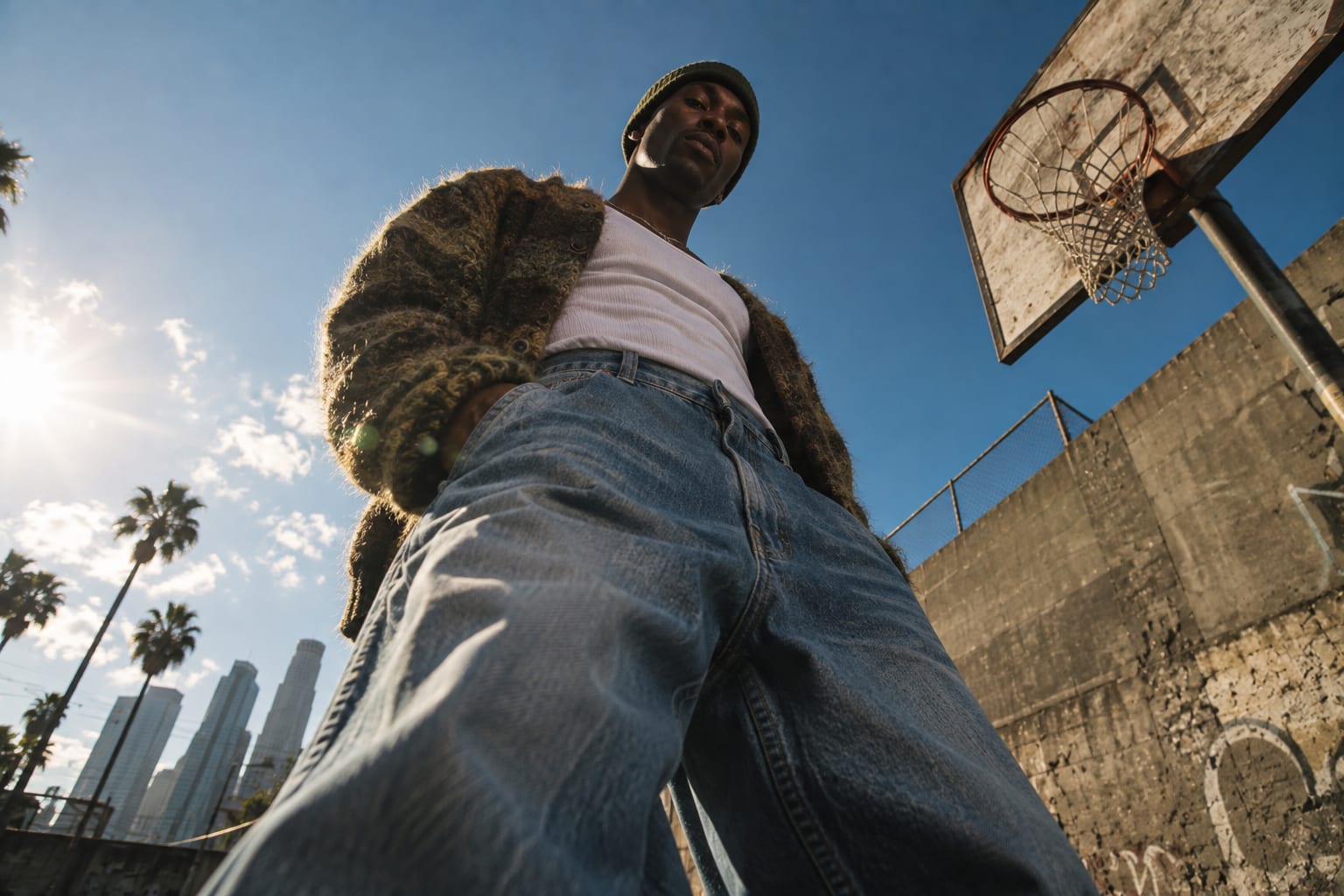
- Monumentality
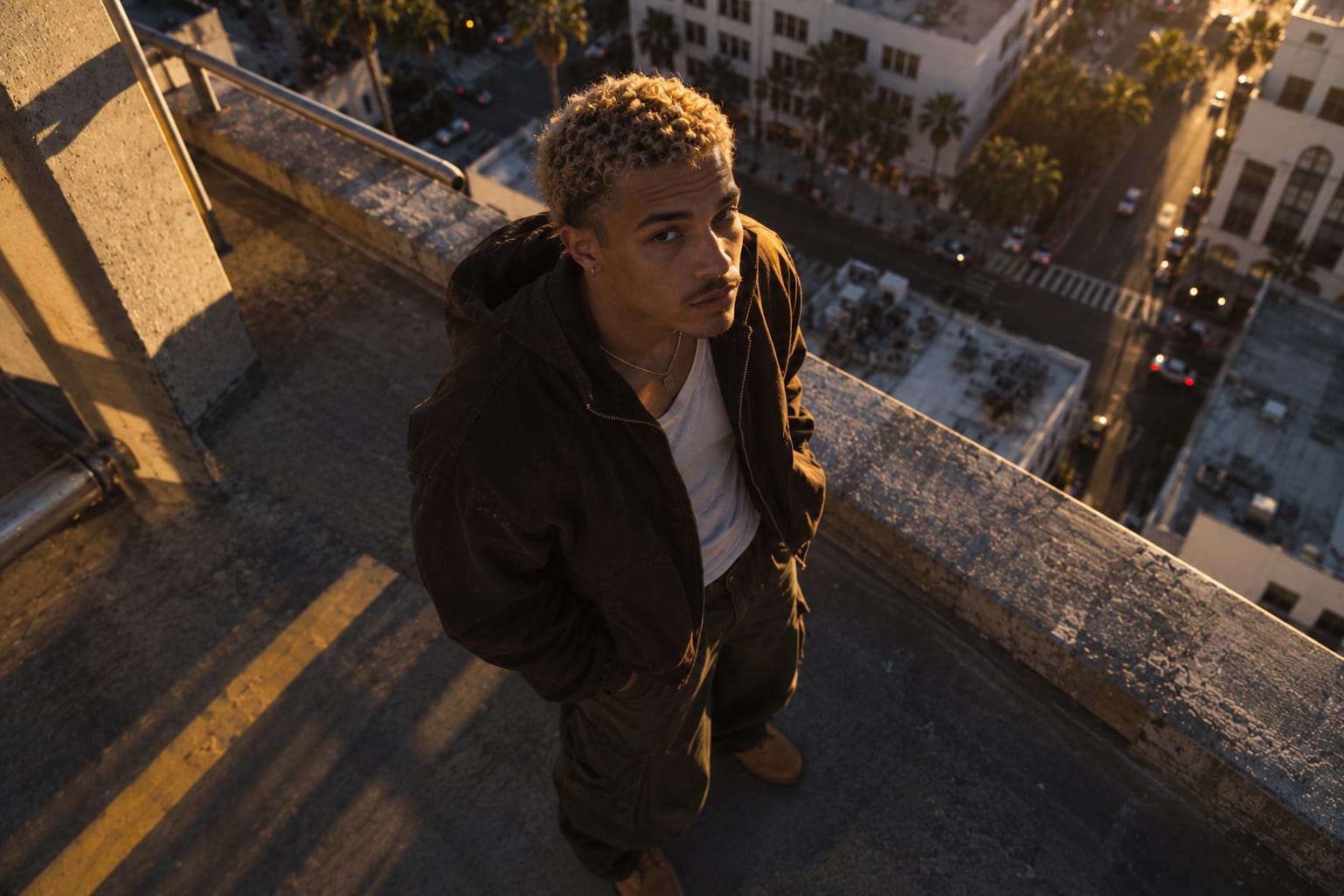
- Vulnerability or menace
- Graphic pattern and plan views
- Scenes that need a sense of being watched
It says
The same camera position asks for different things from a face, a shoe, a facade and a car.
The face at its true proportion. Jaw, brow and eyes sit where a person sees them. Use distance and lens for flattery, not angle.
Prompt phrasing
eye-level portrait, camera at the height of the eyes, natural facial proportion
The decisions that sit on top of the camera position and change what it produces.
How the lens changes it
Recommended: Normal, Telephoto. Eye level works at every shot size. The angle stays the same; only what is included changes.
- Ultra-wide · 14 to 20mm
- Rooms and streets stretch away; anything close to the lens grows. Fine for environment, unkind to faces.
- Wide · 24 to 35mm
- Adds environment without much facial distortion if the subject stays a step back from the lens.
- Normal · 40 to 60mm
- The classic pairing. Space and proportion feel like seeing.
- Telephoto · 85 to 200mm
- Compresses the background toward the subject and flattens features gently. The portrait default for a reason.
Composition
Which compositions this camera position rewards, and why the pairing works.
- Subject placement
- Centred for confrontation and symmetry, offset on a third for a conversational feel.
- Horizon
- The horizon passes through the subject's eyes or the object's midline, so it splits the frame near the middle unless the camera is raised or lowered within the level band.
- Foreground
- Foreground is a plane the subject stands on, not a device. Use it for context, not drama.
- Background
- The background sits directly behind the subject at the same height, so it competes unless separated by focus, tone or distance.
- Negative space
- Reads as air around a person. Generous negative space on the gaze side feels open; on the back of the head it feels crowded.
- Geometry
- Rectilinear and calm. The frame's edges agree with the world's verticals.
Light
- Any light works because nothing is being hidden or exaggerated.
- Soft frontal light keeps the neutrality; hard side light adds drama the angle does not supply.
- Backlight separates the subject from a background that would otherwise sit right behind it.
Motion
A level camera can travel any way it likes. Avoid pedestals that would tip it out of the level band.
A view is where the camera is. A movement is where it goes. They combine.
Read from the shot lists in each style's photo brief, not assigned by hand. A style is here because its own brief asks for this camera.

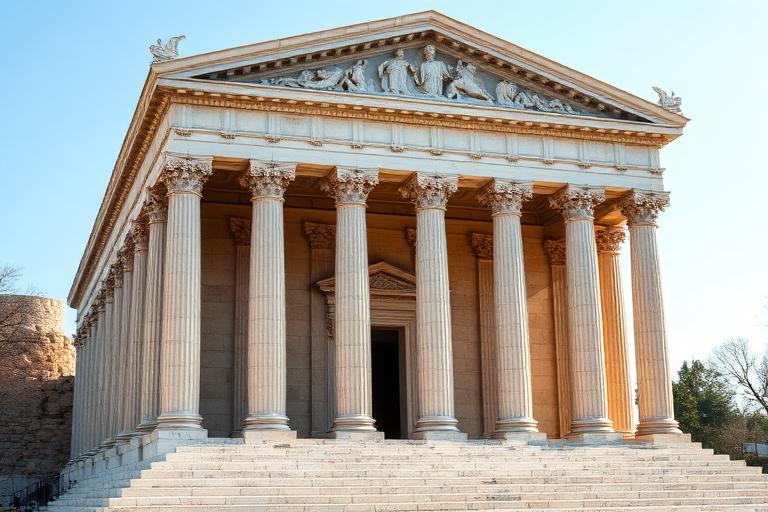
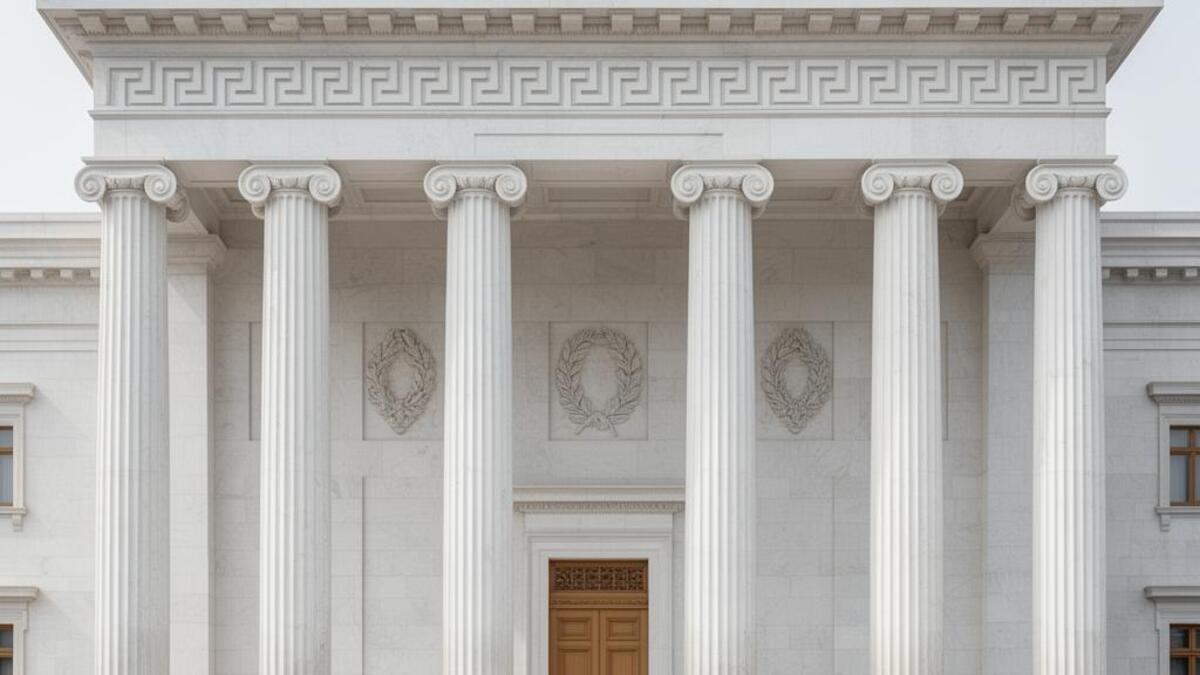
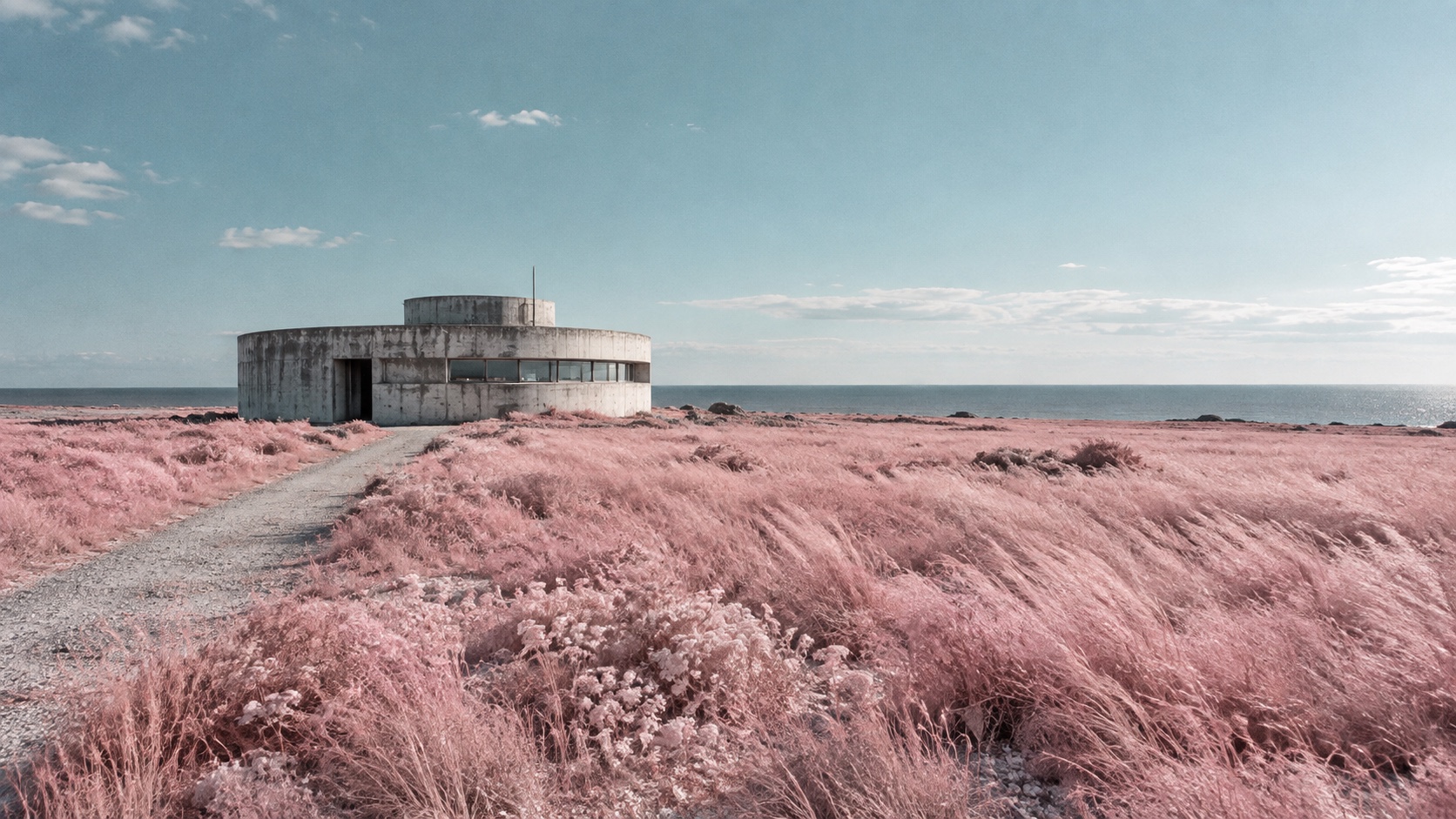

The failures that make this camera position read as an accident rather than a decision.
- Mistaking level for interesting. Eye level needs light, distance or a gaze to do the work.
- A horizon that cuts straight through the subject's neck or the object's midpoint by accident.
- Wide lenses close to a face, which distort even though the angle is neutral.
- Background clutter at the same height as the subject, which is where eye level puts it.
Negative guidance for a model
Prompt language
Geometry, not labels. Models read camera words inconsistently; they read positions the same way every time.
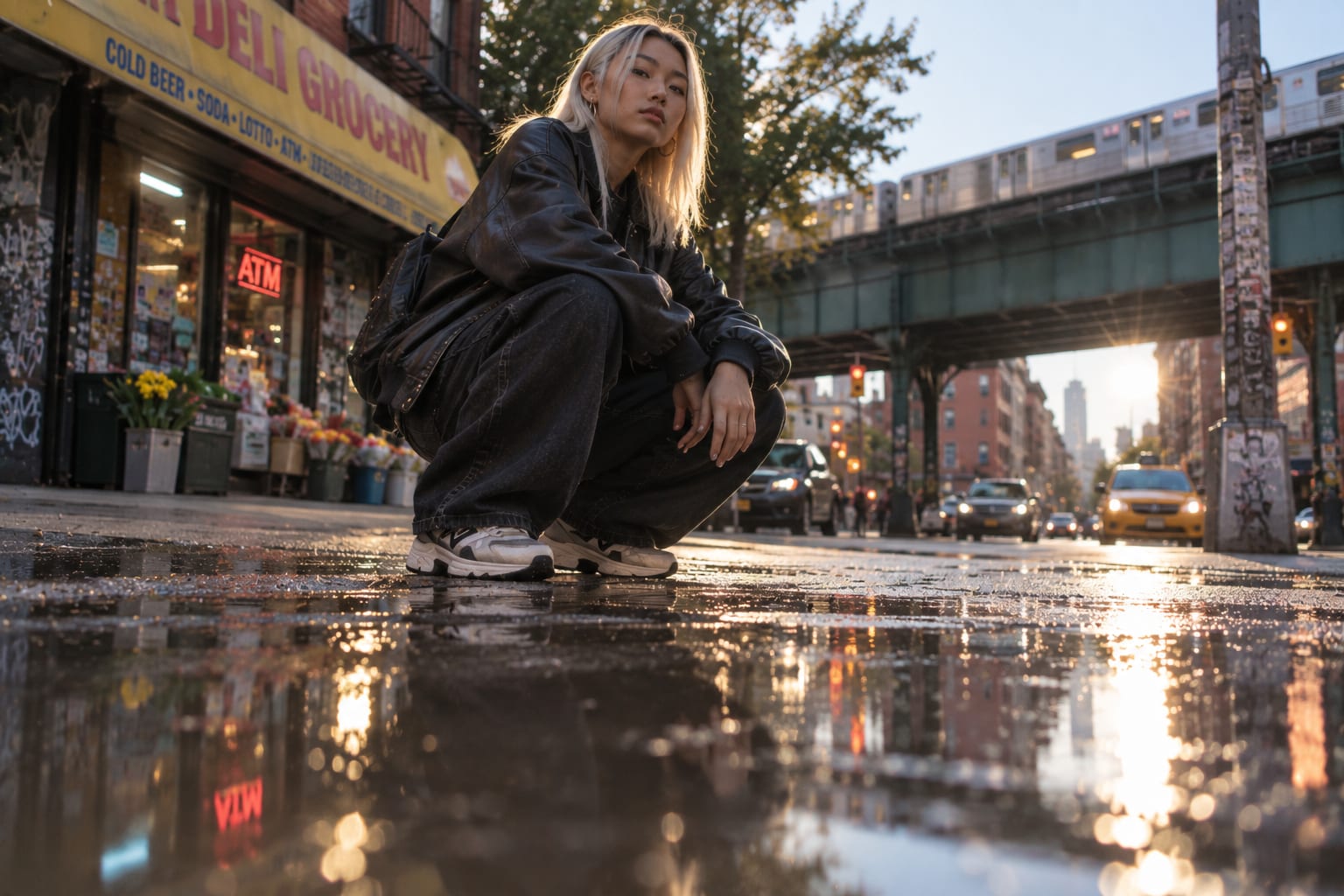
Nearby views
Contrast with
The opposite decisions. If this view is wrong for the picture, one of these is usually right.
In the knowledge graph
Questions
Is eye level the same as a frontal view?
No. Eye level is a height and a tilt: the camera at the subject's eye line, not looking up or down. Frontal is an orientation: the subject's face turned square to the lens. A subject can be at eye level in profile, and a frontal view can be shot from slightly above.
When should I not use eye level?
When the picture needs a point of view. Monumentality asks for a low angle, vulnerability or context asks for a high one, and pattern asks for overhead. Eye level withholds comment, which is a choice, not a default.
What lens suits an eye-level portrait?
A normal or short telephoto, roughly 50 to 105mm on full frame, at a distance of two to three metres. The angle keeps proportion true and the lens keeps the face from stretching.