
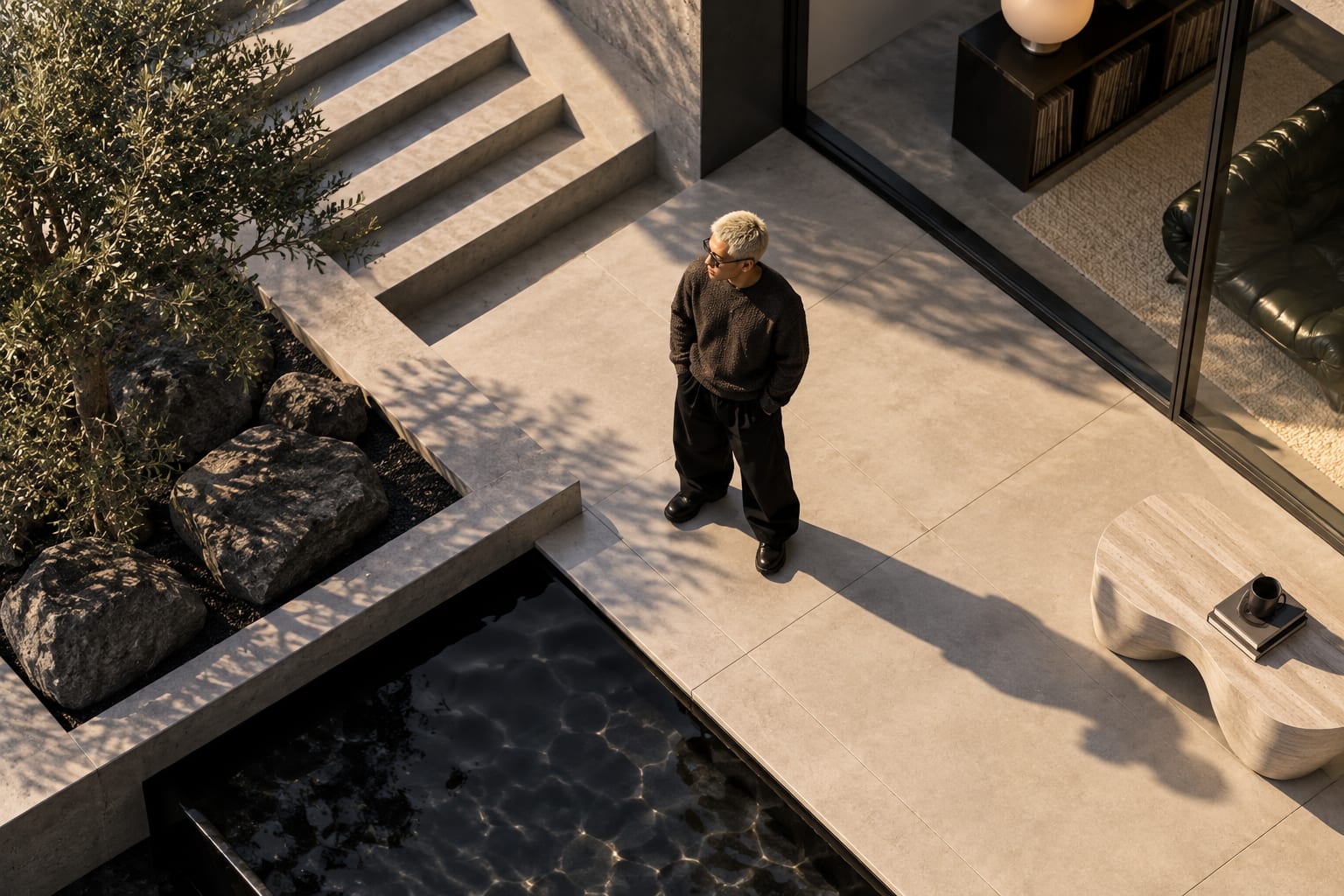
Overhead removes perspective and replaces it with layout. Objects become shapes, tables become canvases, and streets become diagrams. It is the angle of the flat lay, the recipe, the map and the choreographer, and because nothing recedes, every centimetre of the frame is equally available for design.
Try it
Move the strength and the camera moves. Change the lens and the field of view changes. Pick a subject and the direction is written for it.
0% · Steep high angle. Camera high above and tilted down about 70 degrees; a little recession remains and the subject's front is still visible.
40% · Near vertical. Camera above the subject, tilted down about 80 degrees; recession almost gone, tall objects lean slightly.
70% · Plan view. Camera directly above, pointing straight down; objects read as flat shapes on a single surface.
100% · Locked plan. Camera directly above, straight down, squared to the surface with a normal or longer lens so no object leans and the frame is a true plan.
The physical relationship between lens and subject, before any lens or light is chosen.
- Height
- Directly above the subject, from a metre over a table to a rooftop over a square.
- Vertical angle
- Ninety degrees. The lens axis points straight down, perpendicular to the ground plane.
- Horizontal angle
- Rotation only. The camera can be turned about its axis to align the subject with the frame edges.
- Relationship
- Detached. The viewer is above the scene rather than in it.
- Distance
- Height sets scale. Close overheads read as still life; high overheads read as pattern and crowd.
Perspective, depth, scale and distortion: what changes in the picture when the camera is here.
- Perspective
- None, in the usual sense. Only vertical objects converge, toward the centre of the frame, and only if they are tall or the lens is wide.
- Depth
- Suppressed. Height reads only through shadow and the small convergence of tall objects.
- Scale
- Relative. Every object is measured against the others and the ground, not against the viewer.
- Distortion
- Wide lenses make the centre bulge and tall objects lean outward at the edges.
- Spatial feeling
- Diagrammatic. A surface seen as a page.
What it tends to communicate
Tendencies, not laws. What the geometry usually reads as, and where that reading breaks.
Overhead is objective only in its geometry. A person seen from directly above is stripped of face and stature, which reads as vulnerability in a drama and as pattern in a dance film.
Use it for
- Flat lays and product families
- Food, recipes and table settings
- Desks and workspaces
- Pattern, crowds and choreography
- Floor plans and rugs
- Pools, courtyards and plazas
Less suited to
- Portraits, which lose the face
- Facades, which disappear
- Cars, which become rectangles
- Anything whose interest is its vertical form
It says
The same camera position asks for different things from a face, a shoe, a facade and a car.
The face is lost unless the person lies down and looks up. Bodies become shapes; hands and hair become texture. Best for lying figures, swimmers and dancers.
Prompt phrasing
overhead view of a person lying down looking up at the camera, body as a shape on the surface
The decisions that sit on top of the camera position and change what it produces.
How the lens changes it
Recommended: Normal, Wide. Shot size becomes a matter of how much surface is included. Tight overheads are still life; wide ones are pattern.
- Ultra-wide · 14 to 20mm
- Edge objects lean outward and the centre bulges; only acceptable for very large scenes where the distance is great.
- Wide · 24 to 35mm
- Covers a full table from a practical height. Watch tall items at the edges, which will lean.
- Normal · 40 to 60mm
- Keeps objects true to shape. The flat-lay standard.
- Telephoto · 85 to 200mm
- From a great height, removes the last convergence and gives a perfectly flat diagram. A drone at altitude does the same.
Composition
Which compositions this camera position rewards, and why the pairing works.
- Subject placement
- Grid and rhythm. Placement is graphic design: margins, alignment, spacing.
- Horizon
- There is no horizon. The frame edges are the only reference.
- Foreground
- There is no foreground. Everything sits on one plane at one distance.
- Background
- The surface is the background and does most of the work: linen, stone, concrete, water, asphalt.
- Negative space
- Empty surface between objects. The intervals are as designed as the objects.
- Geometry
- Rectangles, circles, grids and radial patterns. Objects read as pure shapes.
Light
- Soft, even light from one side keeps shadows short and consistent, which matters when everything is on one plane.
- A single hard light throws long, parallel shadows that become part of the layout.
- Avoid light from the camera position, which flattens everything and puts the camera's own shadow in the frame.
Motion
A slow overhead truck across a surface reads like scrolling a page. Rotation about the vertical axis turns the layout without changing the geometry.
A view is where the camera is. A movement is where it goes. They combine.
Read from the shot lists in each style's photo brief, not assigned by hand. A style is here because its own brief asks for this camera.



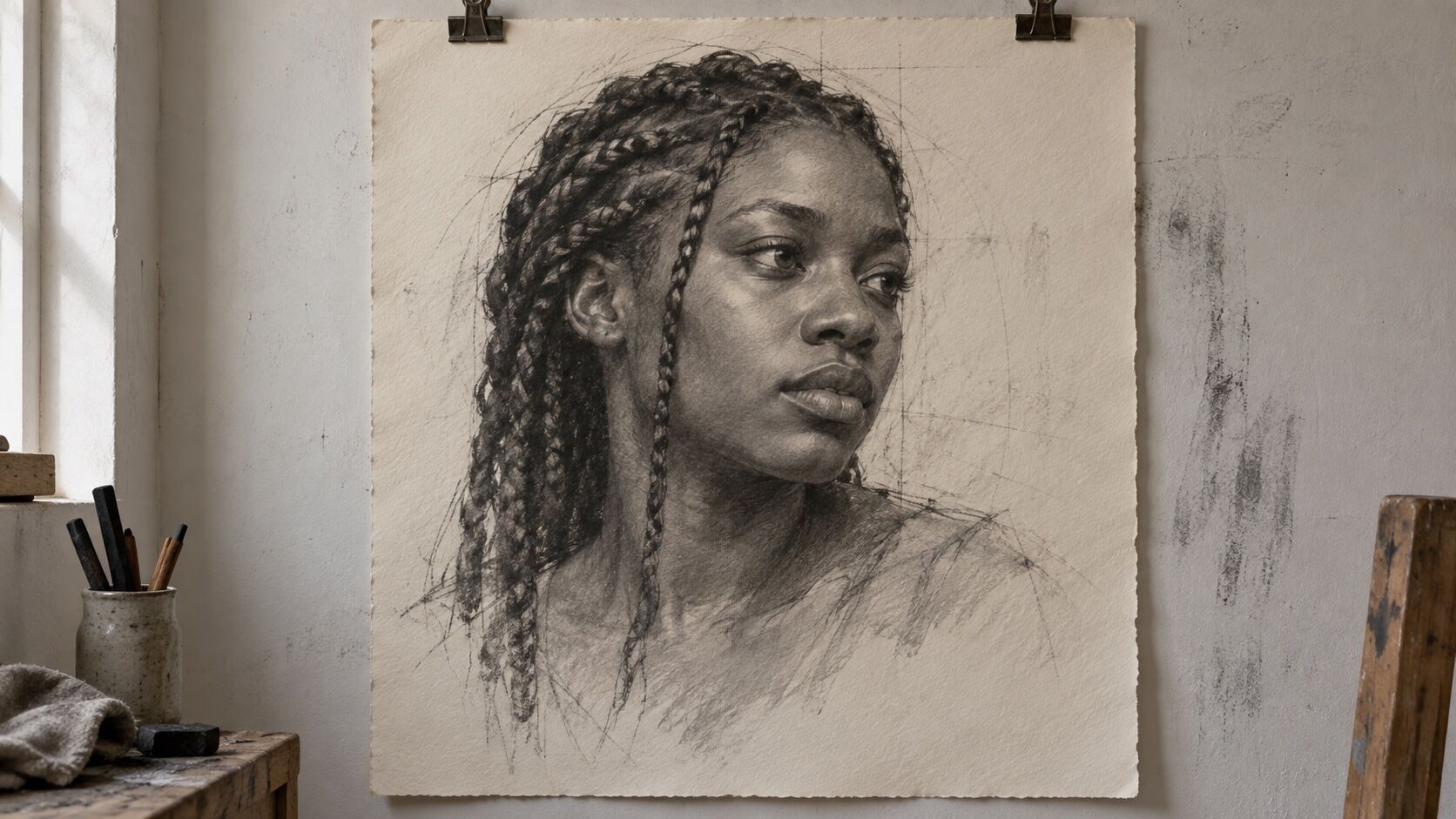
The failures that make this camera position read as an accident rather than a decision.
- A camera that is nearly overhead but not quite, which makes every object lean in one direction and looks like a mistake.
- Tall objects at the frame edge, which topple outward.
- The photographer's shadow or feet in the frame.
- Treating a flat lay as a photograph rather than as a layout. The intervals need designing.
- Losing the face of a portrait subject who needed one.
Negative guidance for a model
Prompt language
Geometry, not labels. Models read camera words inconsistently; they read positions the same way every time.
Nearby views


Contrast with
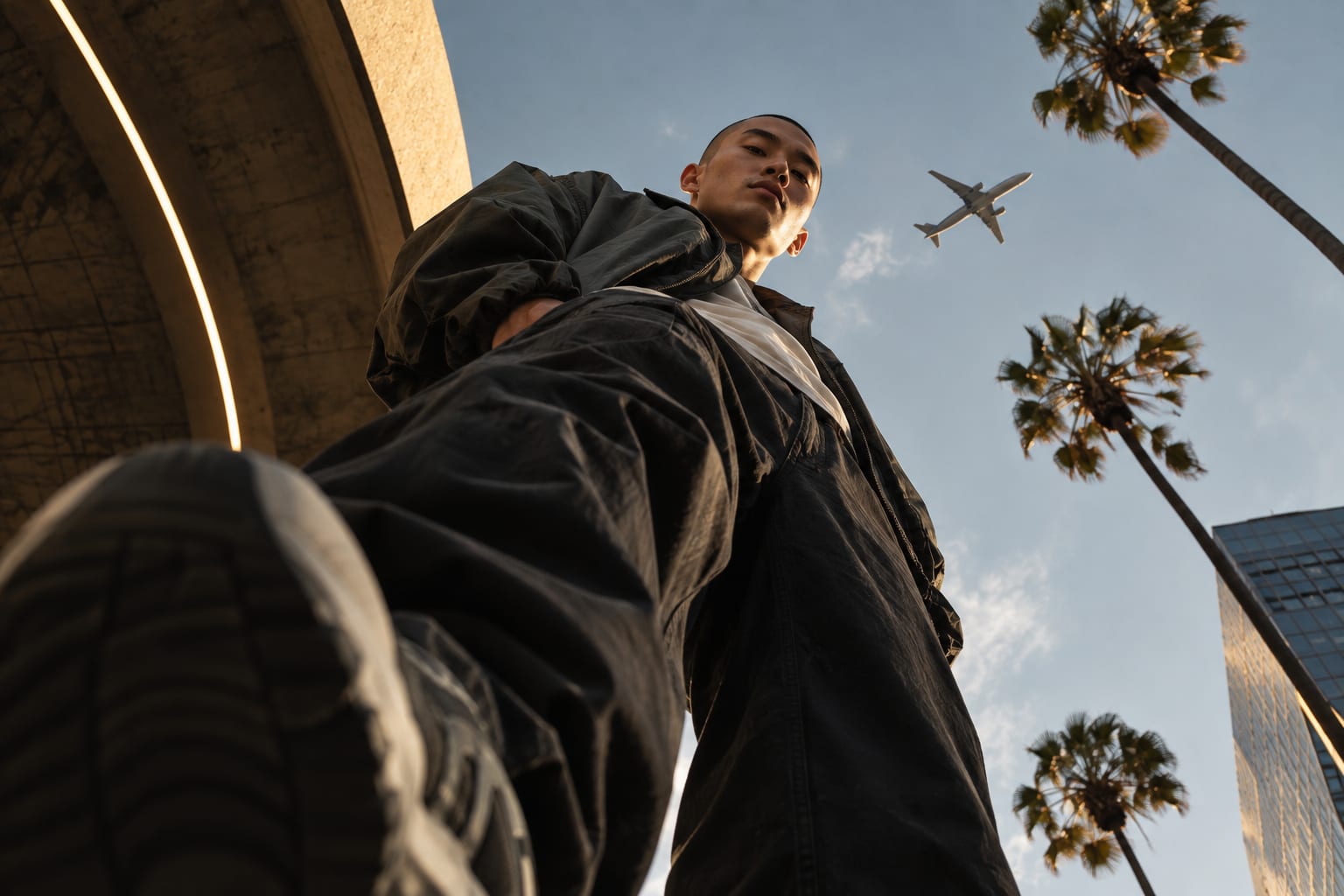
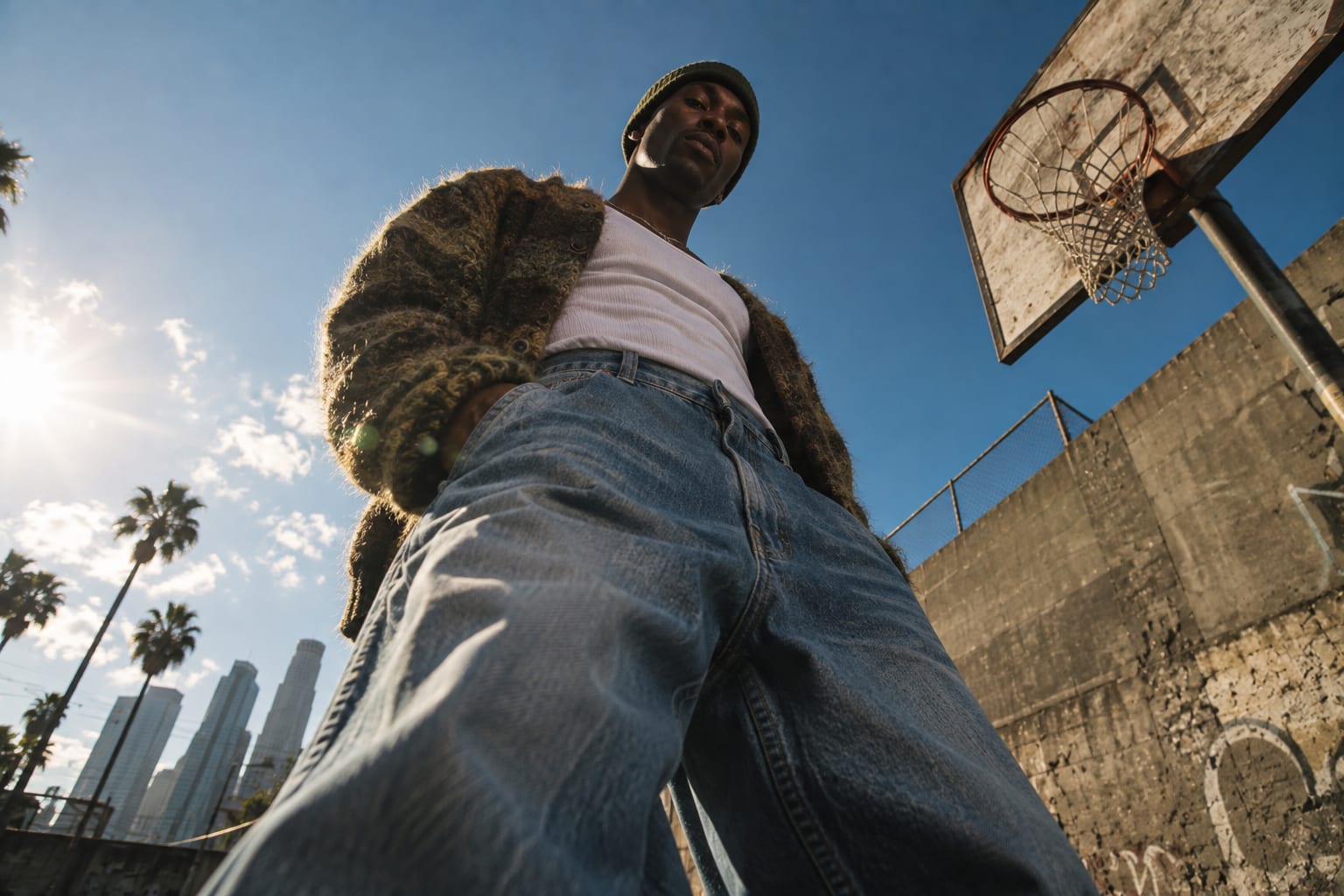
The opposite decisions. If this view is wrong for the picture, one of these is usually right.
In the knowledge graph
Questions
What is the difference between overhead and a bird's-eye view?
In practice they are the same angle: the camera directly above, pointing straight down. Bird's-eye tends to mean a high altitude version, such as a drone over a city, while overhead usually means a camera a metre or two above a table. The geometry is identical; the scale is different.
How high should the camera be for a flat lay?
High enough that a normal lens covers the whole arrangement without tall objects at the edge leaning. On a dining table that is usually 1.2 to 1.8 metres with a 35 to 50mm lens. If you have to go wider than 35mm, the edges will start to lean.
How do I prompt an AI model for a true overhead?
Say the camera is directly above the subject pointing straight down, a plan view with no horizon and no perspective recession, objects as flat shapes on one surface. The word overhead alone often produces a steep high angle instead.