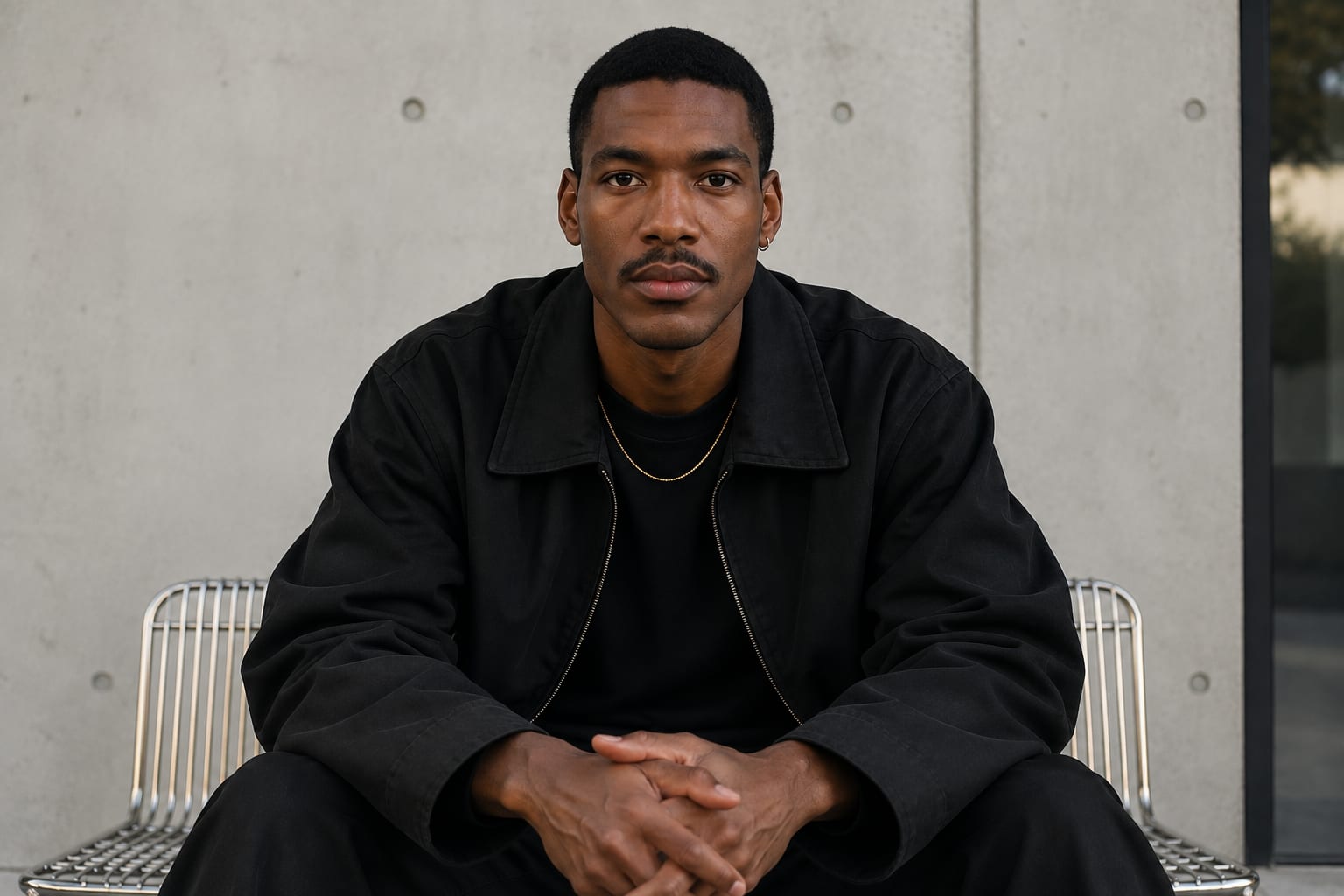
Frontal is the orientation of the passport photograph, the architectural elevation and the product cut-out, and that flatness is the point. Symmetry becomes available, depth is suppressed, and the subject is presented rather than observed. It reads as formal, direct and sometimes deliberately blunt.
Try it
Move the strength and the camera moves. Change the lens and the field of view changes. Pick a subject and the direction is written for it.
0% · Nearly frontal. Subject turned a few degrees off square so one edge shows a sliver of depth.
40% · Square. Subject's front plane perpendicular to the lens axis, camera centred on it.
75% · Locked and symmetric. Camera centred and squared with equal margins either side, background parallel to the sensor.
100% · Elevation. Camera centred, squared, at a longer distance with a longer lens so the subject reads as a flat elevation with no visible sides.
The physical relationship between lens and subject, before any lens or light is chosen.
- Height
- Usually eye level, though frontal can be combined with a raised or lowered camera.
- Vertical angle
- Level by default. A tilt stays possible but starts to undo the flatness.
- Horizontal angle
- Zero. The lens axis is perpendicular to the subject's front plane.
- Relationship
- Face to face. The subject addresses the camera.
- Distance
- Longer distances flatten the elevation further; close distances reintroduce depth at the edges.
Perspective, depth, scale and distortion: what changes in the picture when the camera is here.
- Perspective
- One-point. Any receding lines converge on a single point behind the subject.
- Depth
- Suppressed. The subject reads as a plane, and depth has to come from what is behind it.
- Scale
- True width, hidden depth. Objects look as wide as they are and no deeper than their outline.
- Distortion
- Minimal at distance; edges of a wide frame can bow at close range.
- Spatial feeling
- Presentational. A stage, a wall, a display.
What it tends to communicate
Tendencies, not laws. What the geometry usually reads as, and where that reading breaks.
Frontal reads as formal when the subject is composed and as deadpan when the subject is ordinary. The same geometry made Avedon's portraits and every mugshot.
Use it for
- Typologies and series where subjects must compare
- Facades and symmetrical buildings
- Packaging and product cut-outs
- Formal portraiture
- Deadpan or ironic editorial
Less suited to
- Conveying volume or depth
- Candid or observational moments
- Subjects with an unremarkable front and an interesting side
It says
The same camera position asks for different things from a face, a shoe, a facade and a car.
The full face, both ears, both eyes at equal size. Unforgiving and honest. Distance and a longer lens keep it flattering.
Prompt phrasing
frontal portrait, face square to the camera, both eyes level and equal in size, direct gaze
The decisions that sit on top of the camera position and change what it produces.
How the lens changes it
Recommended: Normal, Telephoto. Frontal works at every size, but the wider the frame the more precisely the camera must be squared.
- Ultra-wide · 14 to 20mm
- The centre stays flat but the edges bow and stretch, which breaks the symmetry frontal depends on.
- Wide · 24 to 35mm
- Works for facades at a distance; for faces it widens the centre of the face.
- Normal · 40 to 60mm
- Clean and true for products and portraits at a couple of metres.
- Telephoto · 85 to 200mm
- Flattens the front plane completely, which is what frontal typologies and architectural elevations want.
Composition
Which compositions this camera position rewards, and why the pairing works.
- Subject placement
- Centred. Frontal off-centre reads as a mistake unless the emptiness is the subject.
- Horizon
- Level and usually hidden behind the subject.
- Foreground
- Almost none. The front plane is the foreground.
- Background
- A flat backdrop or a wall parallel to the sensor keeps the flatness. A receding background reintroduces one-point depth behind the subject.
- Negative space
- Symmetric margins. Equal air either side is what makes the frontal view feel intended.
- Geometry
- Bilateral symmetry, rectangles, a grid the subject sits inside.
Light
- Flat frontal light keeps the plane flat and the symmetry intact; it is the typology light.
- Symmetric two-light setups keep left and right equal, which matters more here than in any other orientation.
- A single raking side light reintroduces the texture and depth that the orientation removes.
Motion
A frontal view survives moves along its own axis. Trucking sideways breaks the square-on relationship.
A view is where the camera is. A movement is where it goes. They combine.
Read from the shot lists in each style's photo brief, not assigned by hand. A style is here because its own brief asks for this camera.

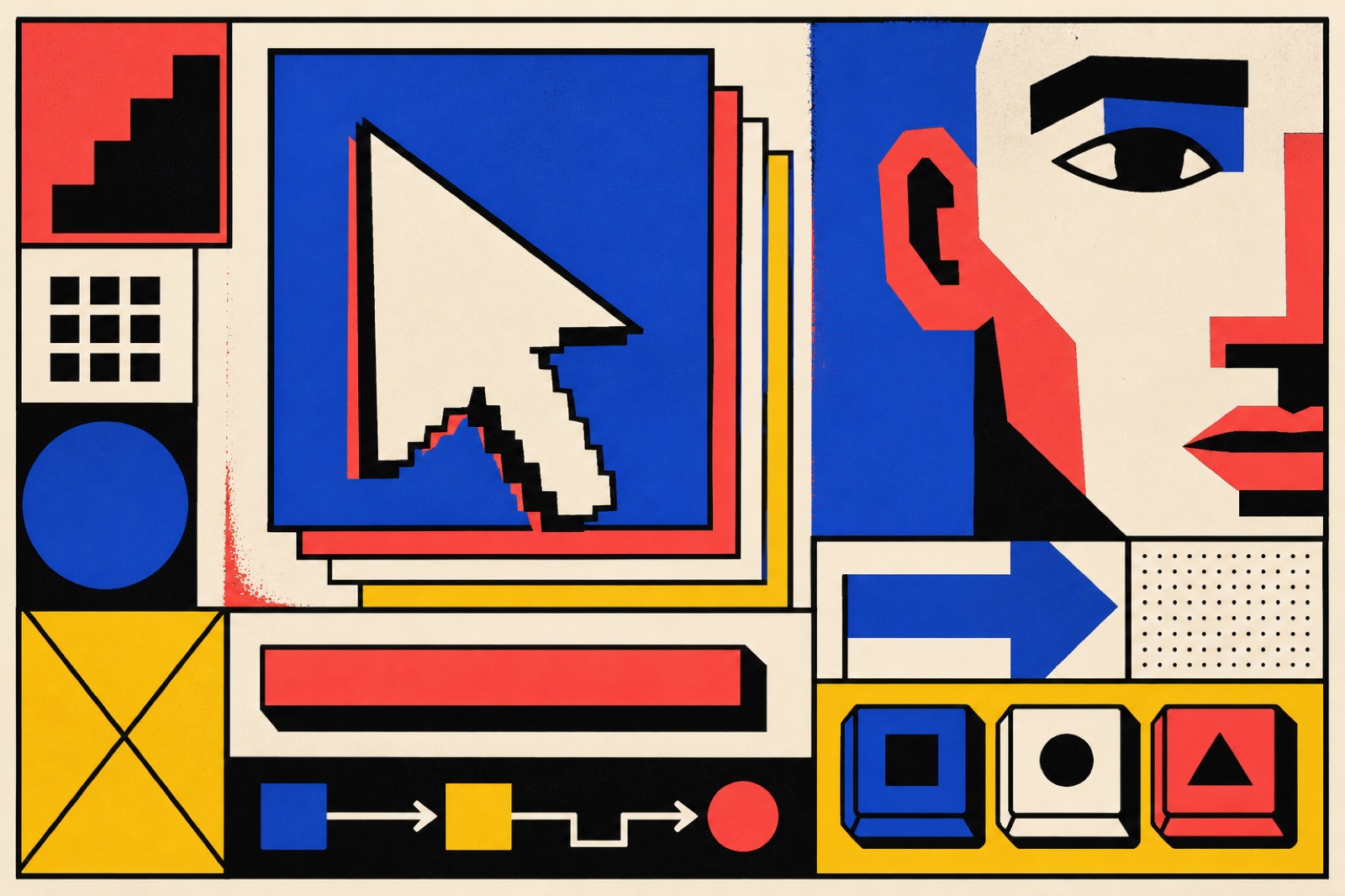
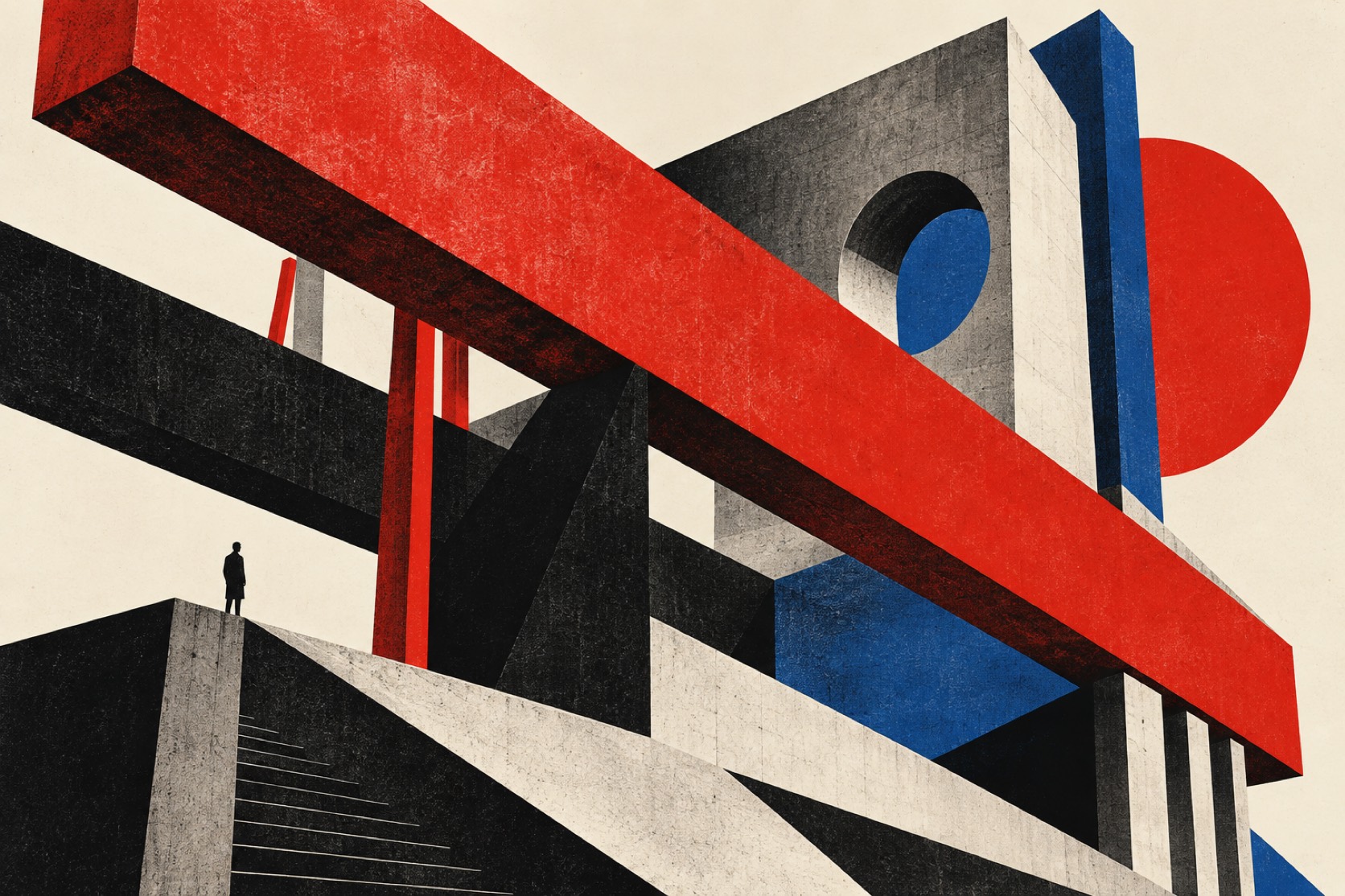
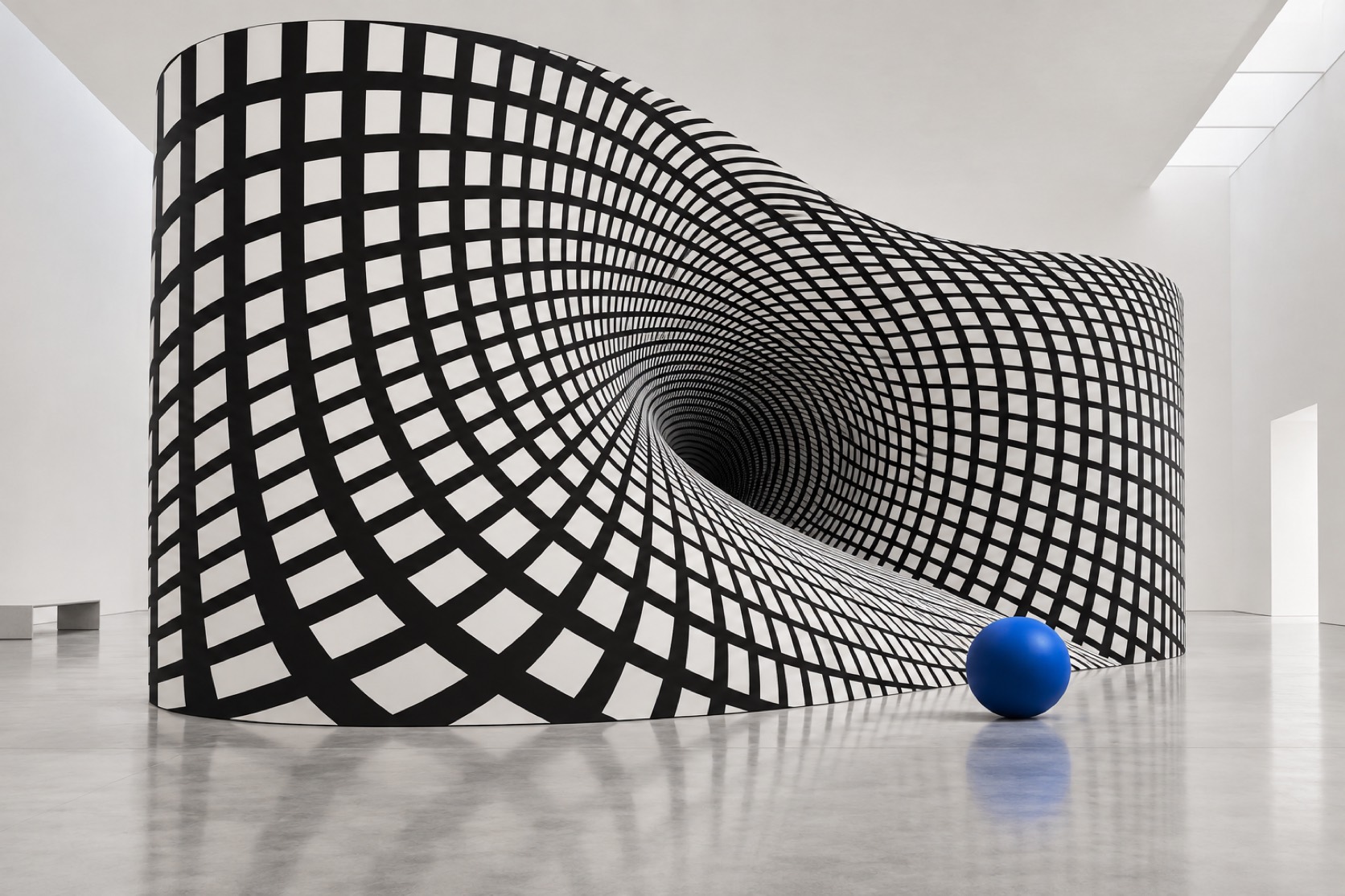
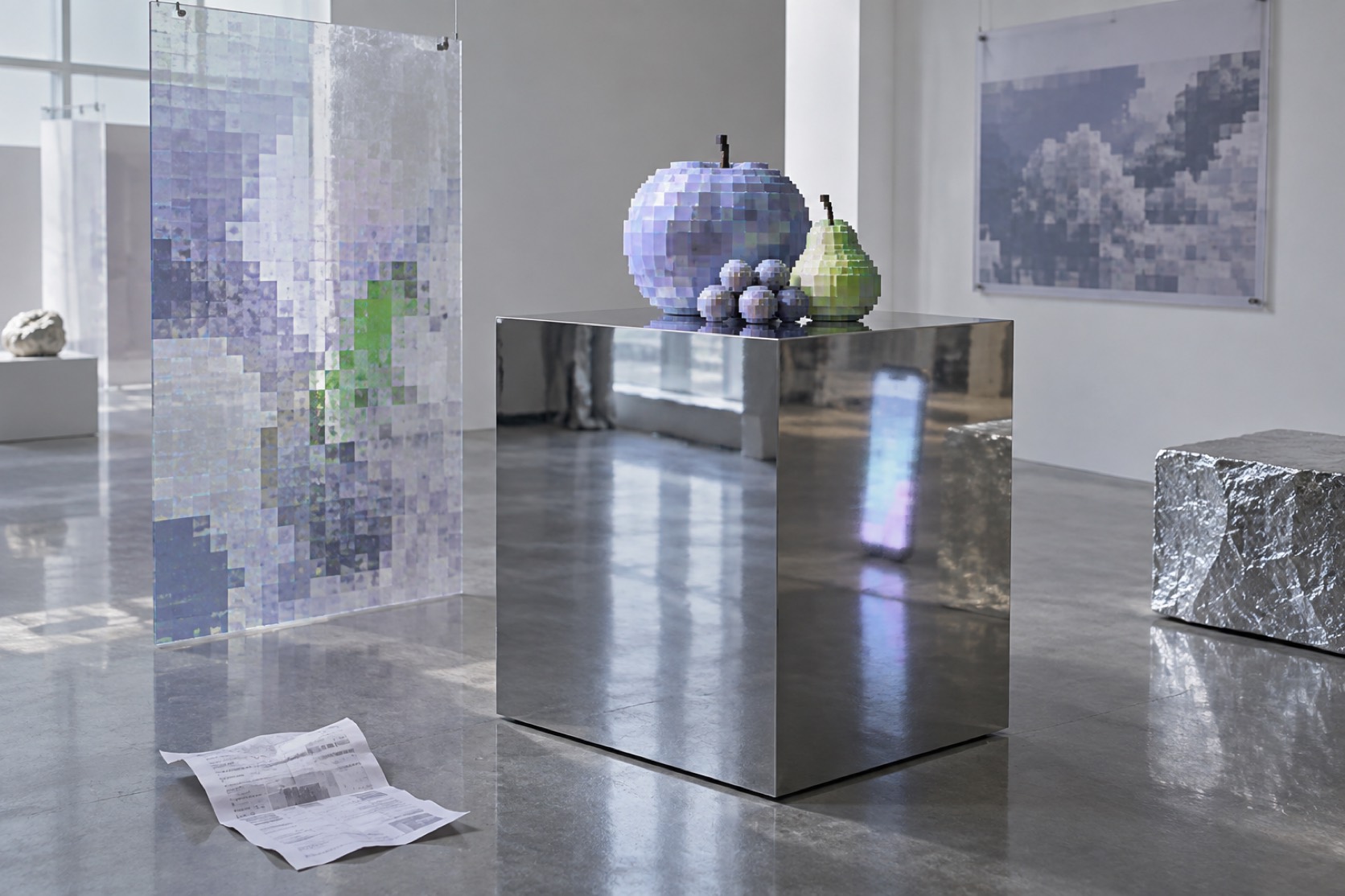

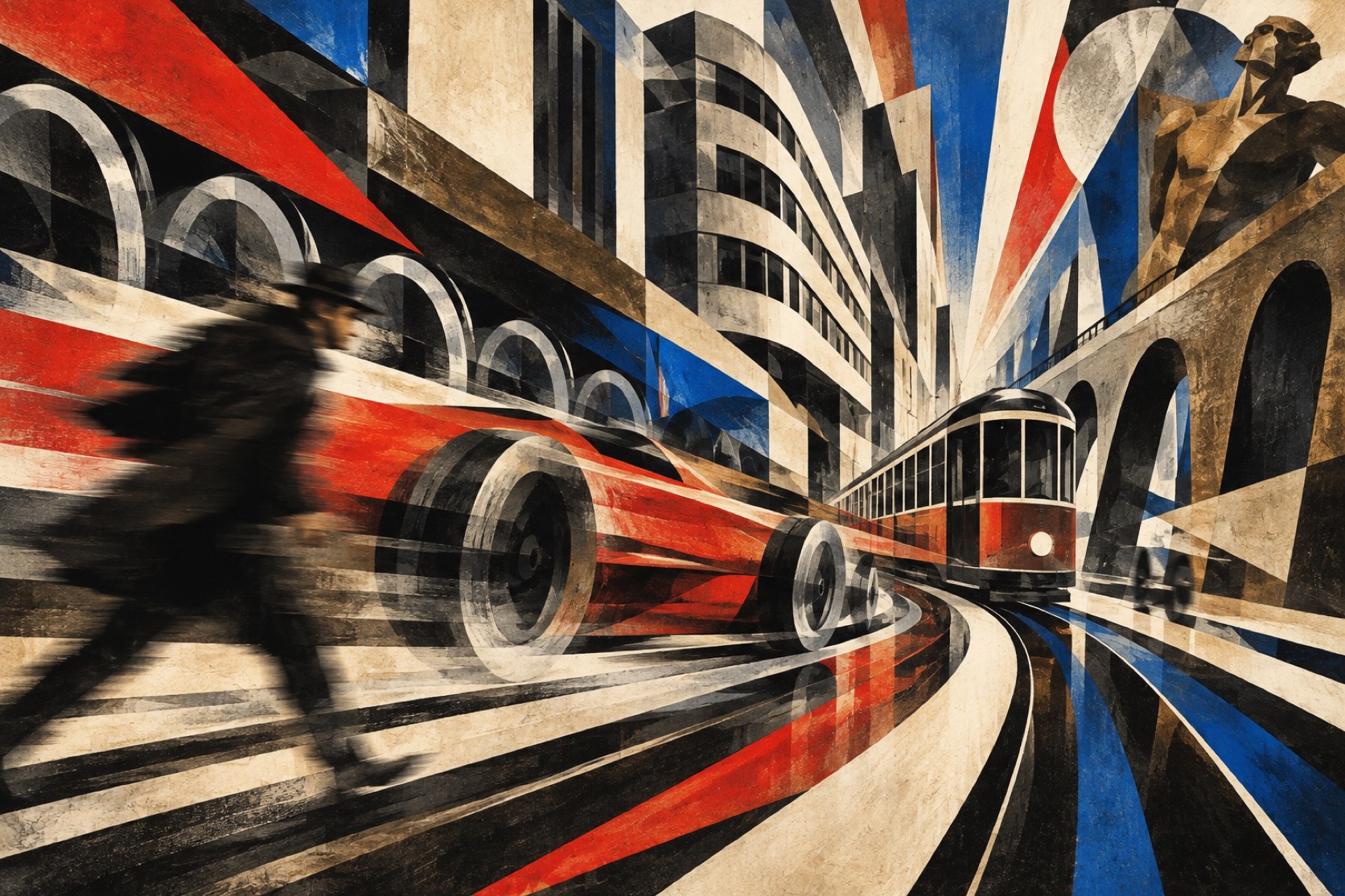
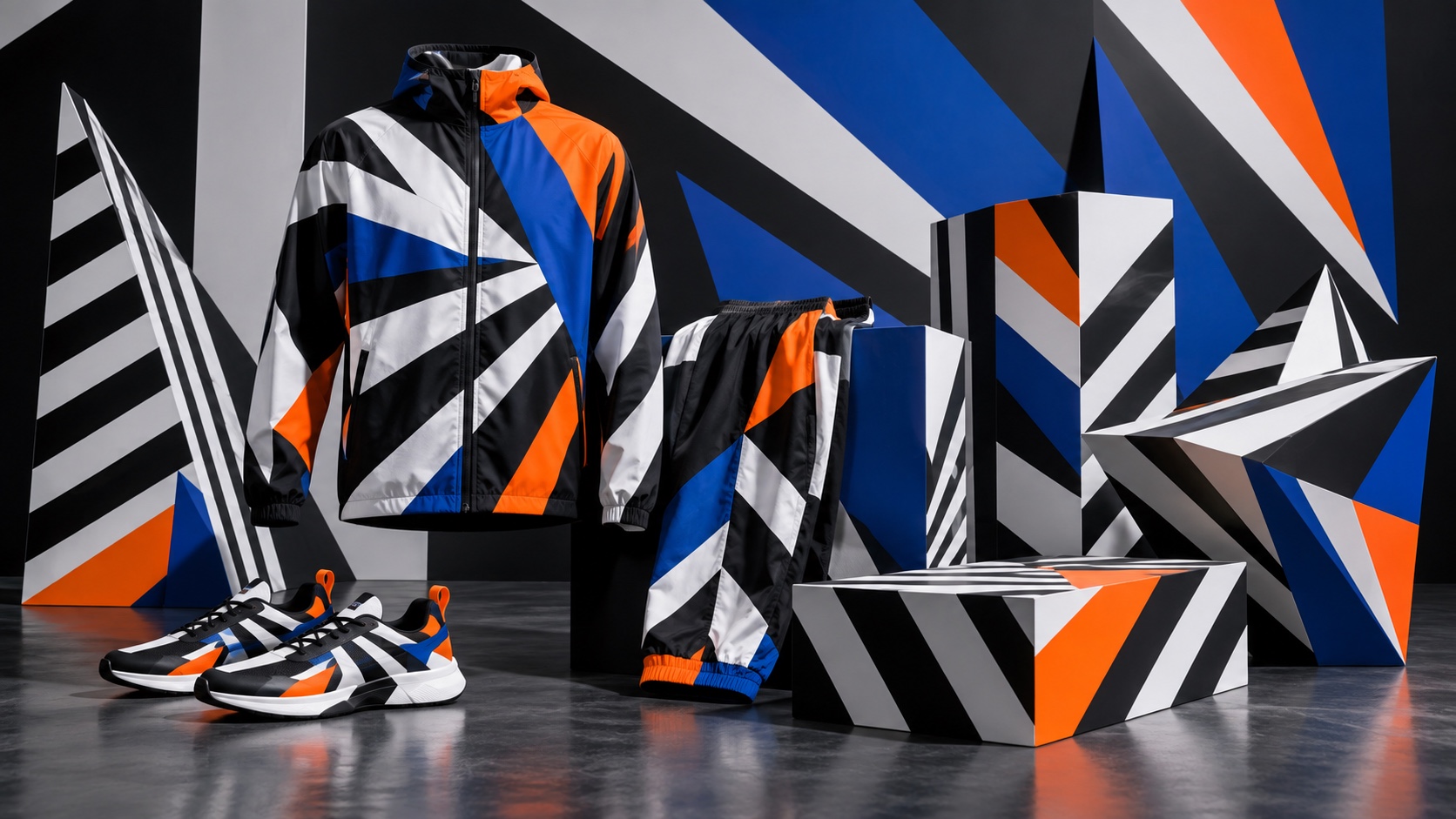
The failures that make this camera position read as an accident rather than a decision.
- Almost square. A frontal view that is five degrees off reads as careless rather than as a choice.
- Unequal margins, which undo the symmetry the orientation promises.
- Wide lenses close to the subject, which stretch the outer edges of a symmetric subject.
- Confusing frontal with eye level. Frontal is which side faces the lens; eye level is how high the lens is.
Negative guidance for a model
Prompt language
Geometry, not labels. Models read camera words inconsistently; they read positions the same way every time.
Nearby views


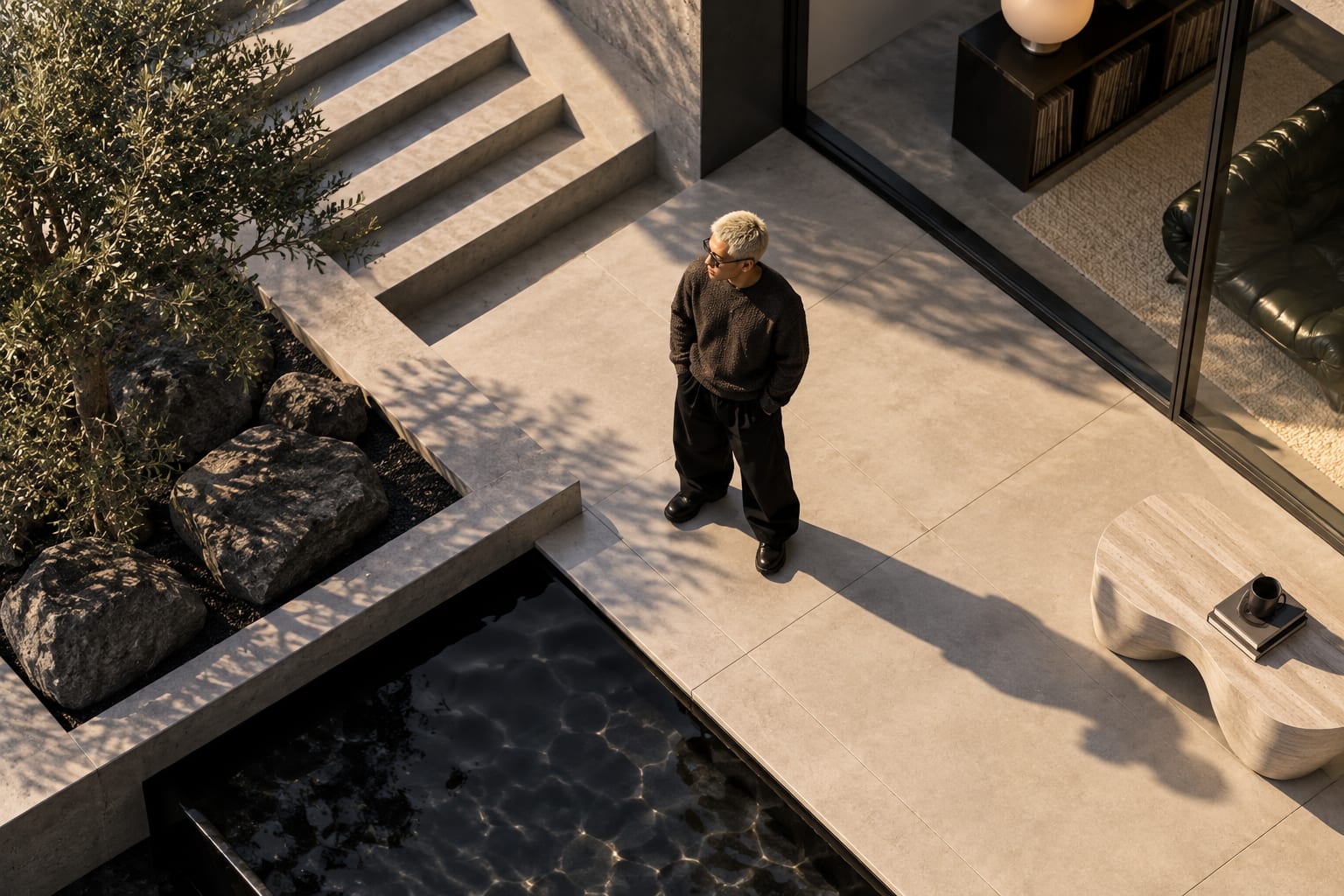
Contrast with
The opposite decisions. If this view is wrong for the picture, one of these is usually right.

In the knowledge graph
Questions
What is the difference between a frontal view and a three-quarter view?
Frontal turns the subject's front plane square to the lens, so no side is visible and the picture reads flat and symmetric. Three-quarter turns it roughly 45 degrees, so the front and one side both show, which gives the subject volume. Frontal presents; three-quarter describes.
How do I keep a frontal shot truly square?
Use the camera's grid, align a horizontal edge of the subject with a grid line, and check that matching features on the left and right sit at the same height and size. For buildings, a tilt-shift lens or a distance with a longer lens keeps the facade parallel to the sensor.
Why do AI images ignore 'frontal' and turn the subject anyway?
The word is ambiguous to a model. Describe the geometry instead: the front plane square to the lens, centred, both sides equal, no side surfaces visible. The compiler on this page writes it that way.