
Profile trades expression for outline. A face in profile is a line, not a gaze; a car in profile is its proportion, not its stance; a building in profile is a section. It is the orientation of coins, cameos and side elevations, and it is the most graphic and sculptural way to see anything, because it turns a subject into its own silhouette.
Try it
Move the strength and the camera moves. Change the lens and the field of view changes. Pick a subject and the direction is written for it.
0% · Three-quarter. Subject turned about 45 degrees; both the front and the side are visible.
35% · Near profile. Subject turned about 70 degrees; a sliver of the far side still shows.
70% · Profile. Subject turned 90 degrees to the lens; only one side visible, the outline clean.
100% · Silhouette profile. Subject at exactly 90 degrees, backlit or on a plain field with a longer lens, so the picture is the outline alone.
The physical relationship between lens and subject, before any lens or light is chosen.
- Height
- Usually eye level or the subject's midline. Profile combines cleanly with slight high or low angles.
- Vertical angle
- Level by default.
- Horizontal angle
- Ninety degrees to the subject's front plane.
- Relationship
- Observer. The subject does not address the camera; the viewer watches from the side.
- Distance
- Distance and a longer lens keep the profile flat and true; close and wide bends the outline.
Perspective, depth, scale and distortion: what changes in the picture when the camera is here.
- Perspective
- The subject's length is shown at full extent; its depth is hidden entirely.
- Depth
- Suppressed. The subject reads as a plane, like a cut-out.
- Scale
- True length and height. A car's wheelbase and a nose's shape are measurable.
- Distortion
- Minimal at distance. Close wide lenses stretch whichever end is nearer.
- Spatial feeling
- Sculptural, graphic, detached.
What it tends to communicate
Tendencies, not laws. What the geometry usually reads as, and where that reading breaks.
Profile is dignified when the subject is still and wistful when they look at something; it is anonymous when the light hides the face, and clinical when it is used for measurement. The gaze off frame decides.
Use it for
- Silhouettes and backlit portraits
- Cars, where the profile is the design
- Sneakers and bottles
- Beauty work on the jaw, nose and neck
- Sculpture and furniture
- Runway and lookbook side views
Less suited to
- Portraits that need eye contact
- Facades
- Product packaging with a front face
- Round objects with no distinguishing profile
It says
The same camera position asks for different things from a face, a shoe, a facade and a car.
Nose, lips, jaw and neck as a single contour. Flattering for strong bone structure; less so for weak chins. Hair and headwear become shape.
Prompt phrasing
side profile portrait, face at ninety degrees to the camera, nose, lips and jaw as one contour, gaze off frame
The decisions that sit on top of the camera position and change what it produces.
How the lens changes it
Recommended: Telephoto, Normal. Profile close-ups are beauty and sculpture; full-length profiles are fashion and automotive. Both want a clean field.
- Ultra-wide · 14 to 20mm
- The near end of the subject swells and the far end shrinks; the profile bends. Avoid.
- Wide · 24 to 35mm
- Acceptable for long subjects such as cars at some distance; poor for faces.
- Normal · 40 to 60mm
- True profile at two to three metres for people and products.
- Telephoto · 85 to 200mm
- The profile lens. Flattens the subject to a clean cut-out and keeps every proportion honest.
Composition
Which compositions this camera position rewards, and why the pairing works.
- Subject placement
- Offset from centre with the empty space in front of the face or the nose of the car: room to look or move into.
- Horizon
- Level and passing behind the subject.
- Foreground
- Minimal; the subject's near side is the foreground.
- Background
- Plain backgrounds let the outline read; busy ones swallow it. Backlight makes the outline the whole picture.
- Negative space
- Essential. Space ahead of a profile reads as future, intention or destination; space behind reads as departure.
- Geometry
- One dominant contour line. The composition is the outline.
Light
- Backlight turns the profile into a silhouette, the purest reading of the orientation.
- A rim light along the contour draws the outline on a dark ground.
- Light from the camera side flattens the face into a shape; light from the far side turns it into a shadowed mask with a bright edge.
Motion
Trucking alongside a moving profile, a runner or a car, keeps the outline constant while the world streams past.
A view is where the camera is. A movement is where it goes. They combine.
Read from the shot lists in each style's photo brief, not assigned by hand. A style is here because its own brief asks for this camera.
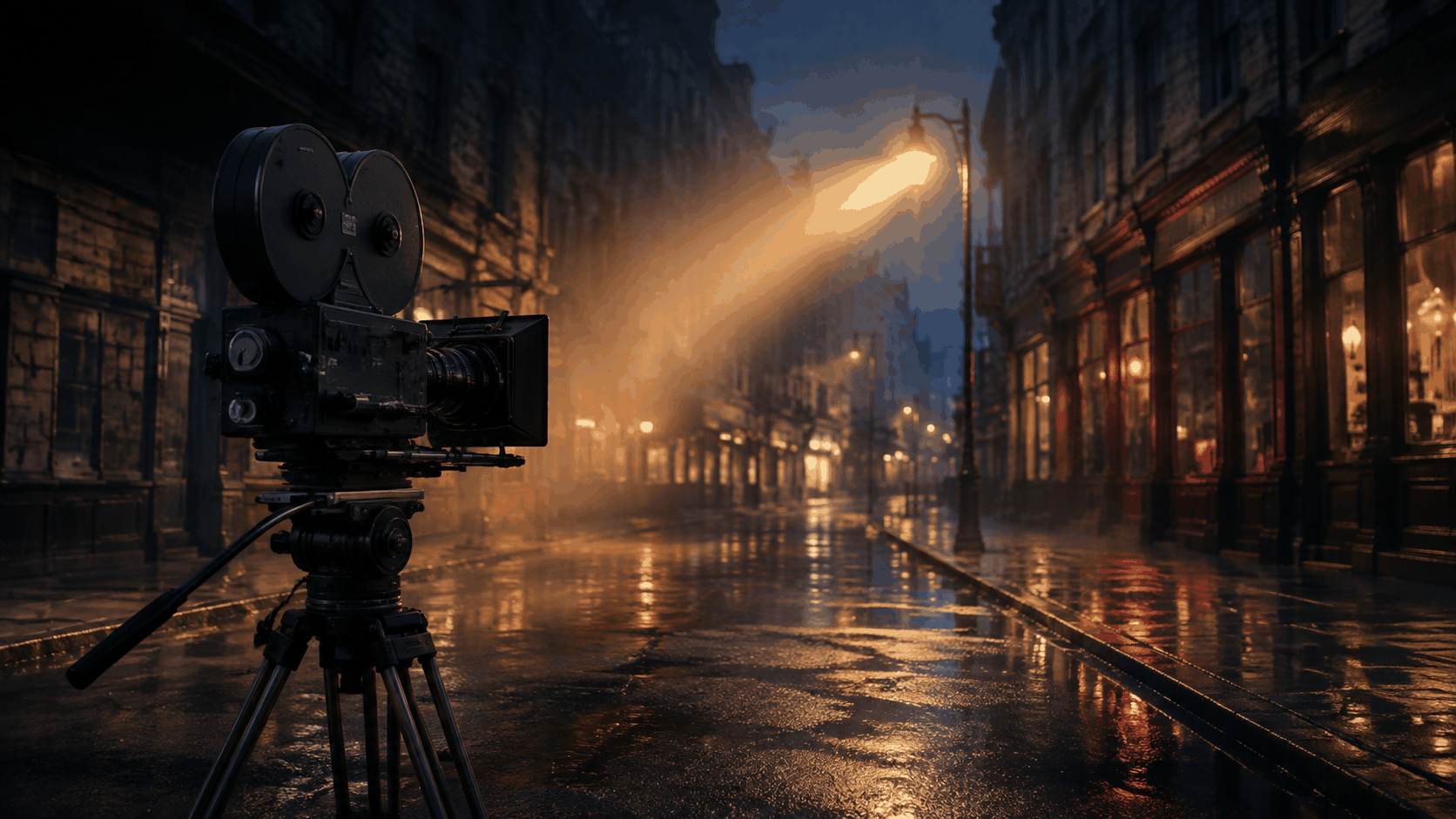
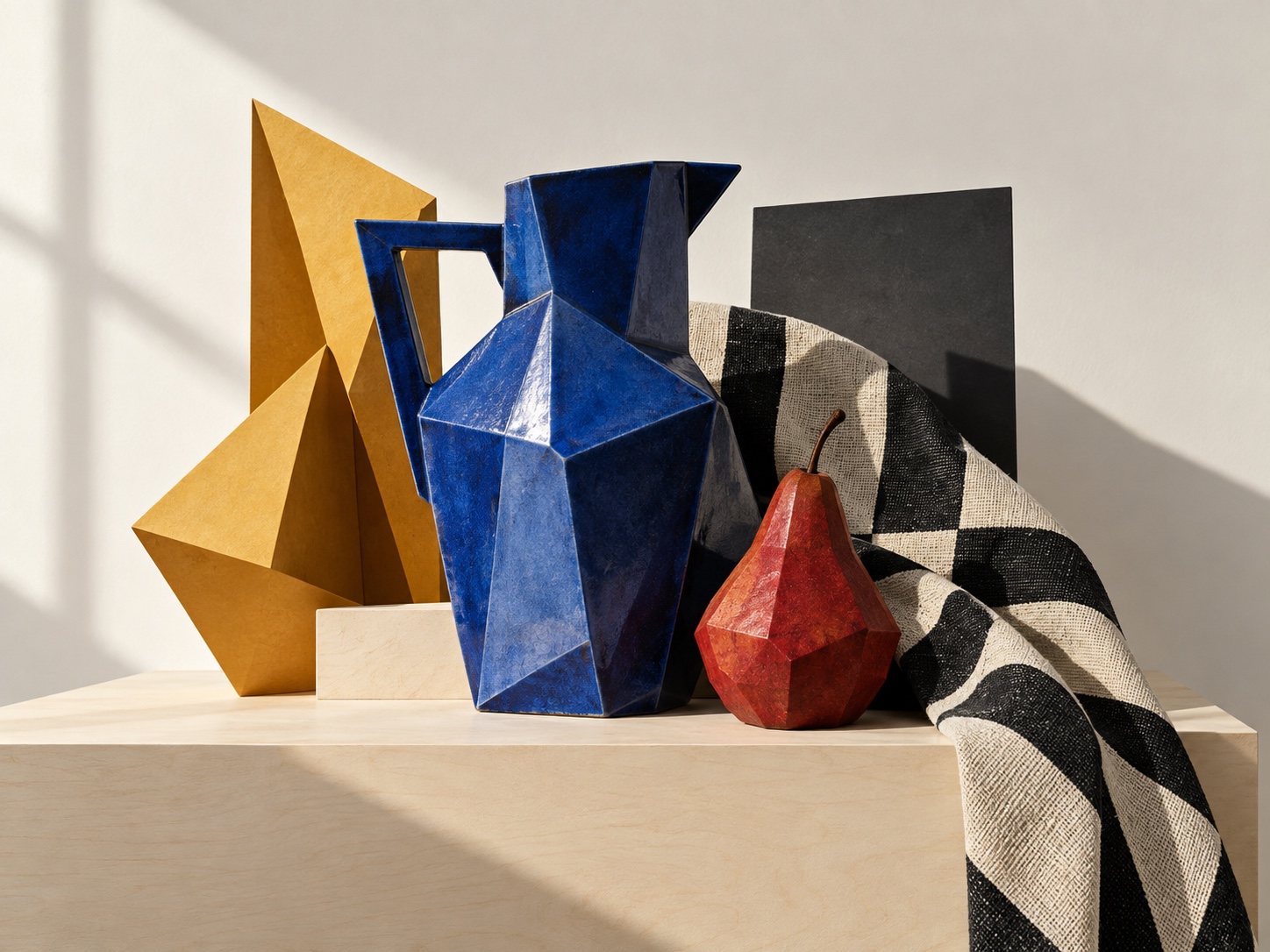
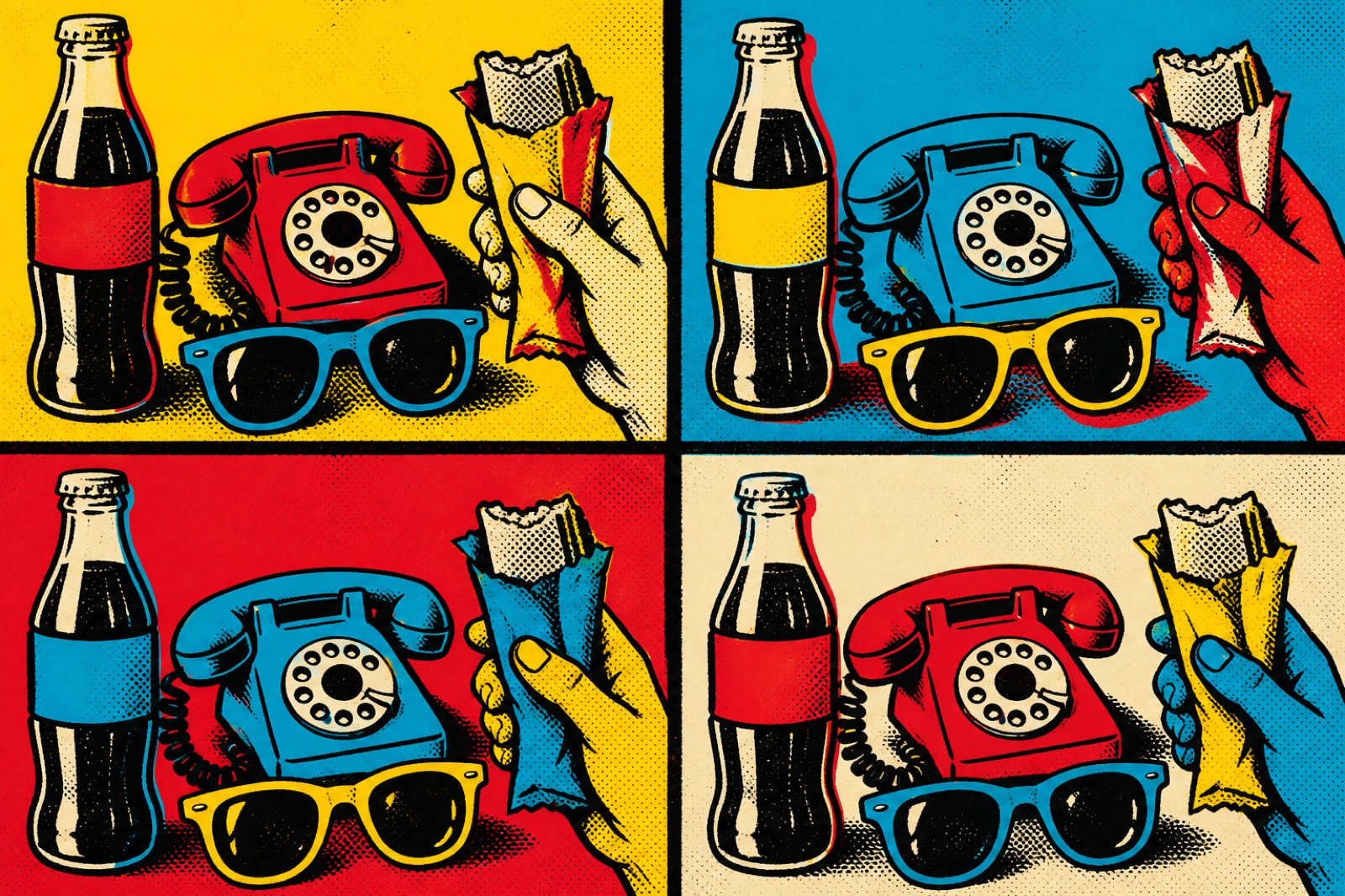


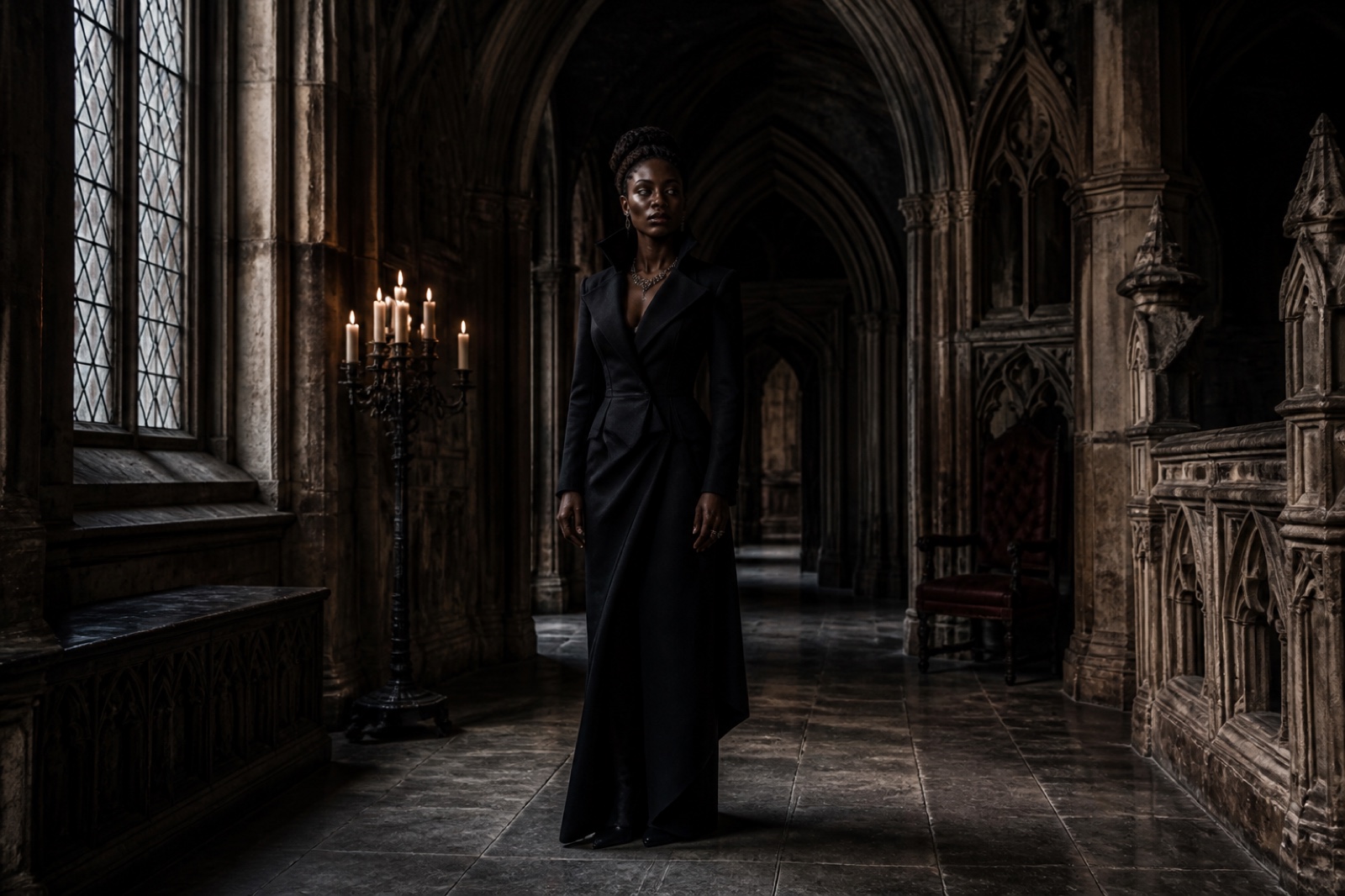

The failures that make this camera position read as an accident rather than a decision.
- Almost profile. A few degrees off shows a bit of the far eye or the far headlight and loses the graphic outline.
- Weak chins and receding features shown honestly when the brief wanted flattery.
- A cluttered background that eats the contour.
- No room in front of the face or the nose of the car; the subject presses against the frame edge.
Negative guidance for a model
Prompt language
Geometry, not labels. Models read camera words inconsistently; they read positions the same way every time.
Nearby views

Contrast with
The opposite decisions. If this view is wrong for the picture, one of these is usually right.
In the knowledge graph
Questions
When is a profile better than a frontal portrait?
When the picture is about shape rather than expression. Profile shows bone structure, hair and headwear as a contour and lets the subject look at something out of frame, which reads as contemplation. Frontal shows the eyes and asks the viewer to meet them.
Why do car photographers use the profile so often?
Because that is the view the car was designed in. Wheelbase, overhangs, roofline and the character line from headlight to tail are all only readable from the side, and a longer lens at a distance keeps them true.
How do I get a clean profile silhouette?
Turn the subject exactly ninety degrees, use a longer lens from further back so the outline does not bend, and put the light behind the subject or a plain field behind them. Leave space in front of the face for the gaze.