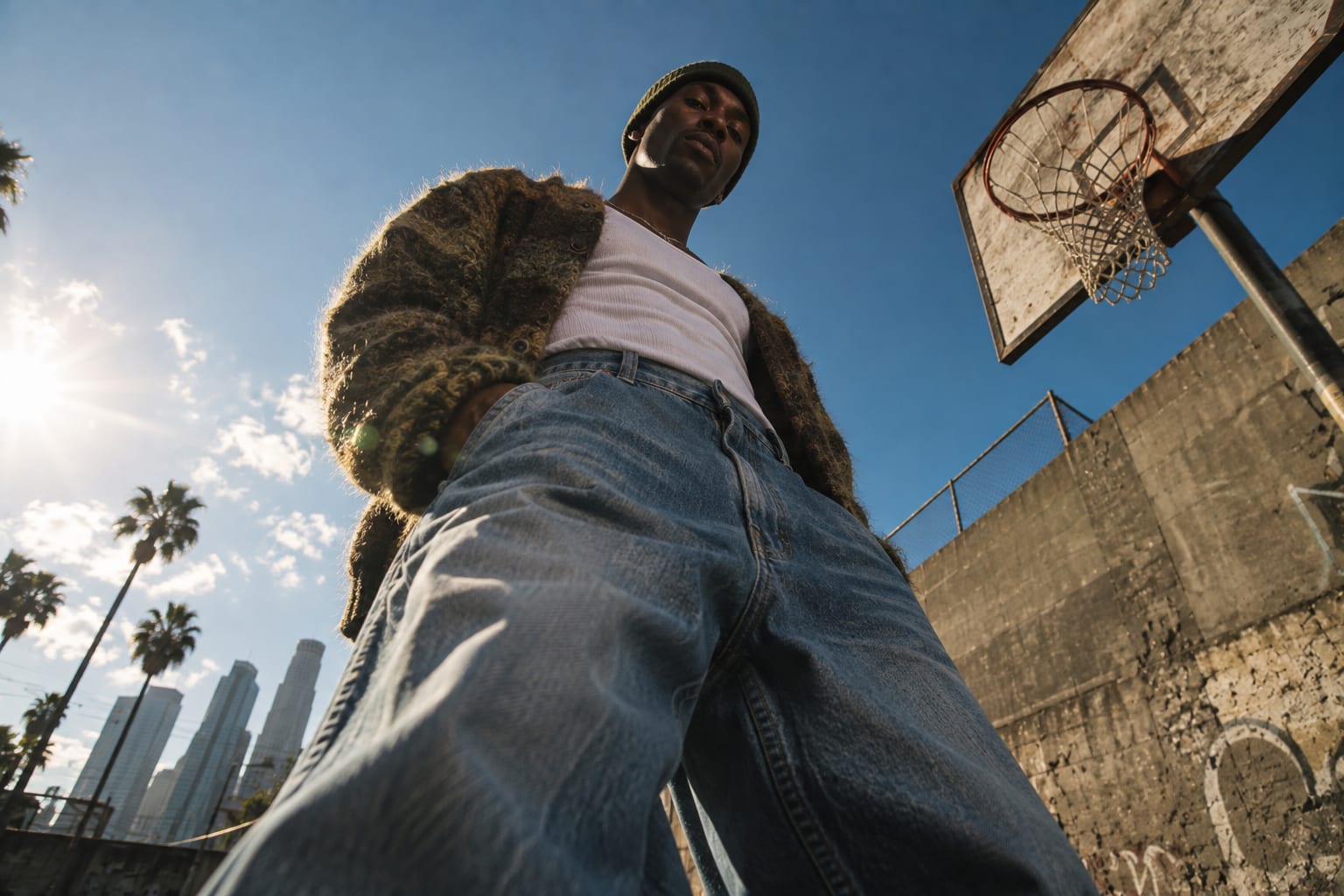
Low angle is the oldest trick in the book because it works on the body before the mind. Anything seen from below is bigger than us, closer to the sky, and standing on the ground we cannot see. It gives a person stature, a product presence, a building weight and a car stance, and it does all of that before anyone reads the caption.
Try it
Move the strength and the camera moves. Change the lens and the field of view changes. Pick a subject and the direction is written for it.
0% · Level. Camera at the subject's eye line, no tilt.
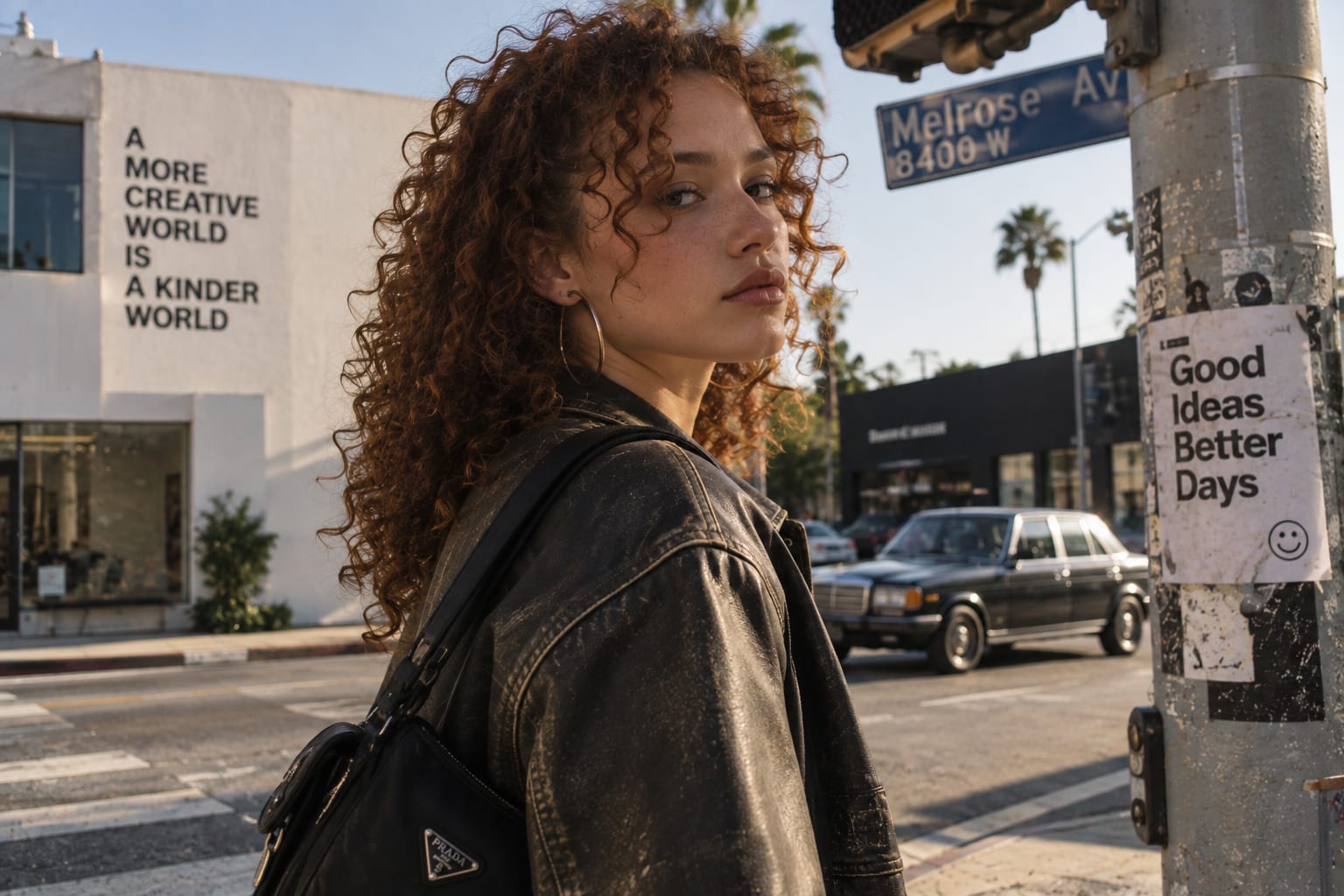
20% · Slightly below. Camera a little below the subject's midline, tilted up a few degrees; the effect is felt rather than seen.
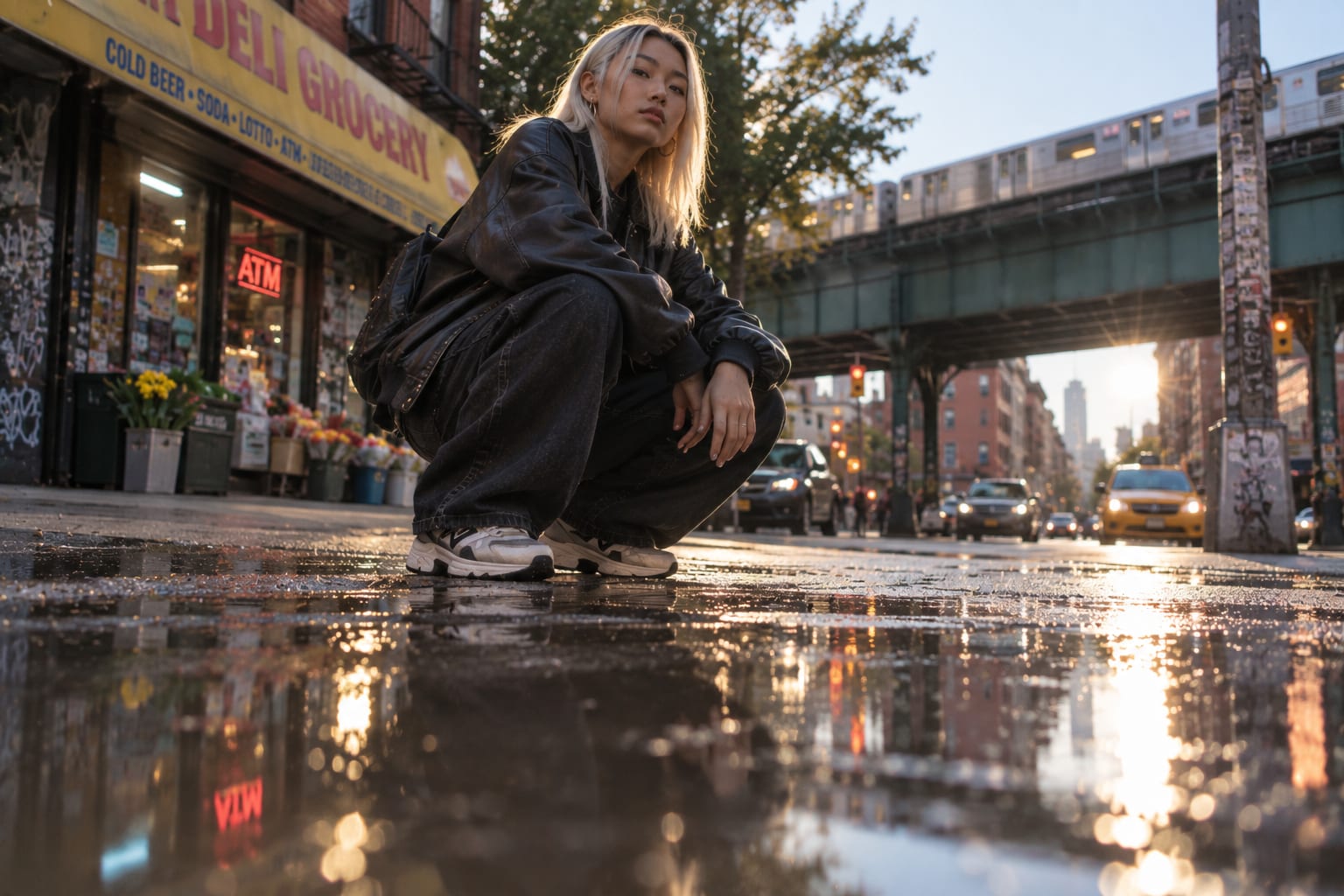
50% · Clearly below. Camera at waist or knee height, tilted up so the subject rises above the frame's centre and the horizon drops low.
80% · Dramatic. Camera near the ground, tilted steeply upward; verticals converge visibly and the ground leaves the frame.
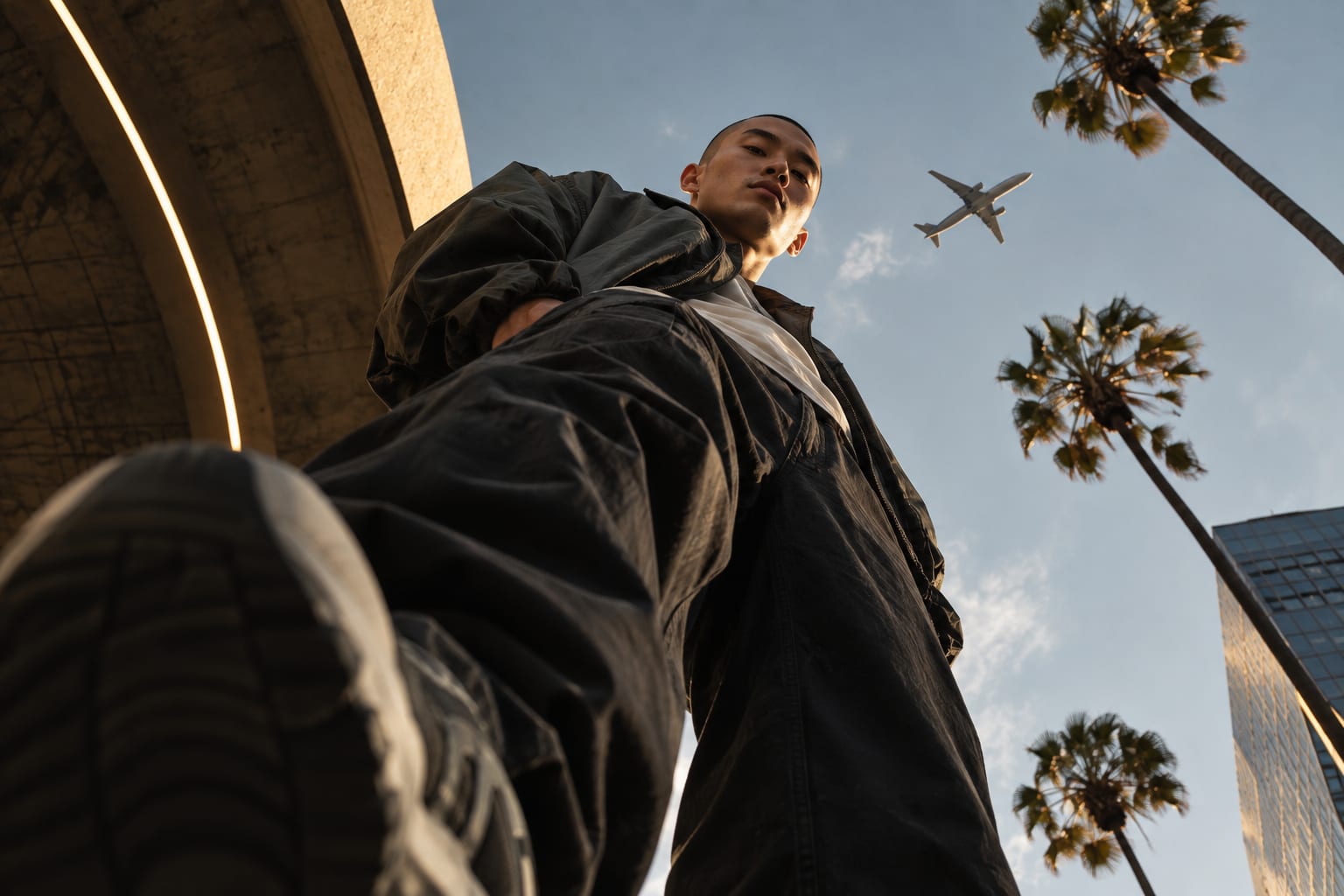
100% · Extreme, worm's eye. Camera on the ground or below the subject's base, pointed almost straight up; the subject towers, silhouetted against sky or ceiling.
The physical relationship between lens and subject, before any lens or light is chosen.
- Height
- Below the subject's centre of mass. Chest height on a standing person is mild; knee height is pronounced; ground is extreme.
- Vertical angle
- Tilted up, from a few degrees to nearly vertical.
- Horizontal angle
- Any. Frontal low angles are monumental; three-quarter low angles are dynamic.
- Relationship
- Subordinate. The viewer looks up to the subject.
- Distance
- Close and low exaggerates the near parts of the subject. Far and low, with a longer lens, keeps proportion and adds only the upward view.
Perspective, depth, scale and distortion: what changes in the picture when the camera is here.
- Perspective
- Verticals converge upward. Tall subjects taper toward the top of the frame.
- Depth
- The subject's nearest parts grow and its farthest shrink, so a body or building reads as a wedge rising away.
- Scale
- Enlarged. The subject appears taller and heavier than at eye level.
- Distortion
- Wide lenses stretch whatever is closest, which on a person is the legs and the chin.
- Spatial feeling
- Rising. The ground drops out of the frame; sky, ceiling or void fills in behind.
What it tends to communicate
Tendencies, not laws. What the geometry usually reads as, and where that reading breaks.
The power reading needs a subject that can carry it. A low angle on a frightened person reads as looming threat over the viewer's shoulder; on a child it reads as the child's own world. Context decides whether the height is the subject's or the viewer's.
Use it for
- Athletes, performers and leaders
- Hero product shots
- Facades and towers
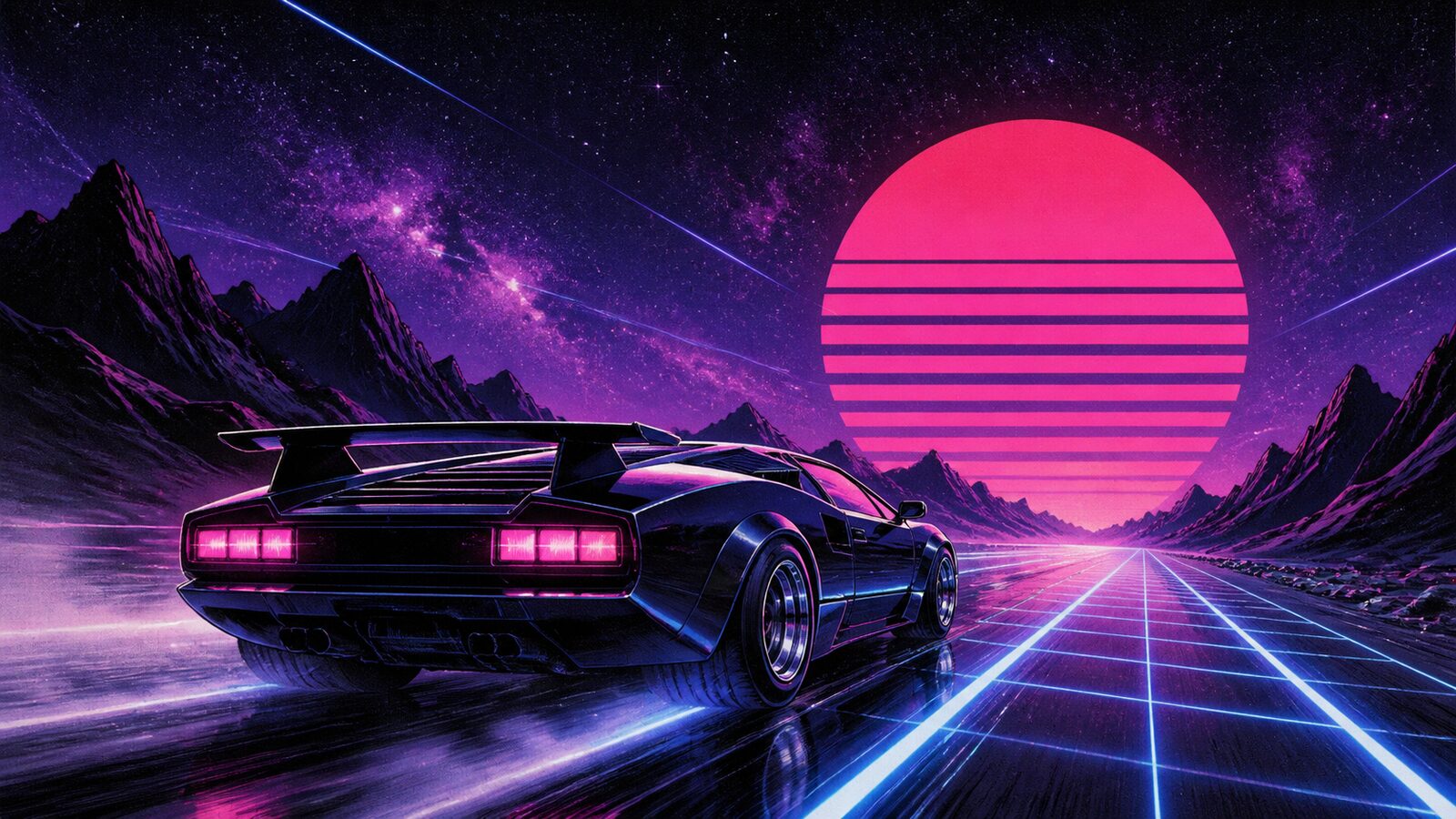
- Cars and motorbikes
- Fashion editorial that wants statuesque length
- Making a modest space feel taller
Less suited to
- Vulnerability
- Flat lays and plan views
- Faces that need to be flattered from close range
- Food, which rarely benefits from being looked up at
It says
The same camera position asks for different things from a face, a shoe, a facade and a car.
Prioritise presence, stature and silhouette against the sky. Keep the lens normal or longer and the camera at waist height or below; a wide lens at knee height stretches the legs and shrinks the head.
Prompt phrasing
low-angle portrait, camera below the subject's chest looking up, tall commanding stature, silhouette against the sky
The decisions that sit on top of the camera position and change what it produces.
How the lens changes it
Recommended: Wide, Normal. Low angle needs enough of the subject to rise. Tight close-ups from below tend to read as distortion rather than stature.
- Ultra-wide · 14 to 20mm
- Exaggerated foreground, extreme convergence, the subject as a spire. Powerful for buildings and cars, brutal for faces.
- Wide · 24 to 35mm
- Convergence and foreground drama with proportions that still hold at a metre or two from the subject.
- Normal · 40 to 60mm
- Elevated presence with natural perspective. The safe low angle for people.
- Telephoto · 85 to 200mm
- From a distance the low angle compresses into a graphic, flat reading with a rising horizon line and no stretch.
Composition
Which compositions this camera position rewards, and why the pairing works.
- Subject placement
- Centred or slightly high in the frame so it towers; low placement wastes the angle.
- Horizon
- Drops to the bottom of the frame or leaves it entirely. Sky or ceiling takes over.
- Foreground
- Ground close to the lens becomes a large, receding plane; use it as a base or crop it out.
- Background
- Replaced by whatever is above: sky, ceiling, canopy. Clean and graphic, and it separates the subject for free.
- Negative space
- Sky above the subject is the natural negative space; it reads as room to rise into.
- Geometry
- Triangles and wedges. Converging verticals point at the top of the frame.
Light
- Backlight from the sky rims the silhouette, which is the low angle's natural companion.
- Light from below is theatrical and often unflattering; light from above with the camera below is the heroic pairing.
- Interiors need the ceiling lit, since the ceiling has become the background.
Motion
A low dolly-in toward a subject builds stature over time. A slow tilt up from the feet is the classic reveal.
A view is where the camera is. A movement is where it goes. They combine.
Read from the shot lists in each style's photo brief, not assigned by hand. A style is here because its own brief asks for this camera.
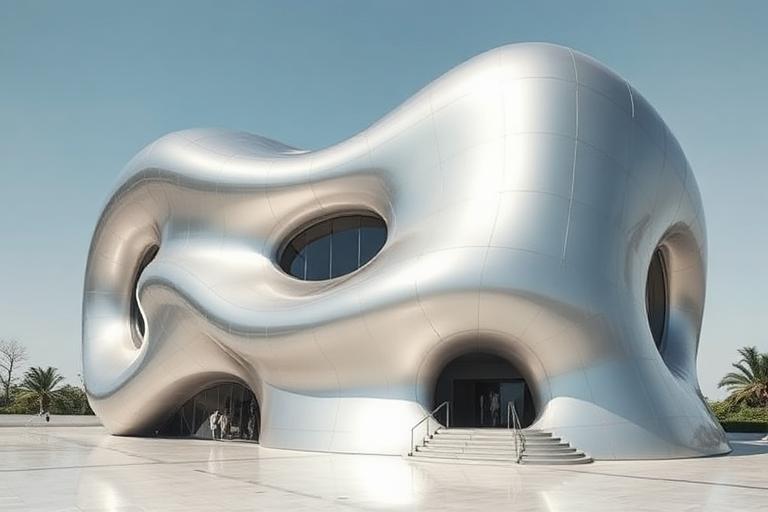
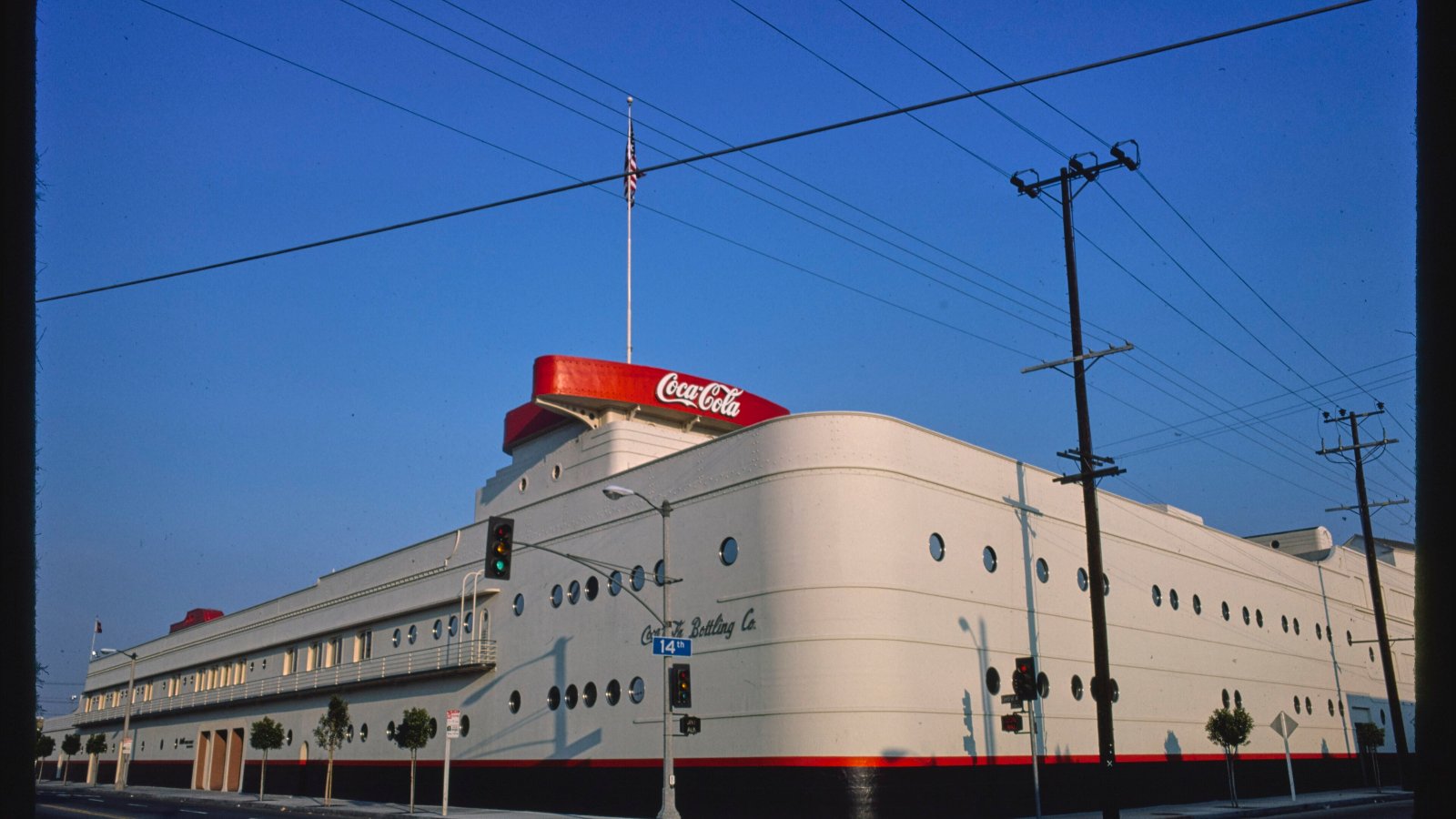
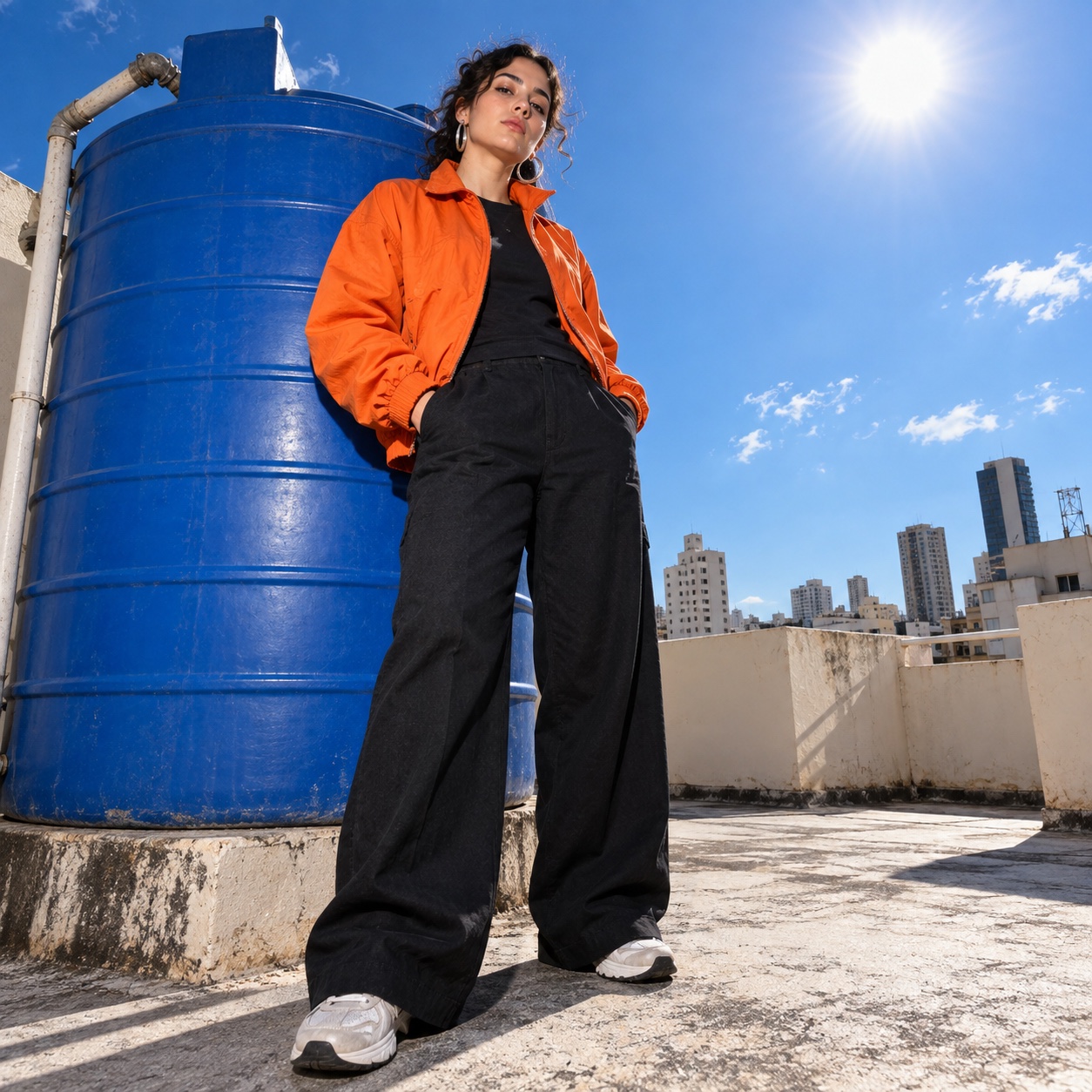
The failures that make this camera position read as an accident rather than a decision.
- Cliché. The heroic upshot is the most overused angle in advertising; earn it with a subject that has stature to show.
- Nostrils, chins and stretched legs from a wide lens too close to a person.
- Unwanted keystoning on buildings where the brief expected parallel verticals.
- Accidental menace: a low angle on someone leaning over the camera reads as threat.
- Forgetting the ceiling or sky is now the background, and leaving it ugly.
Negative guidance for a model
Prompt language
Geometry, not labels. Models read camera words inconsistently; they read positions the same way every time.
Nearby views
Contrast with
The opposite decisions. If this view is wrong for the picture, one of these is usually right.
In the knowledge graph
Questions
What does a low angle communicate?
Most often stature, dominance and importance, because the subject rises above the viewer's own height. The reading depends on the subject: a leader looks commanding, a building monumental, a car planted, and a person leaning over the lens threatening. The geometry is the same; the meaning is contextual.
Which lens should I use for a low angle?
It depends on the subject. Wide lenses at 24 to 35mm give buildings and cars converging drama. People are better served by a normal to short telephoto lens from further back, which keeps the stature without stretching legs and chins. An 18mm and a 135mm from the same low position make two entirely different pictures.
How do I write a low angle for an AI image model?
Describe the position, not the label. Say the camera is below the subject's midline, tilted upward, with the subject rising above the camera and vertical lines converging toward the top of the frame. Add the subject-specific goal, such as silhouette and presence for a product, and tell it what to avoid, such as stretched limbs.