Registrar's index cards on the platen glass - captured by the scanner
2000s-present · Global
Contemporary architecture is not a style but a condition: the absence of a single dominant ideology for the first time since Modernism's rise. After Postmodernism exhausted its irony and Deconstructivism its fragmentation, architecture entered a pluralist era where Pritzker Prize winners range from the social activism of Alejandro Aravena to the material refinement of Peter Zumthor to the conceptual transparency of SANAA. No manifesto unites current practice; what unites it is the shared condition of practicing architecture after the certainty of manifestos has dissolved.
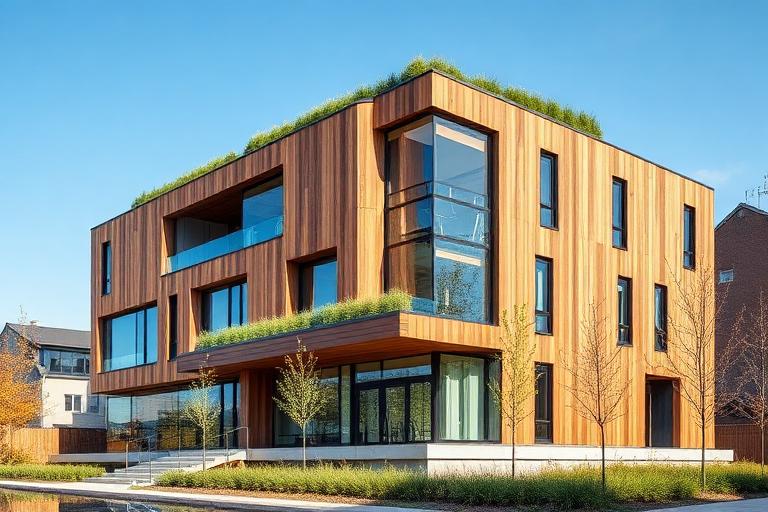
Several threads run through contemporary work without constituting a unified movement. Sustainability has shifted from niche concern to baseline requirement, with passive design strategies, mass timber construction, and carbon consciousness reshaping practice. Digital fabrication and parametric design have expanded formal possibilities. A renewed emphasis on social responsibility, visible in Kere Architecture's community buildings in Burkina Faso and Lacaton & Vassal's transformation-over-demolition approach in France, challenges the profession's tendency toward monument-making.
The most significant shift may be geographic. For a century, architectural innovation was concentrated in Western Europe, the United States, and Japan. Contemporary practice is genuinely global: Wang Shu in China, Studio Mumbai in India, Al Borde in Ecuador, and countless others are producing work that draws on local traditions, materials, and construction cultures while engaging with international discourse. Architecture has not had a single center since the decline of the International Style.
The visual DNA: what makes it recognisable
- Variable and contemporary sans-serifs: Inter, Sohne, ABC Diatype
- Mix of geometric and humanist faces reflecting pluralism
- Strong hierarchy through size and weight rather than typeface variety
- Digital-native type design with screen legibility as primary concern
- Site-responsive plans rather than imposed geometric systems
- Mixed structural systems within single projects
- Landscape and building as continuous design surface
- Flexibility and adaptability built into spatial organization
- Mass timber (CLT, glulam): #C4A87C, #B89468, #A08050
- Weathering steel (Corten): #8B4513, #6B3410, #A0522D
- Recycled and reclaimed materials: variable patina and color
- High-performance glazing with minimal frames: #E8ECF0, #D0D8E0
- Green roofs and integrated planting
- Perforated and operable facade systems
- Mass timber structure left exposed as finish surface
- Community spaces and public ground floors as design drivers
8-channel console - dominant channels taped & circled by the registrar
Your aesthetic passport - share the fingerprint
The style's primary materials, assembled bottom-up
Tap a stratum for material detail · Full catalog
Contemporary · 1995–present - tap any style to travel
4 color interpretations of this aesthetic
Join waitlist for access
Join the waitlist for full access
Join the waitlistContemporary Architecture: where the language earns its place
Contemporary Architecture is most effective when its visual decisions do useful work. No single doctrine - the live edge of global practice where Diébédo Francis Kéré builds with compressed earth and Kengo Kuma weaves timber lattices, both answering the same question: what should architecture do right now?
The style gives styling, proportion, and image sequencing a clear point of view rather than treating them as decoration.
It can turn atmosphere, material, and spatial pacing into evidence of a distinct experience before a visitor arrives.
It helps a physical or editorial environment feel authored, which raises attention and perceived care.
They recognize the references, proportion, and restraint that make the language feel intentional.
They respond to visible judgment because it reduces the feeling of interchangeable product.
A coherent aesthetic gives them a usable standard for choosing images, objects, and collaborators.
The cost comes from consistent art direction, suitable locations or materials, and time to edit the details that would otherwise undermine the premise.
The challenge is conceptual. It takes visual literacy and a real point of view to avoid borrowing surface cues without their original logic.
Lighting, casting, type, color, material, and retouching must agree. A single weak choice can make the work feel like an imitation.
Contemporary Architecture creates its strongest advantage when it gives a brand a standard of judgment, not merely an attractive finish. It fails when recognizable cues are collected without a governing idea. The difference between average and exceptional execution is usually proportion: how much is shown, what is withheld, and whether every element belongs to the same world. The most capable teams pair an exacting art director with specialists who understand the medium, from photographer and stylist to set designer, editor, and typographer.
Should Contemporary Architecture be the strategic choice?
Surface imitation is easy. The language becomes generic when familiar cues replace proportion, specificity, and a coherent system.
Its visual ingredients appear regularly in contemporary work, but a rigorous execution remains distinguishable from a loose collection of references.
Its strongest principles depend on composition, material, and cultural literacy rather than a short-lived visual effect.
It asks for consistency across photography, typography, motion, environments, and the many details that make a brand feel believable.
Contemporary Architecture deserves serious consideration from brands and institutions that can articulate a real point of view and protect it through execution. It is less suitable for work that needs immediate instructional clarity, broad visual neutrality, or low-cost production flexibility. Its greatest advantage is differentiation through judgment: it can make a product, place, or editorial proposition feel authored rather than merely packaged. Average executions borrow recognizable signals, then lose coherence when type, casting, copy, or materials fail to agree. Exceptional executions understand the visual language as a system of choices, including what not to show. The largest mistake is treating the style as a finish applied after strategy. Adopt it only when the product and organization can carry the same standard of care the imagery proposes.
Join waitlist for access
Join the waitlist for editorial depth
Join the waitlistConnected across the creative knowledge graph